Anytype vs Notion: Which Workspace Should You Use in 2026?
The all-in-one workspace — notes, docs, databases, knowledge — has become where a lot of us live and think. Notion popularized this category and remains the polished default. But a privacy-first, open-source, local-first challenger called Anytype has been winning over people who worry about putting their entire digital brain on someone else's cloud. I've used both, so this is my honest Anytype vs Notion comparison for 2026 — the real differences, what I like about each, and which workspace I'd actually recommend.
The quick version
Short answer: Notion is the polished, feature-rich, collaborative all-in-one workspace that's easy to use and works great for teams, while Anytype is the local-first, open-source, end-to-end-encrypted alternative built for privacy and data ownership. If you want the most refined, capable, collaboration-friendly workspace with the biggest ecosystem, Notion is excellent. If you want to own your data, work offline, and keep everything private and under your control, Anytype is genuinely compelling. The core split: Notion's polish, collaboration and ecosystem versus Anytype's privacy, ownership and local-first design.
What they both do
The common ground is large. Both are flexible workspaces where you create pages, notes and docs, build databases with different views, link information together into a connected knowledge base, and organize your work, projects and thinking in one place. Both use a building-block approach where you assemble pages from flexible elements, and both let you structure information as objects with relations rather than just flat documents. So for the core job of being a flexible home for your notes, docs and knowledge, either one delivers. The differences are in where your data lives (cloud vs local-first), openness (closed vs open source), privacy and encryption, collaboration, polish, and ecosystem — and those are what determine which fits you.
Where Notion shines
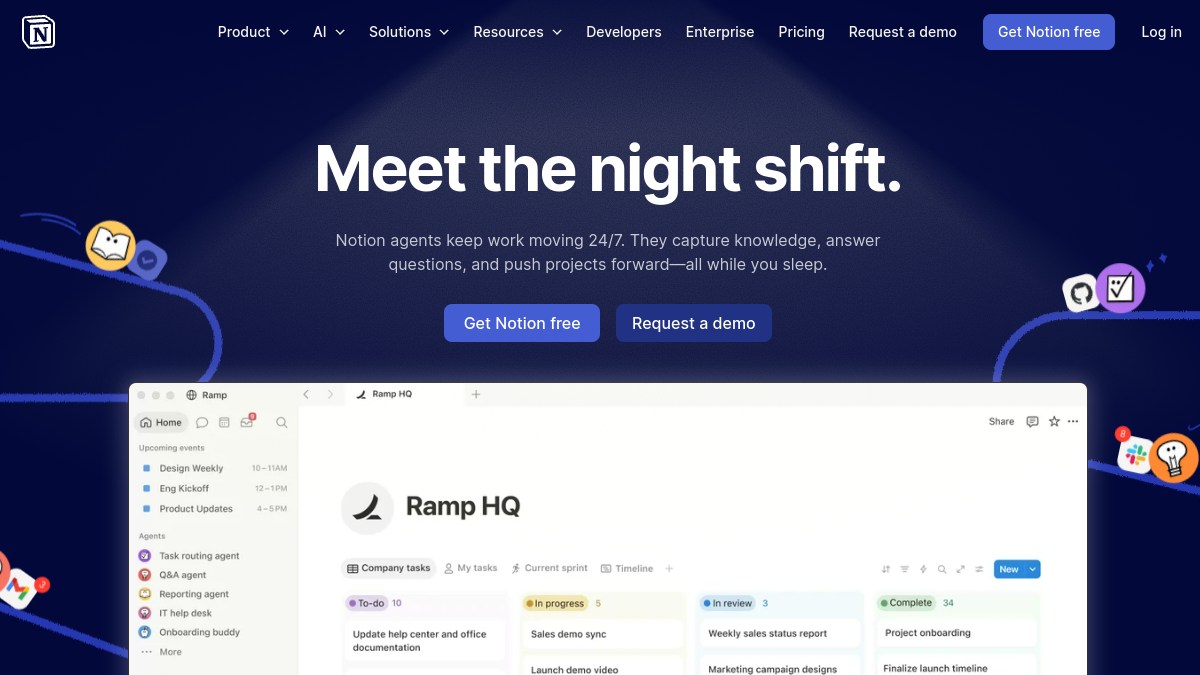
Notion is the category's polished standard, and it earns that. It's deeply refined and easy to use, with a vast feature set, beautiful design, and excellent collaboration — real-time editing, sharing, comments and team features that make it superb for working with others. It has a huge ecosystem of templates, integrations and community resources, and nearly everyone knows it, so sharing and onboarding others is frictionless. For individuals and especially teams who want the most capable, polished, collaboration-friendly workspace with the biggest ecosystem and the reassurance of the popular standard, Notion is outstanding. Its maturity, design and collaboration features are real strengths, and they're why it became the default workspace for so many people and companies.
Where Anytype shines
Anytype's appeal is privacy, ownership and local-first design. It's local-first, meaning your data lives on your device and works offline — not dependent on a cloud connection — and it's end-to-end encrypted, so your information stays private, even from the company behind it. It's open source, so you can trust it, rely on a community, and avoid lock-in, with the option of a more decentralized, you-own-it model rather than your knowledge sitting on a corporate server. For privacy-conscious people, anyone who wants to truly own their data, those who need offline access, and people uneasy about putting their entire digital brain on a third party's cloud, Anytype is genuinely compelling. It offers the flexible-workspace experience while aligning with values of privacy, ownership and decentralization that Notion can't match.
The local-first and privacy difference
The biggest philosophical difference is local-first and encrypted versus cloud-hosted. Anytype storing your data locally and encrypting it end-to-end means your notes — which can be deeply personal or sensitive — stay on your devices, under your control, private even from Anytype itself, and accessible offline. Notion, being cloud-hosted, stores your data on its servers, which is convenient and enables seamless collaboration and access anywhere, but means trusting a third party with your entire workspace and depending on their cloud and connection. For people who care about privacy, data ownership, working offline, or not being locked into a corporate cloud, Anytype's local-first, encrypted, open-source nature is a real, tangible advantage. For those who prioritize convenience and collaboration and don't mind the cloud, Notion's model is perfectly fine — it's a genuine values-and-priorities choice.
Collaboration and polish: Notion's edge
To be fair to Notion, its maturity shows where it counts for many people. Real-time collaboration, sharing, comments and team workflows are seamless and refined in Notion in a way that a local-first, privacy-focused tool finds inherently harder (collaboration and local-first encryption are in some tension). Notion is also more polished overall, with a deeper feature set, more templates and integrations, and the frictionless familiarity of everyone already using it. Anytype, being younger and prioritizing privacy and local-first design, is still maturing in polish and especially in seamless multi-person collaboration. So if smooth team collaboration, maximum polish, and a vast ecosystem are central to your needs, Notion has a clear edge. Anytype is improving, but for collaborative, team-heavy work, Notion currently remains the stronger, smoother choice.
Which I'd pick for you
My recommendation: choose Notion if you want the most polished, capable, collaboration-friendly workspace with the biggest ecosystem, you work closely with a team, and you're comfortable with the cloud — it's the refined, popular standard for good reason. Choose Anytype if you value privacy, data ownership, offline access, open source, and keeping your digital brain under your own control rather than on a corporate cloud — especially for personal knowledge management. Personally, I love what Anytype represents and reach for it for private, personal thinking, while I'd still point a collaborating team toward Notion for its smooth teamwork and polish. Decide based on whether you prioritize collaboration and polish or privacy and ownership.
Can you switch?
Switching workspaces takes effort, since your notes and structure are involved, but it's feasible — and you can run both for different purposes. Because both use a flexible, block-and-object model, the concepts transfer, though you'll rebuild or import your content into the new tool. A reasonable approach, given Anytype is free, is to try it for your personal, private knowledge while keeping Notion for collaborative team work, letting each serve what it does best. Many people don't fully migrate but adopt Anytype gradually for the things they most want private and owned. Since your notes are valuable and central, it's worth being deliberate about any move, but the low cost of trying Anytype means you can experience the local-first, private approach firsthand before deciding how much to shift over.
The wider field of workspaces and note tools
Anytype and Notion are a key matchup, but the workspace and notes space has more worth knowing. If you want local-first, plain-text ownership with a powerful linked-notes "second brain", Obsidian is a beloved option that stores Markdown files on your device. If you want an open-source workspace that combines docs with a whiteboard canvas, AFFiNE is an interesting newcomer. If you want database power closer to Notion but with different strengths, Coda and ClickUp are capable alternatives. And for fast, beautiful personal docs, Craft is a delight. The point is that "where you keep your notes and knowledge" spans cloud all-in-ones (Notion), local-first and private tools (Anytype, Obsidian), open-source workspaces (AFFiNE), and more — so the right choice depends on how much you value collaboration, privacy, ownership and offline access. Anytype versus Notion captures the core privacy-versus-polish choice especially well.
The honest caveats
For balance, each has trade-offs. Notion's caveats are that your data lives on its cloud (a privacy and ownership consideration), it requires a connection for full functionality, and you're trusting and somewhat locked into a third party with your entire workspace. Anytype's caveats are that, being younger and prioritizing privacy and local-first design, it's less polished than Notion, its collaboration is less seamless (local-first encryption makes smooth multi-person editing harder), and its ecosystem and templates are smaller — it's improving fast but isn't yet as refined or frictionless for team work. Both also share the reality that your workspace becomes central to how you think and work, so migrating later is real effort. Knowing whether you value polish, collaboration and ecosystem (Notion) or privacy, ownership and local-first design (Anytype) makes the choice clear for your priorities.
A practical way to decide
Here's a simple way to choose. Start with what matters most to you about a workspace. If smooth collaboration with a team, maximum polish, a vast template and integration ecosystem, and the convenience of the cloud are your priorities, Notion is the clear, comfortable choice — it's refined, capable and everyone knows it. If instead you care deeply about privacy, owning your data, working offline, and keeping your personal knowledge out of a corporate cloud, Anytype's local-first, encrypted, open-source design is exactly what you're looking for, and it's well worth embracing even with a little less polish.
Put simply: collaboration and polish point to Notion; privacy and ownership point to Anytype. Because Anytype is free and Notion has a free tier, the best test is to use each for a real slice of your work — your team docs in Notion, your private personal knowledge in Anytype — and feel which approach suits you. Many people happily use both for different purposes rather than choosing only one. Don't over-agonize, though: the real win is having a flexible workspace that helps you think and organize at all. Pick based on your values around privacy and collaboration, and you'll have a genuinely capable home for your knowledge either way. And remember that your decision isn't permanent — because both use a flexible block-and-object model and let you export your content, you can shift more of your work to whichever proves itself over time as your priorities around privacy, collaboration and ownership become clearer in daily use.
Frequently asked questions
Is Anytype better than Notion? It depends on your priorities. Notion is more polished, collaborative and ecosystem-rich; Anytype is local-first, open source, end-to-end encrypted and private. For team collaboration and polish, Notion; for privacy, data ownership and offline access, Anytype. Both are capable flexible workspaces with different strengths.
Is Anytype really private and local-first? Yes. Anytype stores your data on your own device (local-first), works offline, and encrypts it end-to-end, so your notes stay private — even from the company behind it. It's also open source. That privacy, ownership and offline capability are its core advantages over cloud-hosted tools like Notion.
Why do people still choose Notion? For its polish, seamless collaboration, vast ecosystem of templates and integrations, and the fact that nearly everyone knows it, which makes sharing and teamwork frictionless. For collaborative, team-heavy work where polish and ecosystem matter, Notion currently remains the smoother, more capable choice.
Can I use both Anytype and Notion? Yes, and many people do — using Notion for collaborative team work where its polish shines, and Anytype for private, personal knowledge they want owned and offline. Because Anytype is free, you can adopt it gradually for the things you most want private while keeping Notion for collaboration, letting each tool serve exactly what it does best.
The bottom line
Anytype vs Notion is a values-driven choice between privacy and polish. Notion is the refined, collaborative, ecosystem-rich all-in-one workspace — ideal for teams and anyone who wants the polished standard and is comfortable with the cloud. Anytype is the local-first, open-source, end-to-end-encrypted challenger — ideal for those who prize privacy, data ownership and offline access. Both are capable, flexible homes for your notes and knowledge, and you can even use each for what it does best. Pick Notion for collaboration and polish, or Anytype for privacy and ownership — and enjoy a workspace that actually fits how you think and what you value. In a world where so much of our thinking now lives in software, that choice — convenience and collaboration, or privacy and control over your own digital brain — is a more meaningful one than it first appears, and it's worth making deliberately rather than by default. Whichever you choose, the important thing is that your knowledge finally has a connected, flexible home instead of being scattered across a dozen apps and your own fading memory.
Building a productivity or note-taking tool? List it on Tolodora — get discovered by the people comparing options, earn a backlink, and collect real reviews from day one.