The Best AI Tools for Small Business in 2026 (That Actually Pay Off)
If you run a small business in 2026, you're drowning in AI marketing. Every tool you already pay for sprouted an "AI" badge, and every week brings a new one promising to revolutionise your operations. Most of it is noise. But underneath the hype, a real shift happened: a handful of AI tool categories now deliver genuine, measurable returns for small businesses — the kind that give a five-person company the leverage that used to require twenty. This is a practical guide to where the payoff is real, where it isn't, and how to adopt without wasting money.
The mindset that separates winners from budget-burners
Before any tool list, the meta-lesson, because it's worth more than any single recommendation. Small businesses that win with AI don't "adopt AI" as a vague initiative. They identify a specific, expensive, repetitive task and apply a tool to that. The losers buy impressive-sounding tools and go looking for a use; the winners start with a painful problem and find the tool that kills it. Every recommendation below should be evaluated against one question: which specific task in my business does this remove or speed up, and is that worth the cost and the learning? If you can't answer that crisply, don't buy it yet.
Marketing and content: the clearest win
This is where small businesses see the fastest payoff, because marketing is time-intensive and AI is genuinely good at it now. A general AI assistant alone — for drafting emails, social posts, ad copy, product descriptions, and first drafts of blog content — replaces hours of work weekly. Dedicated AI writing and marketing tools go further with brand-voice training and campaign workflows. AI design tools let a non-designer produce decent graphics and social content in minutes. The honest caveat: AI content needs a human edit to not sound generic, and pumping out soulless AI filler hurts your brand and your SEO. Used as a force multiplier on a human's judgment, though, the time savings are enormous and immediate — this is the category to start with.
Customer support: leverage without losing the human touch
AI support tools — chatbots that actually understand questions, AI that drafts replies for your team, automated triage and routing — let a small team provide responsive support that used to require a much bigger one. The modern versions resolve common questions instantly and hand the hard ones to a human with context attached, which is a real upgrade over both the old dumb chatbots and the "we'll reply in 48 hours" inbox. The trap to avoid: hiding all human contact behind a bot that frustrates people. The winning pattern is AI for speed and volume, humans available for the moments that matter. Done right, it improves both your response times and your customers' experience while keeping your team sane.
Operations and automation: the quiet money-saver
The least glamorous category is often the most valuable. AI-powered automation — connecting your tools so data flows automatically, AI that processes invoices and documents, smart scheduling, automated data entry — eliminates the soul-crushing administrative work that silently eats small-business hours. Every hour your team spends copying data between systems or manually processing routine paperwork is an hour not spent on the business. Automation platforms, increasingly with AI baked in, are how small teams punch above their weight operationally. The ROI here is unglamorous but real and compounding: set it up once, save time forever. Audit where your week actually goes, and you'll usually find an automation-shaped hole.
Finance and admin: fewer mistakes, less dread
AI tools for bookkeeping, expense categorisation, invoicing, and financial insight reduce both the time and the errors in the part of the business owners dread most. Modern accounting tools use AI to categorise transactions, flag anomalies, chase late invoices, and surface cash-flow insights you'd otherwise miss. For a small business without a finance team, this is like having a junior bookkeeper who never sleeps. It won't replace an accountant for the hard calls, but it makes the day-to-day vastly less painful and the books far more accurate — which pays off again at tax time.
Sales and CRM: more follow-through, less leakage
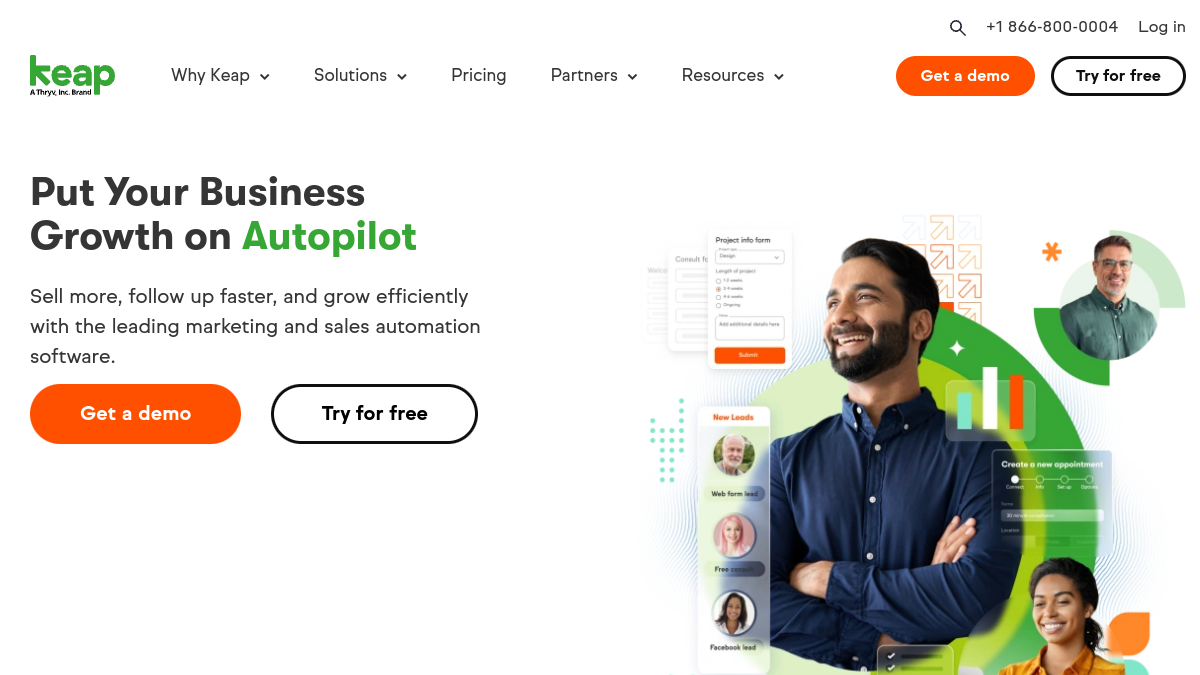
AI in sales tools helps small teams stop leaking revenue through the cracks. AI that scores leads, drafts personalised follow-ups, logs activity automatically, and surfaces which prospects to call next means a tiny sales team operates with discipline that used to require a dedicated operations person. The biggest practical win is simply consistent follow-up — the deals small businesses lose most often are the ones nobody followed up on, and AI is very good at making sure nobody falls through the cracks. It turns "I meant to email them back" into a system.
How to adopt without wasting money
A simple framework keeps you out of trouble. Start with one painful task, not a strategy. Pick the single most time-consuming or error-prone thing you do and solve that first. Use free trials ruthlessly. Almost every tool offers one — prove the value on your real work before paying, and cancel without guilt if it doesn't deliver. Count the all-in cost. Subscriptions stack up fast; five "cheap" AI tools is a real monthly line item, so consolidate where one tool covers several jobs. Measure the actual saving. If a tool was supposed to save five hours a week, check that it did; if it didn't, drop it without sentiment. Don't automate a broken process. Fix the workflow first, then add AI — automating a mess just gives you a faster mess. Keep a human in the loop wherever quality, money, or customer trust is on the line.
Where AI is NOT worth it (yet)
Honesty cuts both ways. Some "AI" features are marketing veneer that add little — a chatbot bolted onto a tool whose real job is unchanged, "AI insights" that just restate your dashboard. Resist paying a premium for an AI badge that doesn't change the outcome. And some tasks still want a human: high-stakes decisions, sensitive customer conversations, anything requiring genuine judgment or accountability. The goal isn't maximum AI; it's maximum leverage. Sometimes that means a powerful AI tool, and sometimes it means recognising that a particular job is cheaper and better done the old way.
A 30-day adoption plan
Knowing the categories is one thing; rolling them out without chaos is another. Here's a sane 30-day plan. Week one — audit. Don't buy anything yet. List the tasks that eat the most time or cause the most errors in your week, and rank them. The point is to find your one or two highest-value targets, because adopting AI everywhere at once guarantees you'll do all of it badly. Week two — pilot one tool. Pick the single biggest pain from your audit and trial one tool against it, on real work, using a free trial. Give it genuine tasks, not toy ones, and note how much time it actually saves versus the friction of learning it. Week three — measure and decide. If the tool delivered, keep it and fold it into your routine properly; if it didn't, drop it without sentiment and try an alternative. Resist the sunk-cost urge to keep paying for something that isn't earning its keep.
Week four — expand deliberately. Only once your first adoption is working should you move to the next pain on your list. This staged approach feels slow, but it's the opposite of the expensive pattern where a business buys five impressive tools at once, masters none, and quietly pays for all of them forever. One tool well-adopted beats five half-used, and the discipline of measuring each one against real time saved keeps your AI spend honest. By the end of a deliberate quarter you'll have two or three tools genuinely embedded and paying off, which is far more than most businesses achieve by buying everything at once.
A real example: a five-person team
To make it concrete, picture a five-person service business. They start with their worst pain: marketing took too long and went out inconsistently. A general AI assistant now drafts their emails, social posts, and blog outlines, cutting a day of work a week to a couple of hours — a human still edits for voice and accuracy, but the blank-page time is gone. Next they tackle admin: an automation tool now routes inbound leads, logs them, and triggers follow-up reminders automatically, so nothing falls through the cracks. Then support: an AI assistant drafts replies to common questions for a human to approve, doubling their response speed without anyone feeling fobbed off by a bot.
Notice what this team did not do. They didn't buy a dozen tools chasing every AI headline. They didn't replace anyone. They took their three biggest, most repetitive pains and applied one well-chosen tool to each, with a human in the loop wherever quality or relationships mattered. The result is a five-person team operating with the marketing output, responsiveness, and operational tidiness that used to require eight or ten people — which is exactly the leverage AI is supposed to deliver when you use it deliberately instead of impulsively.
The real risk: doing nothing
Amid all the warnings about wasting money on hype, it's worth naming the opposite danger, because it's the bigger one for most small businesses: standing still. While you debate whether AI is overhyped, your competitors are quietly using it to market more, respond faster, and operate leaner with the same headcount. The leverage these tools provide is real, and it compounds — a competitor who saves ten hours a week and reinvests them into their business pulls steadily ahead of one who doesn't. The risk isn't only buying the wrong tool; it's letting analysis paralysis keep you on the sidelines while the playing field tilts.
The resolution isn't "buy everything immediately" — it's "start small, but start." Pick one painful task, trial one tool, measure the result, and build from there. That deliberate path avoids both failure modes: you don't waste money on a pile of unused subscriptions, and you don't get left behind by refusing to engage. The businesses that will struggle in the next few years aren't the ones who adopted AI carefully — they're the ones who either threw money at every shiny tool without a plan, or who treated the whole thing as a fad and did nothing. A small, measured first step this month beats a perfect strategy you never execute. The goal is leverage, and leverage rewards the businesses that begin.
Frequently asked questions
What's the best first AI tool for a small business? A general AI assistant for marketing and content drafting, plus an automation tool to kill repetitive admin. Those two categories deliver the fastest, clearest time savings for most small businesses.
How much should a small business spend on AI tools? Start with free trials and only pay for tools that demonstrably save more than they cost. Watch the cumulative subscription total and consolidate — five overlapping tools is a real expense.
Will AI tools replace my employees? For most small businesses, no — they give your existing team leverage to do more, especially on repetitive work, rather than replacing the judgment, relationships and accountability people provide. The realistic outcome is a smaller team doing the work of a larger one, with people freed to focus on what actually needs a human.
Is AI content bad for my SEO? Only if it's low-value filler. AI-assisted content edited by a human for accuracy and voice is fine; mass-produced generic AI content is what search engines demote.
The bottom line
The best AI tools for small business in 2026 aren't the flashiest — they're the ones that quietly remove your most expensive repetitive tasks. Start with marketing and automation where the payoff is fastest, add support, finance, and sales tools as specific pains demand, and evaluate everything against one question: does this save more than it costs in time and money? Ignore the hype, chase the leverage, and a small team can operate with the reach of a much bigger one.
Looking for the right AI tools for your business? Browse honest, structured comparisons and alternatives on Tolodora — built to help small teams pick tools that actually pay off.