Vibe Coding in 2026: Can You Really Build Software by Just Describing It?
A year ago, "vibe coding" was a half-joke — a term for letting an AI write your code while you barely look at it, going on vibes instead of understanding. In 2026 it became one of the most consequential shifts in how software gets made. A new generation of AI tools lets you describe an app in plain English and watch a working version appear, no syntax required. Non-developers are shipping real products; developers are moving five times faster. But the hype has wildly outrun the reality in specific, predictable ways. This is an honest guide to what vibe coding actually is in 2026, what it can and can't build, and how to use it without getting burned.
What "vibe coding" actually means now
At its simplest, vibe coding is building software by describing what you want in natural language and letting AI generate the code, the interface, and often the whole running app — while you guide it conversationally rather than writing code line by line. You say "build me a landing page with a waitlist form that saves emails," and a tool produces it, live, in seconds. You then refine it by talking: "make the hero bigger," "add a dark mode," "connect it to a database." The "vibe" part is that you're steering by feel and intent, not by manually engineering each piece.
This is different from traditional no-code, which gives you visual building blocks to assemble by hand. Vibe coding generates the actual application from a description, and increasingly produces real code you can own and extend. It sits at a new intersection: as accessible as no-code, but with the open-endedness of real software. That combination is exactly why it exploded — it removed the single biggest barrier to building, which was knowing how to write code in the first place.
The tools driving it in 2026
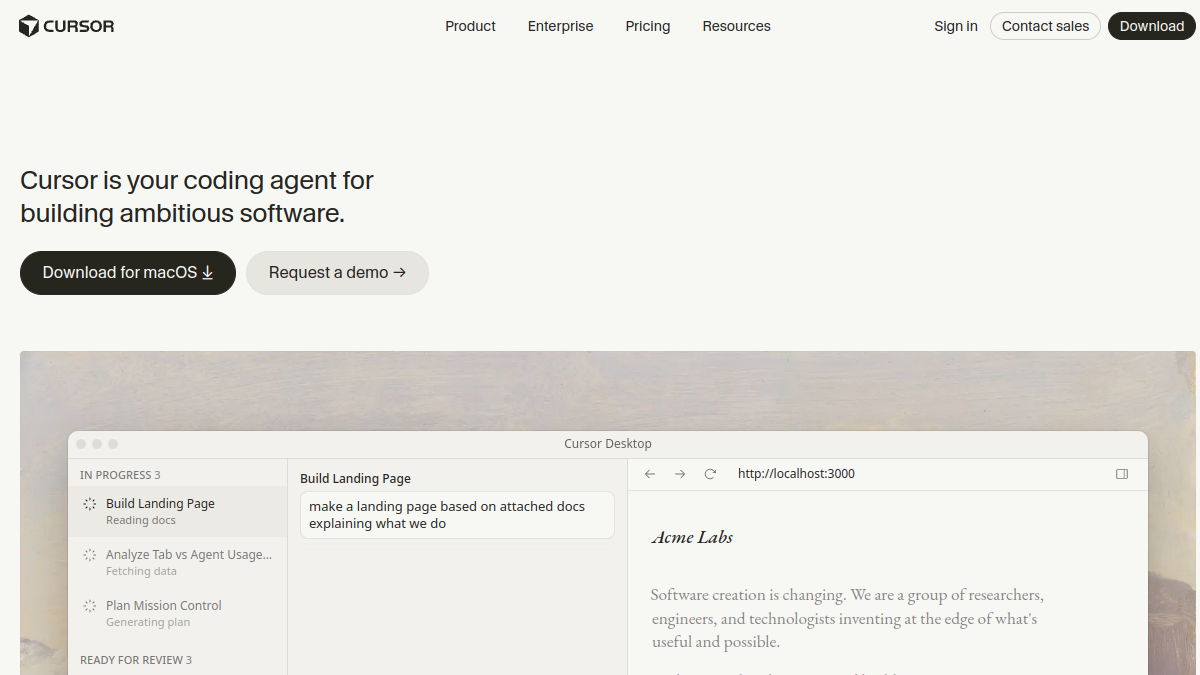
A handful of tools defined this movement. Browser-based app builders let you prompt an entire web app into existence — front end, back end, and database — and deploy it instantly, which is intoxicating for founders who want to test an idea today. AI-first code editors brought the same magic into a professional environment, letting developers describe changes across a whole codebase and have the AI execute them. And a wave of "prompt-to-UI" tools generate polished interfaces and components from a sentence, which designers and developers then drop into real projects.
What unites them is the loop: you describe, the AI builds, you react, it adjusts. The best ones keep the full context of your project, so each instruction builds coherently on the last rather than producing disconnected fragments. The experience genuinely feels like collaborating with a fast, tireless junior developer who never gets bored — which is both the promise and, as we'll see, the catch.
What vibe coding genuinely builds well
Start with the wins, because they're real and large. Vibe coding excels at the well-scoped, common, and visual: landing pages, marketing sites, simple web apps, internal tools, dashboards, prototypes, and the first version of a product. If what you want resembles things that exist a million times over — a CRUD app, a form that saves data, a directory, a simple SaaS front end — the AI has seen countless examples and produces a working result fast. For validating an idea, building an MVP, or replacing a spreadsheet with a real tool, it's transformative.
It's also a phenomenal accelerant for people who already code. A developer can scaffold a feature, generate boilerplate, wire up an API, or build a UI in minutes instead of hours, then refine the details by hand. And it's a remarkable learning tool: beginners can build something real on day one and gradually understand the code the AI produces, learning by doing rather than slogging through tutorials first. The motivational power of seeing your idea work immediately should not be underestimated.
Where it breaks — and bites
Now the honest part, because this is where people get hurt. The first failure mode is the wall: vibe coding is brilliant at the start and the middle, then hits a point where the app is complex enough that the AI starts breaking things it previously built, introducing bugs while fixing others, and going in circles. Without understanding the code, you can't diagnose or escape this — you just keep prompting and praying. Many vibe-coded projects stall exactly here, when the app outgrows what the builder can hold coherently in its head.
The second is confident wrongness. The AI will produce code that looks right and runs, but is subtly broken, insecure, or inefficient — and because it's fluent and the app appears to work, you ship it. Security is the scariest version: vibe-coded apps regularly leak data, expose secrets, or skip authentication, because the AI optimized for "make it work," not "make it safe," and the builder didn't know to check. There have been very public incidents of vibe-coded apps exposing user data for exactly this reason.
The third is the ownership and maintenance trap. An app you can't understand is an app you can't truly maintain, debug, or hand to someone else. When it breaks in production, when a dependency changes, or when you need a feature the AI can't manage, you're stuck — dependent on the tool and on prompting your way out of problems you don't comprehend. The code might be yours on paper, but if it's a black box to you, your control over your own product is an illusion.
The skills that still matter (more, not less)
Here's the counterintuitive truth: vibe coding makes some skills less necessary and others far more valuable. You need to write less syntax, but you need more of the judgment that separates a working product from a disaster. Knowing how to specify clearly — to describe exactly what you want, including the constraints and edge cases — is now a core skill, because vague prompts produce vague, wrong software. Understanding enough about how software works to review what the AI built, spot a security hole, and know when something is off remains essential, even if you never write a line yourself.
The people getting the most from vibe coding aren't the ones who blindly trust it; they're the ones who treat the AI as a powerful tool they direct and verify. A non-developer who learns to review, test, and ask the right questions will build far more durable things than one who ships whatever appears. And a developer who pairs deep understanding with AI speed becomes extraordinarily productive. The vibe is a starting point, not a substitute for judgment.
How to vibe code without getting burned
A few rules separate the people who ship real products from the ones who hit a wall and rage-quit. Scope tightly and build incrementally — describe one clear piece at a time and verify it works before moving on, rather than asking for a whole complex app in one breath. Test everything, especially the unglamorous paths — what happens with bad input, with no data, with the wrong user? Take security seriously — at minimum, check that authentication works, that secrets aren't exposed, and that user data is protected; if you can't verify this yourself, get someone who can before you launch. Learn from the output — read the code the AI writes, ask it to explain anything you don't understand, and gradually build real comprehension. And know when to bring in a human — when the app hits the wall, or when it's handling money, sensitive data, or real users at scale, that's the moment for genuine engineering, not more prompting.
Vibe coding vs. real engineering: it's not either/or
The smartest builders in 2026 don't see vibe coding and traditional development as opposites — they use them together. Vibe code the prototype, the landing page, the internal tool, the first version; validate the idea fast and cheap. Then, when something proves valuable and needs to scale or handle real stakes, invest in proper engineering, whether that's you learning more or bringing in a developer. The vibe-coded version did its job by getting you to a working product for a fraction of the time and cost; rebuilding or hardening it from a position of knowledge is a feature, not a failure. The mistake is treating a vibe-coded prototype as a finished, production-grade product just because it runs.
The economics: why vibe coding changes the math
Beyond the technical shift, vibe coding rewrites the economics of building software, and that's a big part of why it matters. The cost of getting from idea to working prototype has collapsed — what once required hiring a developer or spending weeks learning to code now takes an afternoon and a subscription. For founders, this means you can validate far more ideas, far more cheaply, before committing real money. The cost of a failed experiment drops to almost nothing, which changes how you build a business: instead of betting everything on one idea you spent months building, you can test ten ideas in the time it used to take to build one, and double down on whatever shows signs of life.
For existing businesses, the math is just as compelling on internal tools and automation. The dozens of small software needs that were never worth a developer's time — a custom dashboard, a workflow tool, a quick integration — suddenly become trivially cheap to build, unlocking efficiency that was previously uneconomical. The flip side, and the thing to watch, is that cheap-to-build doesn't mean cheap-to-maintain: a pile of vibe-coded tools nobody fully understands can become a liability over time. The economics favor building fast and validating, but the long-term cost lives in maintenance and understanding — which is exactly why judgment about what to vibe code and what to engineer properly matters so much.
Where this is heading
The trajectory is steep, and it's worth thinking about where vibe coding goes from here. The tools are improving rapidly at exactly their current weaknesses: holding larger, more complex projects coherently, producing more secure code by default, and catching their own mistakes. As they get better, the wall that vibe-coded projects hit today will move further out, and more ambitious software will become buildable by describing it. But the fundamental principle won't change: software that handles real money, sensitive data, or serious scale will always demand genuine understanding and engineering rigor, because the cost of getting those wrong is too high to leave to vibes.
The likely future isn't "everyone vibe codes everything" or "vibe coding was a fad" — it's a spectrum, where more and more of the simple-to-medium work is built by describing it, while the hard, high-stakes core still requires real expertise. The people who thrive will be those who learn to move fluidly along that spectrum: vibe coding the parts where it's safe and fast, engineering the parts where it isn't, and always keeping enough understanding to know which is which. Vibe coding is a powerful new tool in the toolbox, not a replacement for the toolbox.
Frequently asked questions
Can a non-developer really build an app with vibe coding? Yes — for well-scoped, common apps like landing pages, simple tools, and MVPs, a non-developer can build a working product by describing it. The limits show up with complex apps, scale, and security, where understanding the code becomes necessary.
Is vibe-coded software safe to launch? Not automatically. AI optimizes for "make it work," not "make it secure," and vibe-coded apps frequently have security holes the builder didn't notice. Before launching anything handling user data or money, verify authentication, data protection, and exposed secrets — ideally with someone who can audit it.
Will vibe coding replace developers? No. It replaces a lot of the mechanical work and lowers the barrier to building, but it makes judgment, review, architecture, and security expertise more valuable, not less. Developers who use it become far faster; the role shifts rather than disappears.
What happens when a vibe-coded app hits "the wall"? As an app grows complex, the AI starts breaking things while fixing others and going in circles. Without understanding the code you can't escape it. The fix is to build incrementally, keep scope tight, and bring in real engineering once the project outgrows what the builder can handle.
The bottom line
Vibe coding in 2026 is genuinely revolutionary for a large slice of building — the fast, visual, well-scoped work that used to require knowing how to code — and genuinely dangerous when treated as a complete replacement for understanding and engineering. Use it to build fast, validate ideas, and learn; verify what it produces, take security seriously, and bring in real expertise when the stakes rise. The builders who win aren't the ones who trust the vibe blindly or reject it entirely — they're the ones who harness its speed while keeping the judgment to know when the vibe isn't enough.
Built something with vibe coding? Launch it on Tolodora for free — get it in front of buyers, earn backlinks, and start collecting real reviews from day one.