Confluence vs Jira (2026): What's the Difference and Which Do You Need?
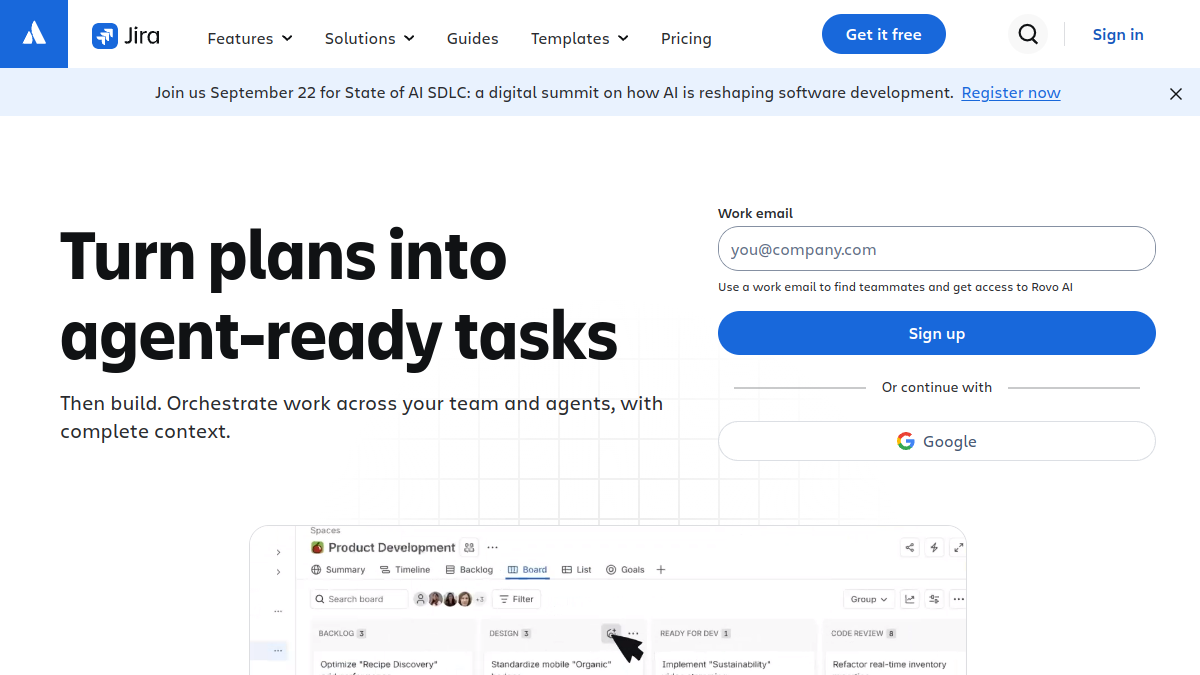
Confluence and Jira are both made by Atlassian, they're often bought together, and their names get used almost interchangeably — which is exactly why teams get confused about the difference. Here's the clear version, so you know which one you actually need (and whether you need both).
The quick answer
Jira is for tracking work; Confluence is for documenting knowledge. Jira manages tasks, issues, bugs, and projects — the what needs doing and what's its status. Confluence is a team wiki for documents, notes, specs, and knowledge — the information and context. They're complementary, not competitors, and they're designed to work together.
What is Jira?
Jira is a work and project tracking tool, originally built for software teams and famous for agile workflows (Scrum and Kanban boards, sprints, backlogs). You create issues (tasks, bugs, stories), assign them, move them through statuses, and track progress with boards and reports. Over the years it's expanded beyond engineering to many kinds of project and work management.
Jira is best for
- Tracking tasks, bugs, and user stories.
- Agile workflows — sprints, boards, backlogs.
- Software development and technical project management.
- Reporting on progress and team velocity.
What is Confluence?
Confluence is a team workspace and wiki. It's where you write and organize documents: project plans, requirements, meeting notes, product specs, onboarding guides, and knowledge bases. Think of it as your team's shared, searchable brain — collaborative pages instead of scattered documents.
Confluence is best for
- Documentation and knowledge bases.
- Project plans, specs, and requirements.
- Meeting notes and collaborative writing.
- Onboarding and internal wikis.
The core difference
The simplest way to remember it: Jira tracks the work; Confluence documents the thinking behind it. In Jira you'd have a ticket: "Build the new checkout flow — in progress." In Confluence you'd have the page that explains why you're building it, the requirements, the designs, and the decisions. One is dynamic status; the other is durable knowledge.
Do Jira and Confluence work together?
Yes — that's the whole point. Because both are Atlassian tools, they integrate tightly: you can link Confluence pages to Jira issues, embed live Jira issue lists inside a Confluence page, and create Jira tickets from a Confluence doc. A typical setup uses Confluence for the plan and documentation, and Jira for executing and tracking the tasks that flow from it.
Which do you need?
- Just Jira if you mainly need to track tasks, bugs, and projects and already document elsewhere.
- Just Confluence if you mainly need a wiki and documentation and track work in another tool.
- Both if you want a connected system where documentation and work tracking reference each other — the setup Atlassian designed them for, common in software and larger teams.
Pricing
Jira and Confluence are priced separately (each has a free tier for small teams and paid per-user plans), and Atlassian bundles them with other products. If you need both, the combined per-user cost adds up, which is one reason smaller teams sometimes look for lighter, all-in-one alternatives that cover docs and tasks together.
Alternatives worth knowing
If juggling two tools (and two bills) feels heavy, several platforms combine docs and work tracking in one. Notion and ClickUp, for example, blend documents with tasks. We rounded up the options in our guides to the best monday.com alternatives and best Notion alternatives — many of which can replace the Jira + Confluence combo for smaller teams.
Frequently asked questions
Is Confluence the same as Jira?
No. Jira tracks tasks and projects; Confluence is for documentation and knowledge. They're separate Atlassian products that integrate with each other.
Can I use Confluence without Jira (or vice versa)?
Yes. Each works independently — Confluence as a standalone wiki, Jira as standalone work tracking. They're just more powerful together.
Do I need both Confluence and Jira?
Only if you want both documentation and work tracking in the Atlassian ecosystem. Many teams use both; others use one plus a different tool, or switch to an all-in-one platform that does both jobs.
The bottom line
Confluence vs Jira isn't an either/or in the way the search suggests — it's docs vs tasks. Jira runs the work; Confluence holds the knowledge. Figure out whether you need to track work, document knowledge, or both, and the right choice (one, the other, or the pair) becomes obvious.