Did Elon Musk Buy Cursor? The Rumour, the Logic, and What It Would Mean
Let's be clear up front: as of today, there is no confirmed deal, no signed term sheet, and no official word that Elon Musk or xAI is buying Cursor. This is a thought experiment — an analysis of a rumour that keeps bubbling up in developer Slacks and tech Twitter. But it's a rumour worth taking seriously, because the logic behind it is surprisingly sound. So let's do what the breathless headlines won't: actually think it through.
First, what is Cursor — and why does anyone care?
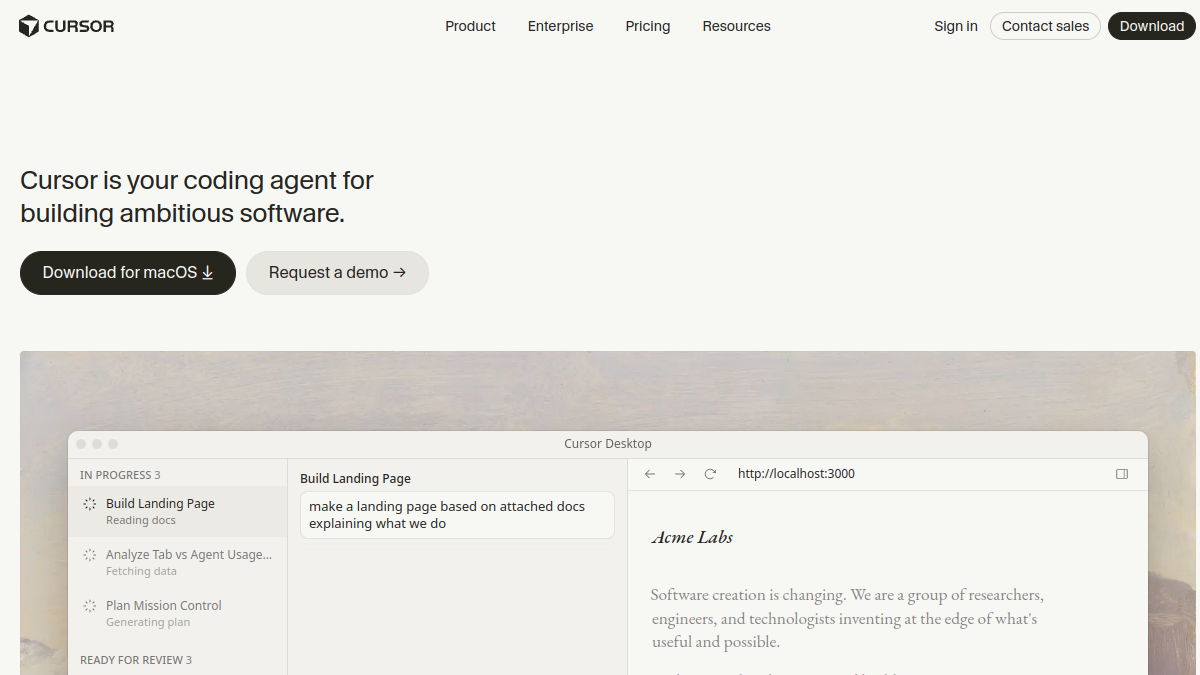
Cursor is an AI-first code editor built on top of VS Code. Instead of treating AI as a sidebar afterthought, it bakes a coding assistant into the core of the editing experience: it understands your whole codebase, writes and refactors across multiple files, answers questions about unfamiliar code, and increasingly acts like an autonomous junior developer you can delegate to. In a remarkably short time it went from "interesting side project" to the tool a huge slice of professional developers reach for every single day.
That kind of traction is rare. Developer tools usually grow slowly, by word of mouth, because engineers are famously skeptical and switching editors is a deeply personal decision. Cursor broke that pattern. And when a developer tool grows that fast, it stops being just a product — it becomes strategic infrastructure. Whoever owns the editor owns a daily touchpoint with millions of the most technical, highest-leverage people in the economy.
Why the rumour even makes sense
Here's the uncomfortable-for-skeptics truth: an xAI–Cursor pairing isn't a crazy idea. It's the kind of move that, on paper, lines up almost too neatly.
1. xAI needs a distribution channel for coding
xAI's Grok models are competitive, and Elon has been explicit that coding is a priority use case for AI. But models don't win on benchmarks alone — they win on distribution. The companies that dominate AI coding aren't necessarily the ones with the best model; they're the ones whose model is sitting in the editor when a developer needs it. Cursor is exactly that surface. Owning it would put Grok in front of millions of developers by default, instead of asking them to switch.
2. Elon likes owning the whole stack
Across his companies, there's a consistent pattern: control the vertical. Tesla builds its own chips and software. SpaceX builds its own rockets and Starlink terminals. xAI bought into the social layer with X. A code editor would extend that instinct into developer tooling — the model, the interface, and the data loop all under one roof.
3. The data flywheel is irresistible
Every keystroke, accepted suggestion, and rejected completion in an editor is training signal gold. An AI lab that owns the editor doesn't just ship a model — it gets a continuous, real-world feedback loop on how developers actually work. That flywheel is one of the most valuable assets in AI, and Cursor is generating it at scale.
Why it might never happen
Now the other side of the ledger, because good analysis doesn't just confirm the exciting story.
- Cursor doesn't need to sell. Hot, fast-growing, well-funded companies have leverage. Why sell when you're winning?
- Model independence is a selling point. Part of Cursor's appeal is that it works with multiple frontier models. Getting absorbed into one lab could alienate developers who like that neutrality.
- Culture clash. Developer-tools companies and Elon-speed companies have very different operating rhythms. Acquisitions die on culture more often than on price.
- Regulatory and trust friction. Tying a beloved developer tool to a high-profile, polarizing owner is a brand risk that cuts both ways.
What it would actually mean for developers
Suppose it did happen. What changes for the person who just wants to ship code on a Tuesday afternoon?
The optimistic version
Tighter integration between a frontier model and the editor could be genuinely great. Faster iteration, deeper codebase understanding, an editor that improves weekly because the people building the model and the people building the interface are the same team. If you believe in the "own the stack" thesis, the product could get dramatically better, dramatically faster.
The pessimistic version
Lock-in. Today you can pair the editor with the model you trust. Tomorrow, the default — and maybe the only first-class option — is one lab's model. For a tool you spend eight hours a day inside, reduced choice is a real cost. Developers value optionality almost as much as they value capability.
The bigger trend this rumour points to
Whether or not this specific deal ever materializes, the rumour is a signal. We're entering a phase where the AI editor is the new browser war. In the 2000s, whoever owned the browser owned the gateway to the web. In the late 2020s, whoever owns the AI coding surface owns the gateway to how software gets built. That's why every major lab is suddenly very interested in editors, agents, and IDEs — not because editors are glamorous, but because they're the chokepoint.
Expect more of this: labs acquiring or building editors, editors getting their own models, and a scramble to be the default AI a developer talks to all day. The Cursor rumour is just the most quotable example of a much larger land grab.
Don't wait on a rumour — here are the tools that matter now
Acquisition gossip is fun, but it doesn't ship your product. If you're choosing an AI coding setup today, the practical question isn't "who will own this in a year" — it's "what makes me faster this week." A few honest notes:
- Pick for your workflow, not the hype. The best AI editor is the one that fits how you already work and the languages you actually use.
- Value model flexibility. Tools that let you swap the underlying model hedge you against exactly the lock-in this article worries about.
- Keep a generalist assistant in the mix. Pairing an in-editor tool with a strong standalone assistant like Claude or ChatGPT covers the gaps the editor doesn't.
Want a structured comparison instead of vibes? Read our breakdown of the best Cursor alternatives, where we rate the leading AI editors on pricing, functionality, ease of use and support.
A short history: how coding got an AI brain
To understand why this rumour has legs, remember how fast this happened. A few years ago, the cutting edge of "AI in coding" was an autocomplete that guessed the rest of your line. Then context windows grew, models learned to reason across files, and the interaction shifted from "complete this line" to "make this change." Suddenly the editor wasn't suggesting — it was doing. That shift, from autocomplete to agent, is the most important thing to happen to developer tooling in a decade, and it's why editors went from boring utilities to strategic assets almost overnight.
Cursor rode that wave better than anyone. It wasn't first to bolt AI onto an editor, but it was first to make the AI feel like the point rather than a feature. That product instinct is exactly what makes a company an acquisition target. You don't buy a company for its code; you buy it for the taste and the traction that are hard to replicate.
Who else wants the editor
If xAI is interested, it's not alone. Every serious AI lab has looked at the same map and reached the same conclusion: the editor is the chokepoint. That's why frontier labs are building their own coding agents, cloud platforms are baking assistants into their consoles, and incumbents are racing to make their IDEs AI-native. In a world where top-tier models are increasingly commoditized, the differentiator isn't the model — it's the surface where developers meet it. The lab that owns the most-used editor owns the relationship.
That pressure cuts both ways for any rumour. It makes owning Cursor more valuable (there are only so many beloved editors) and less likely to sell cheaply (everyone wants in). A bidding dynamic, even a quiet one, changes the math.
What would Cursor even cost?
Let's speculate responsibly. Fast-growing developer tools with deep daily engagement command premium valuations, and an AI editor used by professional engineers every day is about as premium as it gets. Any realistic number would be large — large enough that only a handful of players could write the cheque without blinking. xAI, backed by Elon's fundraising firepower and appetite for bold bets, is plausibly one of them. But "can afford it" and "will pay it" are different things, and the gap between them is where most rumoured deals quietly die.
The trust tax
There's one cost that never shows up on a balance sheet: trust. Developers are unusually sensitive to who controls their tools. Much of Cursor's charm is that it feels like it's on the developer's side — flexible, model-agnostic, focused on making you faster. Folding it into any single lab risks a "trust tax": every product decision gets re-read through the lens of the owner's incentives. Will the editor quietly favour the parent's model? Will pricing change? Will my code train something? Those questions don't have to be answered badly to do damage — they just have to be asked. Managing that perception would matter as much as managing the integration itself.
The Grok factor: this is really a fight over defaults
Strip away the celebrity and the headline, and the strategic core is simple: defaults win. The overwhelming majority of developers use whatever model is already in front of them when they hit a problem. They don't comparison-shop mid-task; they accept the suggestion the editor offers. That means the model wired into the most popular editor gets an enormous, almost passive usage advantage — and usage, at AI scale, compounds into better data, faster improvement, and stickier habits.
For xAI, that's the whole game. Grok being good is necessary but not sufficient; Grok being the default in a tool developers already love would be transformative. Acquiring an editor is the most direct route to that default. Building one from scratch is slower and uncertain; partnering is fragile; buying the category leader is decisive. Seen through that lens, the rumour isn't really about Elon's personality at all — it's about the cold logic of distribution in a market where the models are converging and the interface is where the war is actually won. Whether or not this specific deal happens, that logic isn't going away, and it's why you should expect the editor wars to intensify, not cool down.
The honest bottom line
Could Elon Musk buy Cursor? Strategically, it would make a lot of sense — the distribution, the data flywheel, and the "own the stack" instinct all point the same way. Will he? Nobody outside the rooms where these deals are made actually knows, and anyone telling you otherwise is selling clicks. What we can say with confidence is that the AI editor has become strategic territory, the land grab is on, and developers should choose tools that keep their options open. Treat the rumour as entertainment, treat the trend as real, and treat your own workflow as the only thing worth optimizing for.
Frequently asked questions
Has Elon Musk actually bought Cursor?
No. At the time of writing there is no confirmed acquisition, no official announcement, and no public deal. This article is a clearly-labelled analysis of a rumour and the strategic logic behind it — not a report of a completed transaction. If that ever changes, the facts will come from the companies themselves, not from a headline designed to make you click.
Would Grok become the only model if xAI bought Cursor?
Nobody knows, because the deal is hypothetical — but it's exactly the worry that would shape developer reaction. Part of Cursor's appeal is model flexibility, so any new owner would have to weigh the data-and-distribution upside of pushing its own model against the very real risk of alienating users who value choice.
What should I do about it right now?
Nothing dramatic. Choose your tools for how they help you today, prefer ones that keep your options open, and let the rumour mill be entertainment rather than a planning input.
Building an AI dev tool yourself? List it on Tolodora and get it in front of developers comparing their options right now.