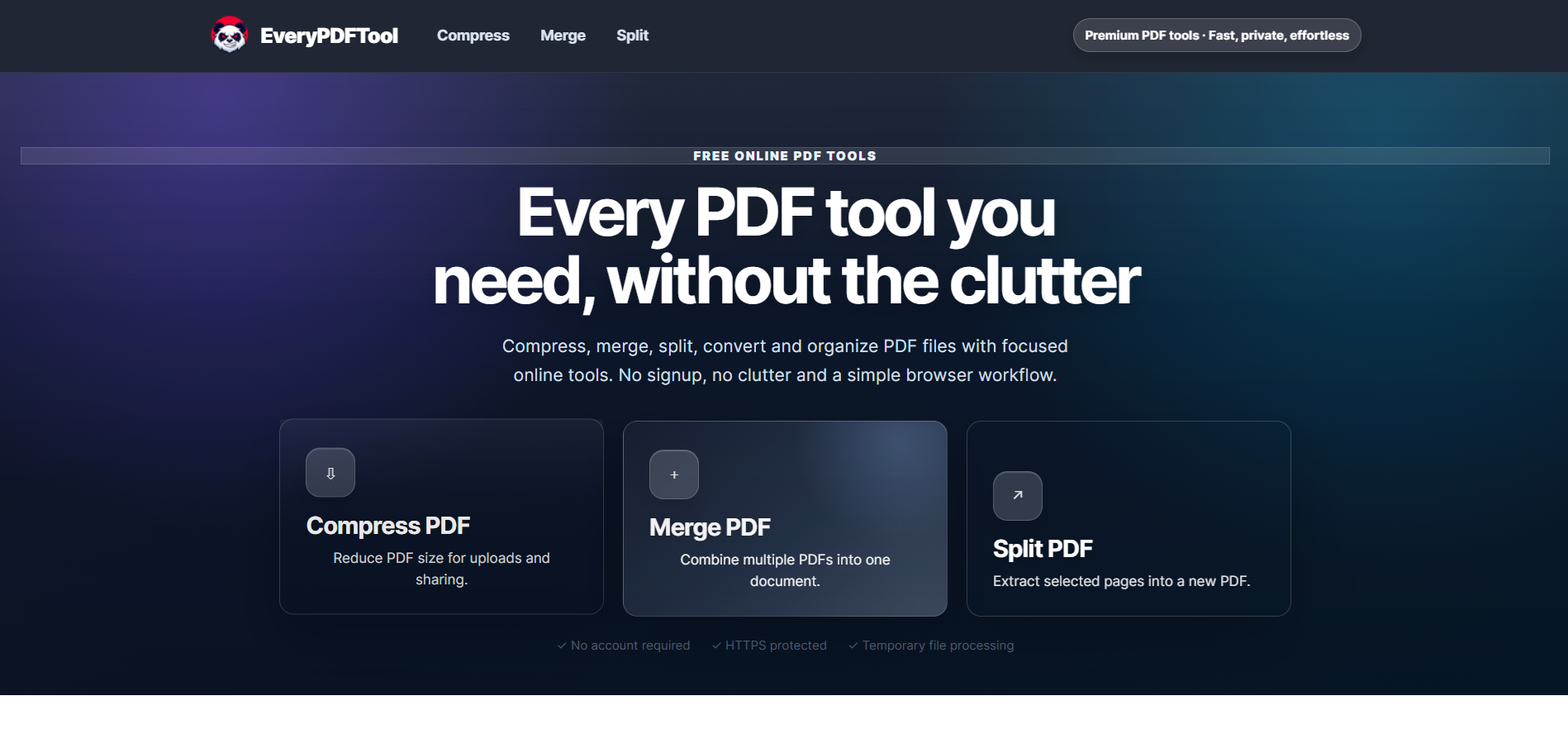
Free Online PDF Tools: Convert, Merge, Split & Compress PDF Files
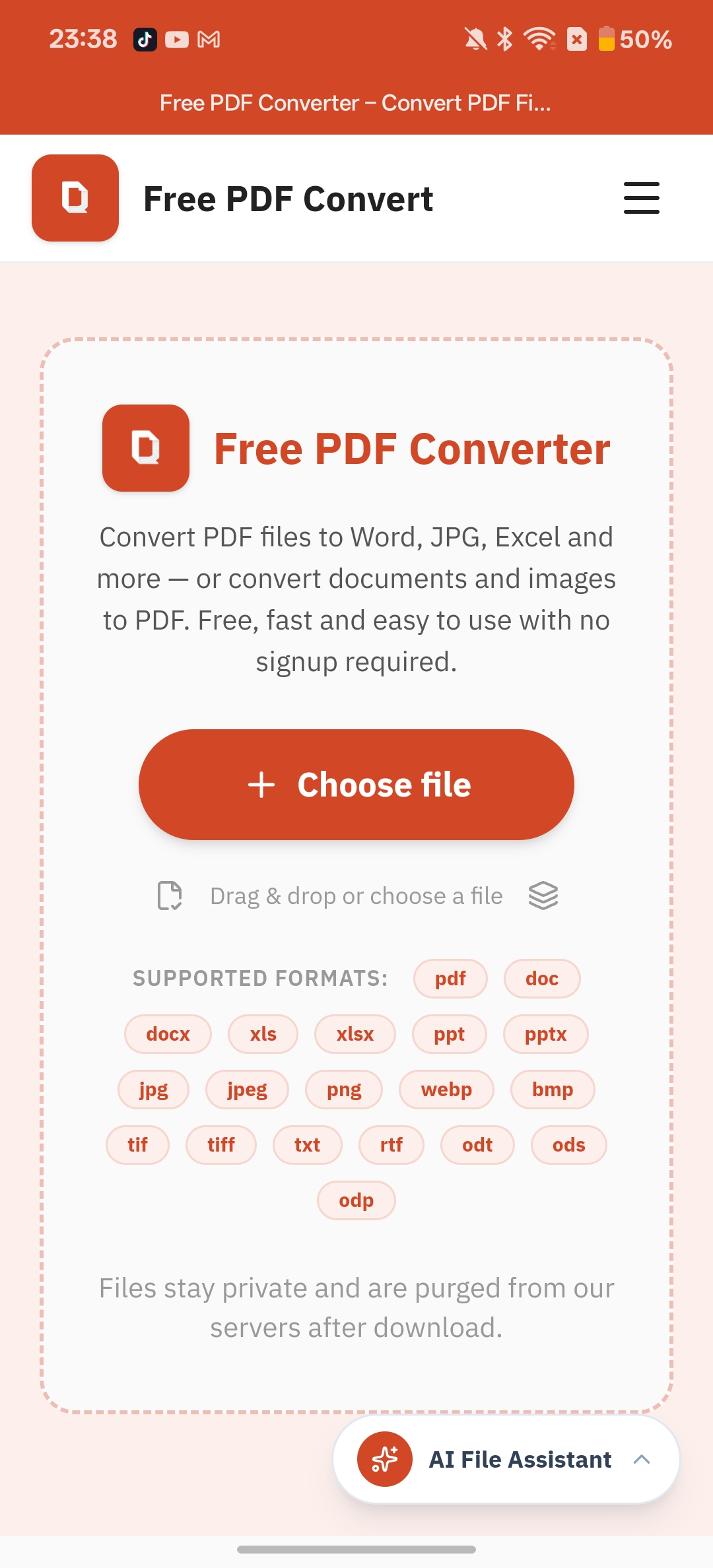
Free Online PDF Tools: Convert, Merge, Split & Compress PDF Files
PDF files have become an important part of everyday digital work. Students use them for assignments and study material, businesses use them for reports and documents, freelancers use them to share work with clients, and individuals use them for storing and sharing important files.
The popularity of PDF comes from its convenience. A PDF document can preserve its layout, fonts, images, and formatting across different devices and operating systems. However, working with PDF files is not always as simple as opening them. People often need to convert images into PDF files, combine multiple documents, extract pages, reduce file size, or convert PDFs into other formats.
This is where online PDF tools can make everyday document management much easier.
Instead of installing separate desktop applications for every task, users can access browser-based PDF tools whenever they need them. "FreePDFConvert.io" (https://freepdfconvert.io/) is one option for users looking for convenient online PDF conversion and management tools.
What Is an Online PDF Converter?
An online PDF converter is a web-based tool that allows users to change files from one format into another. Instead of downloading dedicated software, you can use a browser to access the required conversion tool.
For example, someone who has several PNG images and wants to create a single PDF can use a PNG to PDF converter. Someone working with a presentation may need to convert a PowerPoint file into PDF before sending it to a client.
Depending on the available tools, common conversions include:
- PNG to PDF
- JPG to PDF
- JPEG to PDF
- WEBP to PDF
- TIFF to PDF
- Word to PDF
- Excel to PDF
- PowerPoint to PDF
- PDF to JPG
- PDF to PNG
- PDF to TIFF
The main advantage is convenience. Users can choose the conversion they need without having to learn complicated document-editing software.
Convert Images to PDF Online
Images are frequently used in digital documents, but sending multiple individual image files is not always convenient.
For example, a student might photograph several pages of handwritten notes. A business may have scanned receipts or invoices as JPG files. A designer might have several PNG images that need to be delivered as one document.
Converting these images into a PDF can make them easier to organize and share.
Popular image-to-PDF conversions include JPG to PDF, PNG to PDF, WEBP to PDF, and TIFF to PDF.
When several images belong to the same document, placing them into a single PDF can also make the file easier for another person to read.
JPG to PDF Conversion
JPG is one of the most common image formats on the internet. Photos, scanned documents, screenshots, and other images are often saved as JPG files.
A JPG to PDF converter can be useful when you need to turn one or multiple JPG images into a PDF document.
For example, you might have scanned receipts, photographed documents, product images, ID document scans, class notes, or business records.
Instead of sharing several JPG files separately, you can combine them into a PDF that is easier to store and distribute.
PNG to PDF Conversion
PNG images are widely used when image quality and transparency are important. Screenshots, graphics, diagrams, logos, and digital documents are frequently saved in PNG format.
A PNG to PDF converter can turn these images into PDF documents for easier sharing, printing, or archiving.
This can be especially useful when several PNG files are part of the same project. Rather than sending each image individually, users can organize them into one PDF.
WEBP and TIFF to PDF
WEBP is a modern image format commonly found on websites because it can provide efficient image compression. However, some workflows and document systems may work better with PDF files.
Similarly, TIFF is frequently used for high-quality scans and professional document workflows.
Converting WEBP or TIFF images into PDF can make them more convenient for document sharing and storage.
An online converter can be useful when you only need to perform the task occasionally and do not want to install specialized software.
Convert Office Documents to PDF
PDF conversion is not limited to image files.
Office documents are also commonly converted to PDF before they are shared with other people. A Word document, Excel spreadsheet, or PowerPoint presentation may look slightly different depending on the software or device used to open it.
Converting the finished document into PDF can help preserve its intended appearance.
Common examples include:
Word to PDF: Useful for reports, letters, assignments, resumes, and other text documents.
Excel to PDF: Useful for spreadsheets, financial reports, tables, invoices, and business documents.
PowerPoint to PDF: Useful when a presentation needs to be shared as a document rather than an editable presentation file.
Merge Multiple PDF Files
Another common PDF task is combining multiple files into one document.
Imagine receiving a five-page report in one PDF, supporting documents in another PDF, and an appendix in a third file. Managing three separate files can be inconvenient.
A PDF merge tool can combine multiple PDF files into one document.
This can be useful for:
- Business reports
- School assignments
- Project documentation
- Invoices
- Contracts
- Scanned paperwork
- Research documents
- Application documents
Combining related files can make them easier to organize and share.
Split a PDF Into Separate Documents
The opposite situation can also happen. Sometimes a PDF contains many pages, but you only need a small section.
A PDF splitting tool allows users to extract selected pages or divide a large PDF into smaller documents.
For example, a 50-page document might contain several sections belonging to different projects. Instead of sharing the entire document, you can separate the pages you actually need.
PDF splitting can therefore be useful for organization, document sharing, and file management.
Compress PDF Files to Reduce File Size
Large PDF files can become difficult to upload or send.
Email services, websites, online forms, and messaging platforms may have file-size restrictions. A document that contains many high-resolution images can become particularly large.
A PDF compressor can reduce the file size so the document is easier to upload and share.
PDF compression can be useful when an email attachment is too large, an online form has a file-size limit, a document takes too long to upload, you need to store many PDFs, or you want to share documents more conveniently.
The right compression level depends on the type of document and the required image quality.
PDF Tools for Students
Students frequently work with PDFs for assignments, lecture notes, research papers, scanned documents, and study material.
An online PDF converter can help students organize their files without requiring complicated software.
For example, photographs of handwritten notes can be converted into a PDF, several assignment files can be combined, and unnecessary pages can be separated from a larger document.
This can make digital study material easier to organize.
PDF Tools for Businesses
Businesses also depend heavily on PDF documents.
Reports, invoices, proposals, forms, presentations, contracts, and scanned documents are often exchanged in PDF format.
When employees need to convert, combine, compress, or organize these documents, online PDF tools can provide a convenient solution.
Small businesses and freelancers may particularly benefit from browser-based tools because they can perform occasional PDF tasks without purchasing specialized desktop applications.
PDF Tools for Freelancers and Remote Workers
Freelancers often exchange documents with clients. A designer may need to send a portfolio as a PDF, while a consultant may need to combine several reports into one file.
Remote workers can also encounter PDF-related tasks while collaborating with different teams.
Having access to online PDF utilities can simplify these small but frequent workflow problems.
Why Browser-Based PDF Tools Are Convenient
One of the biggest benefits of browser-based PDF tools is accessibility.
You do not necessarily need to install a large application simply to complete one PDF task. Instead, you can open a browser, select the appropriate tool, upload your document, and complete the required workflow.
This can be especially convenient when working from different computers or when using a device where installing additional software is not practical.
Choosing the Right PDF Tool
The best PDF tool depends on the task you need to complete.
If you have images that need to become a document, choose an image-to-PDF converter.
If you have multiple PDF files that belong together, use a PDF merger.
If you only need certain pages from a large document, use a PDF splitter.
If your PDF is too large to upload, try a PDF compression tool.
If you need to reuse PDF content in another format, look for the appropriate PDF-to-image or document conversion tool.
Choosing a tool based on the specific task can make the workflow faster and simpler.
Final Thoughts
PDF files are an essential part of modern digital communication, but managing them can sometimes require more than simply opening and reading a document.
Converting images and office documents to PDF, merging multiple files, splitting pages, and reducing PDF file sizes are all common tasks.
Online PDF tools provide a convenient way to handle these jobs directly from a web browser. They can be useful for students, businesses, freelancers, professionals, and everyday users who occasionally need to work with documents.
If you are looking for a convenient collection of online PDF conversion and management tools, "FreePDFConvert.io" (https://freepdfconvert.io/) is worth exploring.
Whether you need to convert an image to PDF, organize existing documents, combine files, separate pages, or reduce a PDF's size, using the right online tool can make the process quicker and easier.