Why We Built RestroSuite: Online Ordering Without Giving Away Every Sale
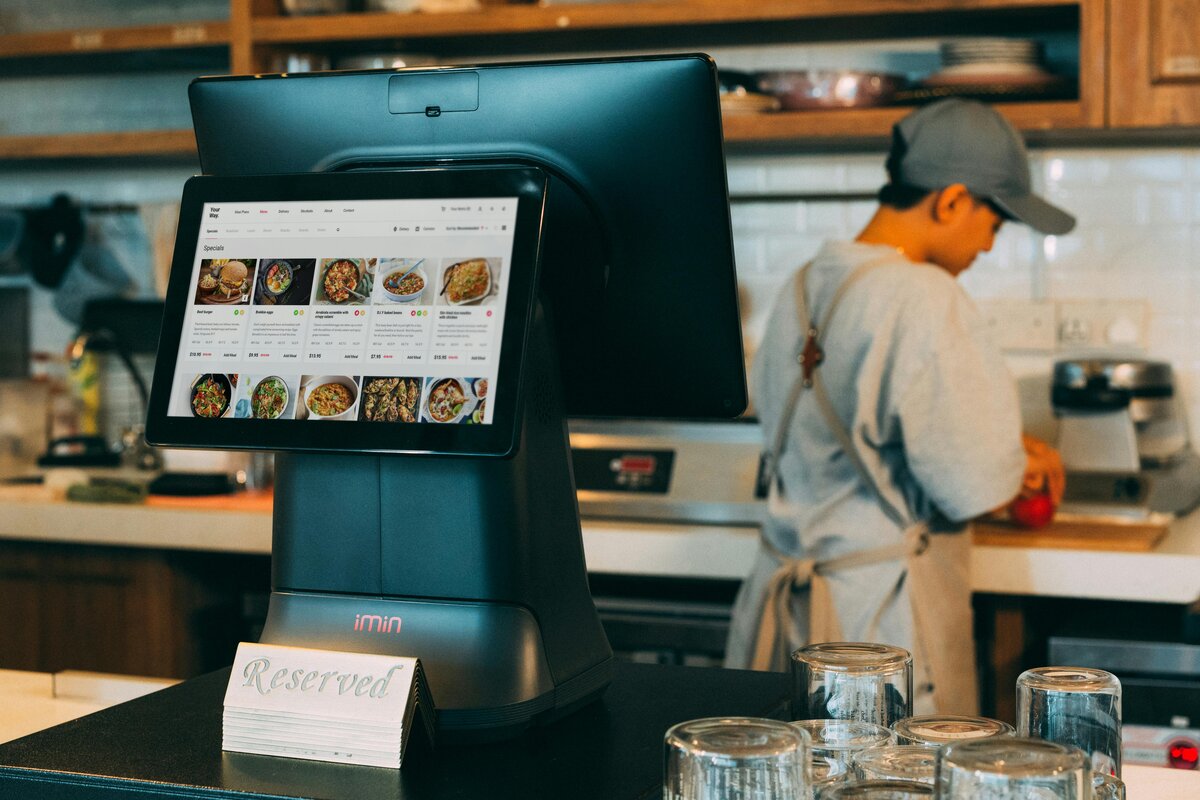
Restaurants shouldn't have to give away a percentage of every direct online order simply because they need software to accept it.
That became one of the principles behind RestroSuite.
Online ordering has become a normal part of running a restaurant. Customers expect to browse a menu on their phone, choose delivery or pickup, pay online and receive confirmation without making a phone call. For restaurants, however, providing that experience often means choosing between expensive custom development, complicated software or platforms that take a percentage of every order.
We believed there should be another option.
The problem with paying more when you sell more
Percentage-based pricing is easy to understand. If a platform brings a restaurant a completely new customer, handles marketing and creates demand that otherwise would not exist, paying a commission can make sense.
Marketplaces provide real value. They offer customer acquisition, discovery and an existing audience.
But we started questioning whether the same model makes sense for every order.
Imagine a customer already knows a restaurant. They search for its name, visit its website and decide to order dinner directly from that business.
The restaurant created the food. It built the reputation. It paid for the ingredients, staff, kitchen, packaging and delivery. It may also have spent years building the relationship with that customer.
Why should the software used to transmit that order become dramatically more expensive simply because the restaurant sells more food?
If a restaurant processes €5,000 in online orders one month and €20,000 the next, the basic job of the ordering software remains largely the same: display the menu, accept the order, process the selected payment method and send the information to the restaurant.
We don't think software providers should automatically earn more simply because a restaurant sold more food.
That became one of the principles behind RestroSuite.
Software should be priced like software
RestroSuite uses a straightforward subscription model rather than charging a percentage commission on orders.
The idea is simple: restaurants pay for access to the software, while the revenue generated by the restaurant stays with the restaurant.
For businesses with only a handful of online orders, the difference may initially seem small. But as direct ordering grows, percentage-based commissions can become a substantial operating expense.
A fixed subscription also makes costs easier to understand.
A restaurant owner should be able to answer a simple question:
How much will my online ordering system cost next month?
We wanted the answer to remain predictable regardless of whether the restaurant has a quiet month or its best month ever.
Growth should be something a restaurant celebrates, not something that automatically increases the percentage of revenue paid to its software provider.
Direct ordering should actually be direct
Cost was only one part of the problem.
We also wanted restaurants to have greater control over how customers interact with their business online.
A restaurant is more than a menu inside somebody else's marketplace.
It has its own name, colors, style, photographs, offers, delivery rules and relationship with its customers. For many independent restaurants, these details are an important part of why customers return.
That is why RestroSuite is designed around the restaurant's own online presence.
A business can operate its ordering website under its own brand and domain, manage its menu, define delivery areas and fees, configure pickup options, set product availability and control the ordering experience.
The customer is ordering from the restaurant, not from a marketplace page that happens to contain the restaurant.
We believe this distinction matters.
Marketplaces can remain an effective acquisition channel. A restaurant does not necessarily need to abandon them.
Instead, direct ordering provides another channel for customers who already know where they want to order.
A marketplace can help a restaurant find new customers.
The restaurant's own ordering system can help it serve returning customers directly.
Those two models can coexist.
Why restaurant software often feels more complicated than it needs to be
Another reason for building RestroSuite was a recurring feeling that business software can accumulate complexity faster than it accumulates usefulness.
Restaurant owners usually do not want another technical project.
They want to change a pizza price, disable a sold-out product, modify delivery fees, add an extra topping or see a new order.
These tasks should not require technical knowledge.
They also should not require navigating through dozens of unrelated settings designed for businesses with completely different workflows.
Our goal with RestroSuite has therefore been to keep common restaurant operations straightforward while still providing the flexibility needed for different menus and delivery models.
Restaurants can manage products, categories, variants, extras, availability, pickup, delivery zones, fees, minimum order values, opening hours, discounts and other ordering rules from one system.
At the same time, customers receive a storefront designed around ordering food rather than navigating a generic e-commerce platform.
That focus is important.
A restaurant does not need software capable of selling industrial machinery, hotel rooms and downloadable PDFs. It needs software that understands that a pizza can have three sizes, additional toppings and different availability hours.
Specialized software can often provide a simpler experience precisely because it does not need to solve every possible problem.
Faster and more reliable should be continuous goals
It would be easy for us to claim that a newer platform is automatically faster, simpler or less prone to problems than every established competitor.
That would not be realistic.
Every software product has bugs, including ours.
Instead, we see reliability, performance and simplicity as continuous engineering goals.
A restaurant ordering system becomes part of the daily operation of a real business. When customers are trying to order dinner on Friday evening, the system cannot treat reliability as an optional feature.
That influences how we think about the product.
We would rather improve the core ordering workflow than continuously add features simply because another platform has them.
We also believe modern software infrastructure gives smaller platforms an opportunity that did not exist to the same extent years ago.
Hosting, deployment, monitoring, payment services and development tooling have all improved dramatically. Building reliable SaaS products is still difficult, but many of the infrastructure costs and technical barriers have fallen.
That raises an obvious question:
If running software infrastructure has become more efficient, should restaurant software necessarily remain expensive?
We think the answer is no.
A restaurant website should do more than display a phone number
Many restaurant websites still function primarily as digital brochures.
They show an address, opening hours, photographs and perhaps a PDF menu. When the customer decides to order, the website sends them somewhere else.
We wanted RestroSuite to treat the restaurant's own website as a sales channel.
The website can present the menu and allow customers to complete the order directly. Restaurants can offer pickup and delivery, configure delivery zones, accept supported online payments and manage incoming orders from the same platform.
This also means the restaurant can promote one destination.
Its own website.
That simplifies marketing.
A QR code on packaging, a Google Business Profile, social media, printed flyers or a returning customer's browser can all lead to the restaurant's own branded ordering experience.
Instead of repeatedly teaching customers to search for the business inside another platform, the restaurant can build recognition around its own domain.
We also wanted pricing to be understandable
Restaurant technology pricing is not always easy to compare.
There can be subscription tiers, transaction fees, setup charges, additional modules and commissions that depend on order volume.
We wanted RestroSuite's basic proposition to be understandable without requiring a spreadsheet.
One subscription gives the restaurant access to the platform, and RestroSuite itself does not take a percentage commission from each order.
Payment processing is different. When a restaurant accepts card or digital-wallet payments, the payment provider may charge its normal transaction fees.
We think that distinction should be clear.
Payment infrastructure costs money to operate, but that does not mean the ordering platform also needs to take an additional percentage of the restaurant's food sales.
Who are we building RestroSuite for?
RestroSuite is primarily aimed at independent restaurants, pizzerias, cafés, takeaways and smaller food businesses that want more control over direct online ordering.
Some are launching online ordering for the first time.
Others already receive orders through marketplaces but want to encourage repeat customers to order directly.
This is also why some restaurants looking for a GloriaFood alternative are moving toward subscription-based direct ordering platforms.
We are not trying to convince every restaurant to abandon every other sales channel.
The goal is simpler:
Every restaurant should have the option to own a direct online ordering channel that remains economically sensible as the business grows.
What comes next
RestroSuite is still evolving.
We continue to improve ordering workflows, menu management, payments, delivery configuration, restaurant websites and the tools businesses use to manage everyday operations.
But the principles behind the platform are unlikely to change.
We want restaurant software to remain focused.
We want pricing to remain understandable.
We want restaurants to control their own brand and direct ordering experience.
And we want increased restaurant sales to be good news for the restaurant rather than an automatic reason for its software bill to increase proportionally.
The technology required to accept an online food order is no longer exotic.
For us, the interesting challenge is not simply proving that restaurant ordering can be done online.
It is proving that it can be done in a way that is simpler, more predictable and more aligned with the interests of the restaurant using the software.
That's why we built RestroSuite.