Firenomics
SoftwareFIRE math that survives contact with reality: withdrawal rates, sequence risk, expected value.
About Firenomics
Firenomics applies expected-value math to financial independence, and it starts from an uncomfortable finding: the famous 4% rule is not a law of nature. One piece walks through why the rule breaks on 50-year horizons - the survival math that holds for a 30-year retirement quietly fails when the retirement runs half a century, and the margin of error widens with every year you add. A companion piece on portfolio concentration shows how a plan built on a handful of mega-cap tech stocks can look fine in a backtest and still break in its first bad decade, because sequence risk - the order in which returns arrive - matters more than the average once you start withdrawing. The same calibration shows up everywhere on the site. A piece on spending fear treats withdrawal strategy as a behavioral problem as much as an arithmetic one, mapping why retirees who can recite their safe withdrawal rate still underspend in downturns, and how to build a withdrawal policy that survives that fear. What Is Your Desired Salary prices a salary the way an investor would: anchor it to a 40% savings rate and the number changes completely. And a piece on guru courses runs the expected-value math on a $997 course against fifteen years of plain index returns - the comparison most buyers never actually run. There is also territory most FIRE content skips: involuntary retirement. Involuntary FIRE and Bridge Income After Late-Career Layoffs covers the version of the plan nobody chooses - a layoff in your fifties - and the bridge-income structures that keep a portfolio intact until a planned withdrawal start. The audience is people who want the math checked, not motivational quotes: savers running their own survival spreadsheets, and skeptics who noticed that every guru's plan works until you stress-test it. New guides publish regularly, and every one shows its assumptions so you can rerun the numbers yourself. Nothing here is personalized financial advice; it is the arithmetic, in public.
What problem it solves
Most FIRE content repeats the 4% rule as if it were settled physics. People planning decades-long retirements need the failure modes: sequence-of-returns risk, concentration in a handful of stocks, 50-year survival math, and the spending fear that makes retirees underspend. Without those numbers a plan can look safe in a backtest and still break in its first decade.
Alternatives & competitors
The alternative to guru courses and motivational FIRE blogs. Where they sell certainty, Firenomics publishes the failure math: 4% rule breakdowns at 50 years, concentration risk in mega-cap portfolios, the expected value of a $997 course versus index returns, and bridge-income plans for layoffs nobody planned. Every piece shows its assumptions so the numbers can be rerun.
Tags
Ratings & reviews
No ratings yet
Be the first to rate Firenomics — your honest take helps others decide.
- No reviews yet — be the first to rate Firenomics.
Similar softwares
Invoice Toolkit
Free, no-signup billing document tools for invoices, estimates, receipts and payment reminders in the browser, with PDF download.
CoinBoss
Real-time crypto liquidations, funding & leverage heatmaps for traders.

OrdoGrid
Peppol invoicing, customers and projects for freelancers and small businesses.
Compare Firenomics
Similar software
BYDFi
Trade crypto on BYDFi with spot, futures, and copy trading. Enjoy low fees, deep liquidity, and secure trading.
PathQuest Solutions
Simplify Accounting with Smart Financial Management Software
CalculatorQueen Roth IRA Calculator
Project Roth IRA growth and compare a simplified annually taxed account.
Phoenix Command
Phoenix Command is a private trading journal and analytics workspace for logging trades, reviewing execution, measuring performance, and improving your process.

Capvant
Capvant is a business funding marketplace that helps SMEs compare competing lending and finance offers in one place.
Sole Accounting App
Sole is an end-to-end accounting platform designed to support both small businesses and the accounting and bookkeeping firms that work with them
Related reads
Best Accounting Software for Truckers (2026 Guide)
The accounting and bookkeeping tools that help truckers and owner-operators handle IFTA, expenses and invoicing without the paperwork headache.
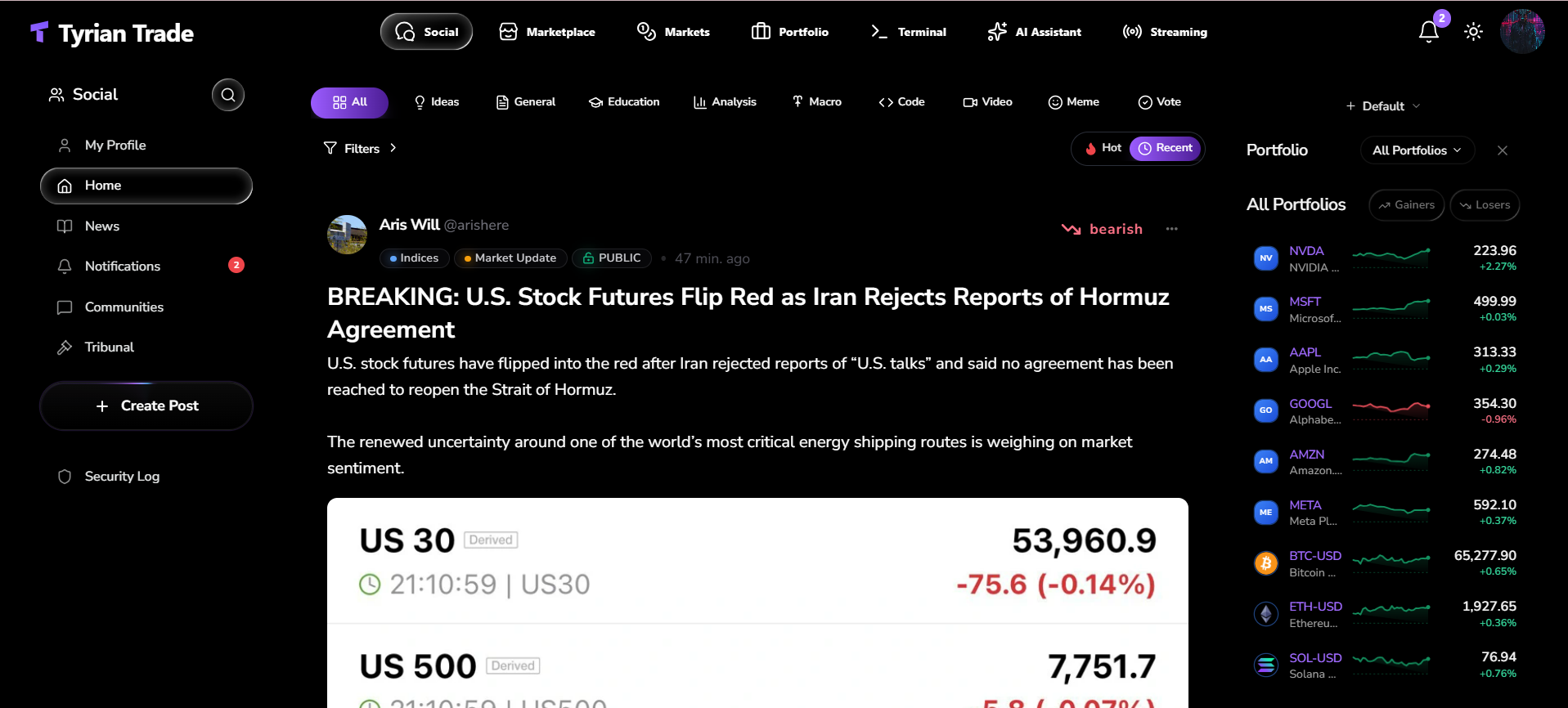
Why I Founded Tyrian Trade: Building a More Trusted Layer for Online Finance
Tyrian Trade was founded on a simple belief: financial communities need more than information—they need trust. As online finance becomes increasingly crowded with opinions, creators, strategies, and t
Best Invoicing Software for Freelance Videographers (2026)
Invoicing and business tools that help freelance videographers send contracts, collect deposits, get paid on time and keep the books clean.
Community discussion (0)
Ask questions, share tips, or compare notes with other Firenomics users.