The Best Fly.io Alternatives in 2026
Tolodora Editorial Team
Independent software reviews for founders and small businesses.
Fly.io is a developer cloud that runs applications as fast-booting VMs distributed across dozens of regions worldwide, giving apps low-latency access to users wherever they are. It bundles managed Postgres, private networking, and a low-level Machines API for teams that want fine-grained control over how and where their containers run.
That per-second billing and edge-first architecture isn't the right fit for every team, though: some want flatter, more predictable pricing, deeper integration with a cloud provider they already use, or a gentler learning curve than Fly's Machines API. Railway and Render are the most commonly searched general-purpose Fly.io alternatives, while DigitalOcean App Platform, Koyeb, AWS App Runner, and Heroku each fit more specific needs around cost, ecosystem, or deployment model.

Comparing against the original?
See Fly.io's profile, rating & reviews on Tolodora →
| # | Tool | Best for | Rating |
|---|---|---|---|
| 1 | Railway | Solo developers and small teams who want Heroku-style simplicity with modern usage-based billing. | 4.2/5 |
| 2 | Render | Teams that want fixed, easy-to-forecast monthly bills instead of usage-based metering. | 4.2/5 |
| 3 | DigitalOcean App Platform | Developers already on DigitalOcean who want a PaaS layer without leaving the ecosystem. | 4.1/5 |
| 4 | AWS App Runner | Enterprises and AWS-native teams that need App Runner to sit alongside existing AWS infrastructure. | 3.5/5 |
| 5 | Heroku | Teams that value Heroku's long-standing stability and add-on marketplace over cutting-edge features. | 3.6/5 |
| 6 | Koyeb | Teams that want Fly-like multi-region deployment but with autoscaling handled more automatically. | 3.6/5 |
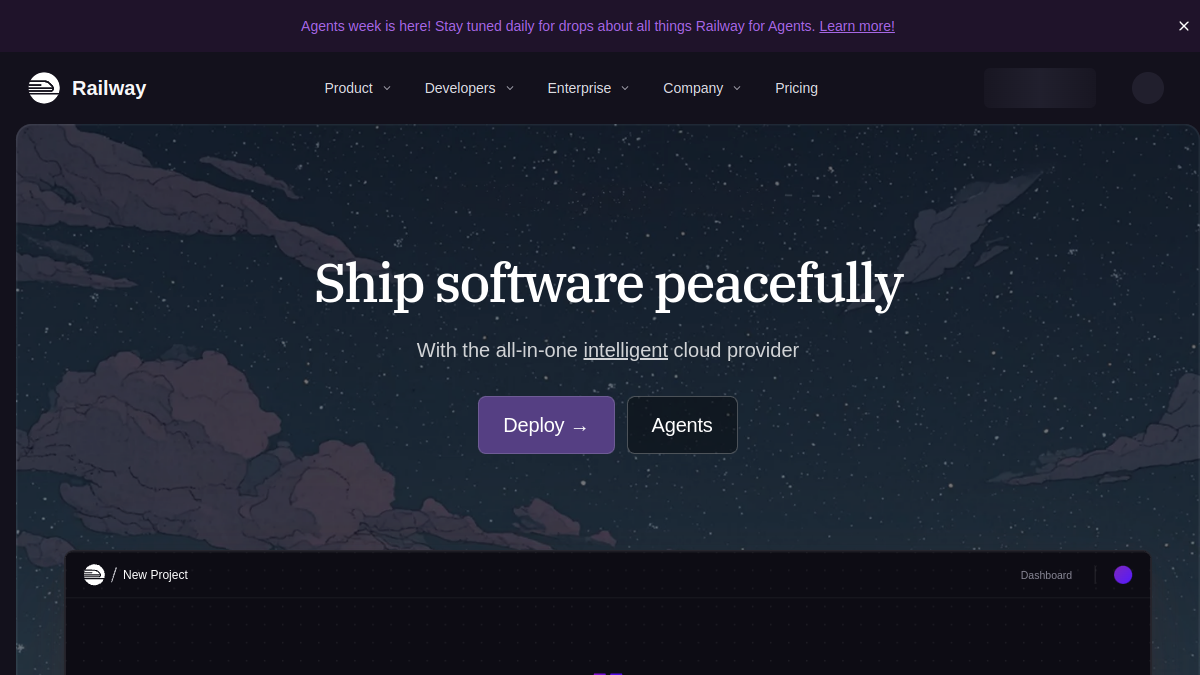
Railway
- Pricing
- 7.8/10
- Functionality
- 8.3/10
- Ease of use
- 9.2/10
- Support
- 7.9/10
What I like
Deploys straight from a GitHub repo in minutes with zero-config builds and a genuinely pleasant dashboard.
Best for
Solo developers and small teams who want Heroku-style simplicity with modern usage-based billing.
Like Fly.io, Railway bills per second for actual usage rather than fixed instance sizes, but it trades Fly's global edge-region footprint for a smaller set of core regions and a much shallower learning curve. Railway's dashboard and one-click database provisioning make it the more approachable choice for teams that don't need Fly's fine-grained Machines API or worldwide latency optimization.
Render
- Pricing
- 8.1/10
- Functionality
- 8.0/10
- Ease of use
- 9.0/10
- Support
- 8.2/10
What I like
Predictable flat-rate pricing plans and a usable free tier for static sites and small hobby services.
Best for
Teams that want fixed, easy-to-forecast monthly bills instead of usage-based metering.
Where Fly.io charges per second of actual compute, Render bills a flat price per instance size, trading some cost efficiency for predictability. Render also runs in fewer regions than Fly's edge network, so it suits apps that don't need to run close to users on every continent, favoring operational simplicity over global latency optimization.
DigitalOcean App Platform
- Pricing
- 8.5/10
- Functionality
- 7.6/10
- Ease of use
- 8.4/10
- Support
- 8.3/10
What I like
Low starting prices and easy access to DigitalOcean's broader ecosystem of Droplets, Spaces, and managed databases.
Best for
Developers already on DigitalOcean who want a PaaS layer without leaving the ecosystem.
App Platform runs out of DigitalOcean's own data centers, which cover far fewer regions than Fly.io's edge network, making it a better fit for centralized apps than latency-sensitive global ones. It's generally cheaper than Fly at small scale and ties in cleanly with DigitalOcean's Droplets and managed Postgres if you want more infrastructure control later.

AWS App Runner
- Pricing
- 6.4/10
- Functionality
- 8.1/10
- Ease of use
- 6.1/10
- Support
- 7.6/10
What I like
Deep native integration with the rest of AWS, including VPC, IAM, and RDS, for teams already committed to the ecosystem.
Best for
Enterprises and AWS-native teams that need App Runner to sit alongside existing AWS infrastructure.
App Runner is AWS's managed container service, and it's considerably more involved to configure than Fly.io's Machines API, with pricing based on provisioned vCPU and memory rather than Fly's per-second billing. It makes the most sense if you already run on AWS and want your app tier wired into existing VPCs, IAM roles, and RDS databases rather than optimizing for global edge latency.
Heroku
- Pricing
- 5.4/10
- Functionality
- 6.7/10
- Ease of use
- 8.5/10
- Support
- 7.8/10
What I like
The original git-push deploy workflow and a mature buildpack and add-on ecosystem built up over more than a decade.
Best for
Teams that value Heroku's long-standing stability and add-on marketplace over cutting-edge features.
Heroku now runs in a sustaining-engineering mode with few new features, and it typically costs more than Fly.io for comparable workloads since removing its free tier in 2022. Its appeal versus Fly is familiarity and ecosystem maturity rather than performance or global reach, since Heroku doesn't offer Fly's fast-booting, multi-region VM model.
Koyeb
- Pricing
- 6.1/10
- Functionality
- 7.7/10
- Ease of use
- 7.9/10
- Support
- 6.9/10
What I like
A global deployment model conceptually closest to Fly.io, with git-based deploys spread across multiple regions.
Best for
Teams that want Fly-like multi-region deployment but with autoscaling handled more automatically.
Koyeb is philosophically the closest match to Fly.io among these alternatives, offering multi-region app deployment and autoscaling out of the box. Since Koyeb's 2026 acquisition by Mistral AI, however, its free Starter tier has closed to new users and its roadmap has shifted toward AI inference and GPU workloads, so teams evaluating it purely as a general web-app host should confirm its current plans before committing.
The verdict
Railway and Render cover the closest general-purpose alternatives to Fly.io for most teams, DigitalOcean App Platform and Koyeb suit cost-conscious or multi-region projects, and AWS App Runner and Heroku fit teams already anchored to AWS or Heroku's legacy ecosystem respectively.
Whatever you shortlist, run your real work through it for a week before committing — the right tool is the one that quietly disappears and lets you get back to it. And if you build software like this yourself, you can list it on Tolodora free.
Frequently asked questions
Is there a truly free alternative to Fly.io?
Render offers the most usable free tier among these alternatives, though free instances spin down after periods of inactivity. Railway and Koyeb no longer offer meaningful free tiers to new users as of 2026.
Which Fly.io alternative is best for global, multi-region apps?
Koyeb is the closest match to Fly.io's multi-region deployment model, though its roadmap has shifted toward AI workloads since its 2026 acquisition by Mistral AI. DigitalOcean App Platform and Render both run in fewer regions than Fly.io.
Which Fly.io alternative is cheapest for a small hobby app?
DigitalOcean App Platform and Render tend to be the cheapest starting points for small apps, with paid tiers starting around $5-7 a month, though actual costs depend heavily on usage patterns and traffic.
Keep exploring
Building one of these alternatives?
List your tool on Tolodora and get discovered by buyers comparing options.
Launch Your Product