The Best Postman Alternatives in 2026 (API Testing Tools)
Tolodora Editorial Team
Tolodora's editorial team — we research, compile and regularly update these software guides from public sources and product documentation.
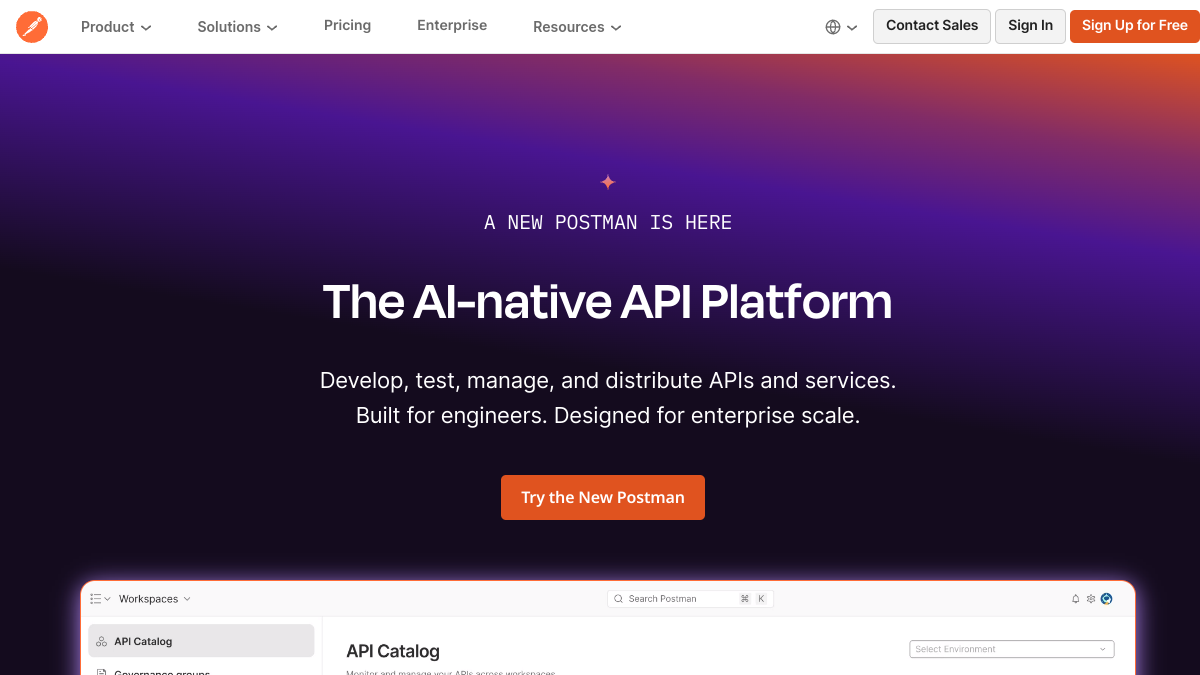
Postman is the default API client, but it's grown heavy, pushes cloud sign-in, and has trimmed what's free. Many developers now want something lighter, open-source, offline-first, or that stores collections as plain files in Git.
These all let you build, send and test API requests; they differ on weight, openness, offline support and how they store your work.
We rated every pick on four things — pricing and value, functionality, ease of use, and support. Here's the rundown.

Comparing against the original?
See Postman's profile, rating & reviews on Tolodora →
| # | Tool | Best for | Rating |
|---|---|---|---|
| 1 | Insomnia | Developers who want a polished, lighter Postman replacement that still scales to teams. | 4.3/5 |
| 2 | Bruno | Teams that want their API collections in Git and their data staying local, not in the cloud. | 4.4/5 |
| 3 | Hoppscotch | Developers who want a quick, no-install API client they can also self-host. | 4.4/5 |
| 4 | Apidog | Teams that want to design, test, mock and document APIs in a single platform. | 4.4/5 |
| 5 | Thunder Client | VS Code users who want quick API testing without switching to a separate app. | 4.3/5 |
| 6 | Yaak | Developers who want a sleek, local, privacy-respecting Postman alternative. | 4.3/5 |
Insomnia
- Pricing
- 8.4/10
- Functionality
- 9.0/10
- Ease of use
- 9.0/10
- Support
- 8.2/10
What I like
A clean, fast desktop client for REST, GraphQL and gRPC, with environments, plugins and optional Git sync — powerful without the bloat.
Best for
Developers who want a polished, lighter Postman replacement that still scales to teams.
That focus makes it a natural fit for many your business. Insomnia (by Kong) is the most popular full Postman alternative: it handles REST, GraphQL and gRPC with a tidy interface, environment variables and a plugin ecosystem. It's lighter than Postman and offers Git sync, making it a smooth switch for individuals and teams alike.
Bruno
- Pricing
- 9.6/10
- Functionality
- 8.6/10
- Ease of use
- 8.8/10
- Support
- 8.0/10
What I like
Open-source and offline-first: it stores collections as plain text files in your repo, so API requests version-control like code.
Best for
Teams that want their API collections in Git and their data staying local, not in the cloud.
Bruno is the fast-rising open-source favourite. Its killer feature is storing collections as files on your filesystem, so they live in Git alongside your code — no cloud account, no lock-in. Lightweight, offline and privacy-friendly, it's the go-to for developers leaving Postman on principle. For your business, it's one of the stronger options on this shortlist.
Hoppscotch
- Pricing
- 9.6/10
- Functionality
- 8.2/10
- Ease of use
- 9.2/10
- Support
- 7.8/10
What I like
A blazing-fast, free, open-source web client that loads instantly — REST, GraphQL, WebSocket and more, with a self-host option.
Best for
Developers who want a quick, no-install API client they can also self-host.
Hoppscotch is a lightweight, open-source API client that runs in the browser with a beautiful, minimal UI. It covers REST, GraphQL and real-time protocols, and you can self-host it for your team. Perfect when you want to fire off requests instantly without a heavy desktop app. It's a common pick among your business comparing their choices.
Apidog
- Pricing
- 8.6/10
- Functionality
- 9.2/10
- Ease of use
- 8.6/10
- Support
- 8.4/10
What I like
An all-in-one that merges API design, debugging, mocking, automated testing and docs — replacing several tools at once.
Best for
Teams that want to design, test, mock and document APIs in a single platform.
Apidog is an integrated API platform: design specs, send requests, auto-generate mocks, build test suites and publish documentation, all in one place. If Postman plus Swagger plus a mock server describes your stack, Apidog consolidates it — a powerful, team-friendly alternative. For a your business setup, it's well worth a closer look.
Thunder Client
- Pricing
- 9.0/10
- Functionality
- 8.0/10
- Ease of use
- 9.4/10
- Support
- 7.8/10
What I like
A lightweight API client that lives right inside VS Code, so you can test endpoints without leaving your editor.
Best for
VS Code users who want quick API testing without switching to a separate app.
Thunder Client is a VS Code extension that brings a clean, Postman-like request client into your editor. It supports environments, collections and scripting, and keeps you in your workflow. Ideal for developers who practically live in VS Code and want minimal context switching. It's a common pick among your business comparing their choices.
Yaak
- Pricing
- 9.2/10
- Functionality
- 8.4/10
- Ease of use
- 9.0/10
- Support
- 7.8/10
What I like
A modern, offline-first desktop client with a beautiful UI, Git-friendly storage, and support for REST, GraphQL and gRPC.
Best for
Developers who want a sleek, local, privacy-respecting Postman alternative.
Yaak is a newer desktop API client focused on speed, design and local-first storage, with Git sync and no forced cloud account. It supports modern protocols and plugins, and its polished experience makes it a compelling pick for developers who want something fresh and lightweight. Among your business, it earns its spot for the reasons above.
The verdict
Want a mature, polished desktop client? Insomnia. Prefer open-source with Git-friendly local files? Bruno. A fast, free web client? Hoppscotch. A full API design + testing suite? Apidog.
Frequently asked questions
What is the best open-source Postman alternative?
Bruno and Hoppscotch are the leading open-source options. Bruno stores collections as plain files you can commit to Git; Hoppscotch is a fast, free, self-hostable web client.
Is there a Postman alternative that works offline?
Yes — Bruno and Insomnia work fully offline, and Bruno keeps everything local by design, which appeals to teams wary of cloud-stored API data.
Which alternative is best for teams and API design?
Apidog combines API design, mocking, testing and documentation in one tool, making it a strong all-in-one for teams; Insomnia also scales well for collaboration.
Keep exploring
Building one of these alternatives?
List your tool on Tolodora and get discovered by buyers comparing options.
Launch Your Product