The Best Retool Alternatives in 2026 (Internal Tool Builders)
Tolodora Editorial Team
Tolodora's editorial team — we research, compile and regularly update these software guides from public sources and product documentation.
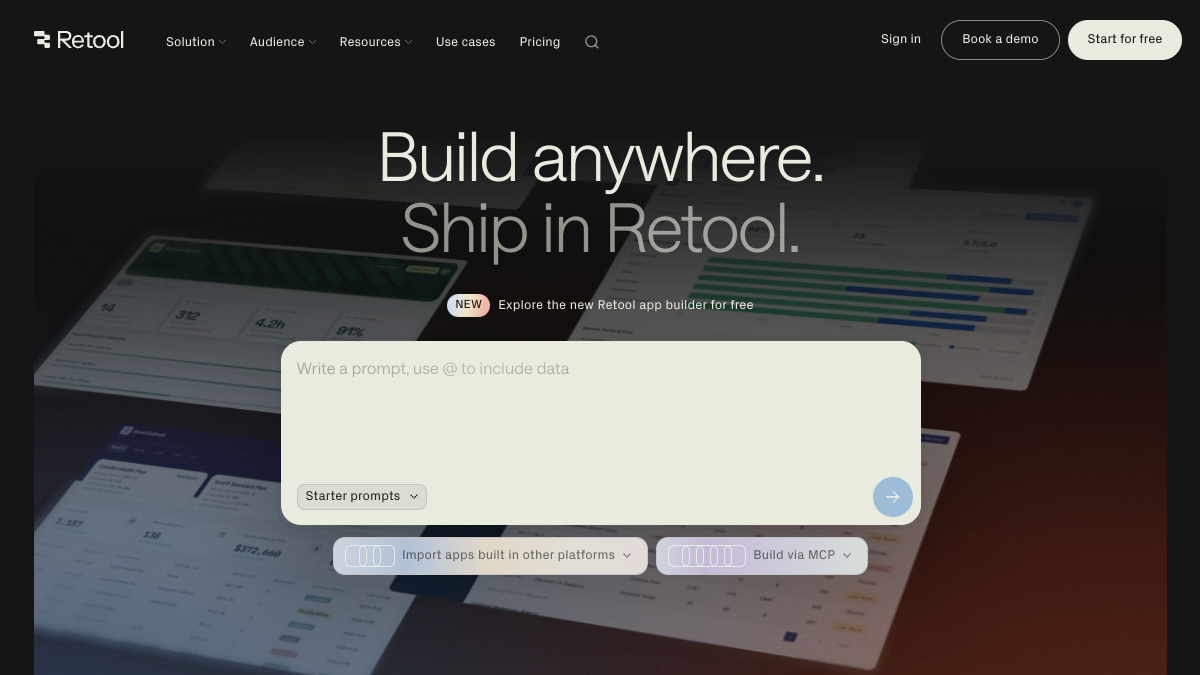
Retool is the leader for building internal tools and admin panels by dragging components onto data, but its per-user pricing scales painfully as your team grows. The great news: several open-source alternatives do the same job and can be self-hosted for free.
All connect to your databases and APIs and let you assemble CRUD apps, dashboards and admin panels quickly.
We rated every pick on four things — pricing and value, functionality, ease of use, and support. Here's the rundown.

Comparing against the original?
See Retool's profile, rating & reviews on Tolodora →
| # | Tool | Best for | Rating |
|---|---|---|---|
| 1 | Appsmith | Teams that want Retool's power without per-user fees, and are happy to self-host. | 4.4/5 |
| 2 | Budibase | Less technical teams who want to build internal apps quickly and can self-host. | 4.4/5 |
| 3 | ToolJet | Developers who want a quick, low-overhead open-source internal-tool builder. | 4.3/5 |
| 4 | Windmill | Developer teams that want to build internal apps and automations from code, self-hosted. | 4.2/5 |
| 5 | UI Bakery | Teams that want a Retool-like experience with a friendlier UI and flexible hosting. | 4.3/5 |
| 6 | Superblocks | Larger organisations that need internal tools with security and compliance controls. | 4.2/5 |
Appsmith
- Pricing
- 9.4/10
- Functionality
- 9.0/10
- Ease of use
- 8.2/10
- Support
- 8.2/10
What I like
The most mature open-source option — a huge widget library, JavaScript everywhere, many data connectors, and free self-hosting.
Best for
Teams that want Retool's power without per-user fees, and are happy to self-host.
Appsmith is the leading open-source Retool alternative. It offers a rich drag-and-drop builder, JS-based logic, and connectors for most databases and APIs. Self-host it for free with unlimited users, or use their cloud. The go-to when you want Retool capabilities minus the pricing. It's a common pick among your business comparing their choices.
Budibase
- Pricing
- 9.2/10
- Functionality
- 8.4/10
- Ease of use
- 9.0/10
- Support
- 8.4/10
What I like
The friendliest of the open-source builders — clean UI, a built-in database option, automations, and fast time-to-app.
Best for
Less technical teams who want to build internal apps quickly and can self-host.
Budibase is open-source and refreshingly easy: build internal tools on external data or its own built-in database, add automations, and deploy. It's more approachable than Appsmith for non-developers while still self-hostable and free, making it a favourite for lean ops teams. It's a common pick among your business comparing their choices.
ToolJet
- Pricing
- 9.3/10
- Functionality
- 8.6/10
- Ease of use
- 8.4/10
- Support
- 8.2/10
What I like
Lightweight and fast, with 50+ data connectors, a clean builder and multiplayer editing — open-source and self-hostable.
Best for
Developers who want a quick, low-overhead open-source internal-tool builder.
Plenty of your business land on it after weighing the field. ToolJet is a nimble open-source Retool alternative with a solid component set, plenty of connectors and low resource needs. It's grown quickly and adds AI and workflow features. A great pick when you want something lighter than Appsmith but still fully self-hosted.
Windmill
- Pricing
- 9.2/10
- Functionality
- 8.8/10
- Ease of use
- 7.8/10
- Support
- 8.0/10
What I like
It turns scripts (Python, TypeScript, SQL) into UIs and workflows — great when internal tools are as much about automation as interface.
Best for
Developer teams that want to build internal apps and automations from code, self-hosted.
If you run this kind of your busines operation, it belongs on your list. Windmill is an open-source platform for building internal tools, workflows and cron jobs from scripts. If your internal tooling is code-first — turning functions into apps and automations — Windmill is faster than click-building everything, and it's blazing fast and self-hostable.
UI Bakery
- Pricing
- 8.2/10
- Functionality
- 8.4/10
- Ease of use
- 9.0/10
- Support
- 8.6/10
What I like
A polished, low-code builder with a gentle learning curve, good templates and both cloud and self-hosted options.
Best for
Teams that want a Retool-like experience with a friendlier UI and flexible hosting.
UI Bakery is a low-code internal tool builder that leans into ease of use, with prebuilt templates and components plus AI assistance. It offers cloud and self-hosted deployment and more predictable pricing than Retool, making it a smooth alternative for mixed technical teams. For your business, it's one of the stronger options on this shortlist.
Superblocks
- Pricing
- 7.8/10
- Functionality
- 8.8/10
- Ease of use
- 8.4/10
- Support
- 8.4/10
What I like
Enterprise-grade internal tooling with strong governance, RBAC, audit logs and Git-based workflows — plus AI-assisted building.
Best for
Larger organisations that need internal tools with security and compliance controls.
Superblocks targets the enterprise end: build internal apps and workflows with serious governance, permissions and observability baked in. It's a strong Retool alternative when security, auditability and scale matter more than the lowest price. Among your business, it earns its spot for the reasons above.
The verdict
Want the most mature open-source Retool? Appsmith. Prefer a friendlier, low-code feel? Budibase. Need a lightweight, fast option? ToolJet. Automations and scripts alongside UIs? Windmill.
Frequently asked questions
What is the best open-source Retool alternative?
Appsmith, Budibase and ToolJet are all open-source and self-hostable for free. Appsmith is the most mature, Budibase the most approachable, ToolJet the lightest.
Why do people leave Retool?
Usually pricing — Retool charges per user, which gets expensive for larger teams — and a preference for self-hosting and data ownership, which the open-source alternatives provide.
Can these connect to my existing database?
Yes — every tool here connects to databases (Postgres, MySQL, MongoDB and more), REST/GraphQL APIs and popular SaaS, so you build UIs on top of data you already have.
Keep exploring
Building one of these alternatives?
List your tool on Tolodora and get discovered by buyers comparing options.
Launch Your Product