Attio vs HubSpot: Which CRM Should You Use in 2026?
A CRM is where your customer relationships live, so choosing one matters — and the choice increasingly comes down to two very different philosophies. HubSpot is the established, all-in-one CRM-and-marketing platform that powers countless businesses. Attio is the modern, flexible, data-driven challenger that startups and relationship-led teams have been flocking to. I've used both, so this is my honest Attio vs HubSpot comparison for 2026 — the real differences, what I like about each, and which CRM I'd actually recommend depending on who you are.
The quick version
Short answer: HubSpot is the mature, all-in-one platform combining CRM, marketing, sales and service with a vast feature set and ecosystem, while Attio is the modern, highly-flexible, data-driven CRM built for how teams actually work today, with a clean design and powerful customization. If you want an established all-in-one suite with deep marketing and service features and a huge ecosystem, HubSpot delivers. If you want a flexible, modern, beautifully-designed CRM that adapts to your workflow and feels fresh, Attio is superb — especially for startups and relationship-driven teams. The core split: HubSpot's breadth and maturity versus Attio's flexibility and modern design.
What they both do
The common ground covers the heart of a CRM. Both let you store and manage your contacts, companies and deals, track interactions and relationships, manage a sales pipeline, and keep your team aligned on who's doing what with which customer. Both help you avoid letting leads and relationships slip through the cracks, and both integrate with other tools. So for the core job of managing your customer relationships and sales process, either one does it. The differences are in flexibility and customization, design and modernity, the breadth of the platform (all-in-one suite vs focused CRM), pricing, and who each is really built for — and those are what determine which fits your team.
Where HubSpot shines
HubSpot is the established all-in-one platform, and that breadth is its strength. Beyond CRM, it offers deep marketing, sales and service tools — email marketing, automation, landing pages, ticketing and more — so you can run much of your go-to-market from one connected suite. It's mature, with a vast feature set, an enormous ecosystem of integrations and resources, and the reassurance of a widely-used, well-supported platform. For businesses that want an all-in-one system tying CRM together with marketing and service, deep features, and a big ecosystem — and who'll use that breadth — HubSpot is outstanding. Its maturity and the convenience of having sales, marketing and service connected in one platform are real advantages, especially for companies that want one system for everything.
Where Attio shines
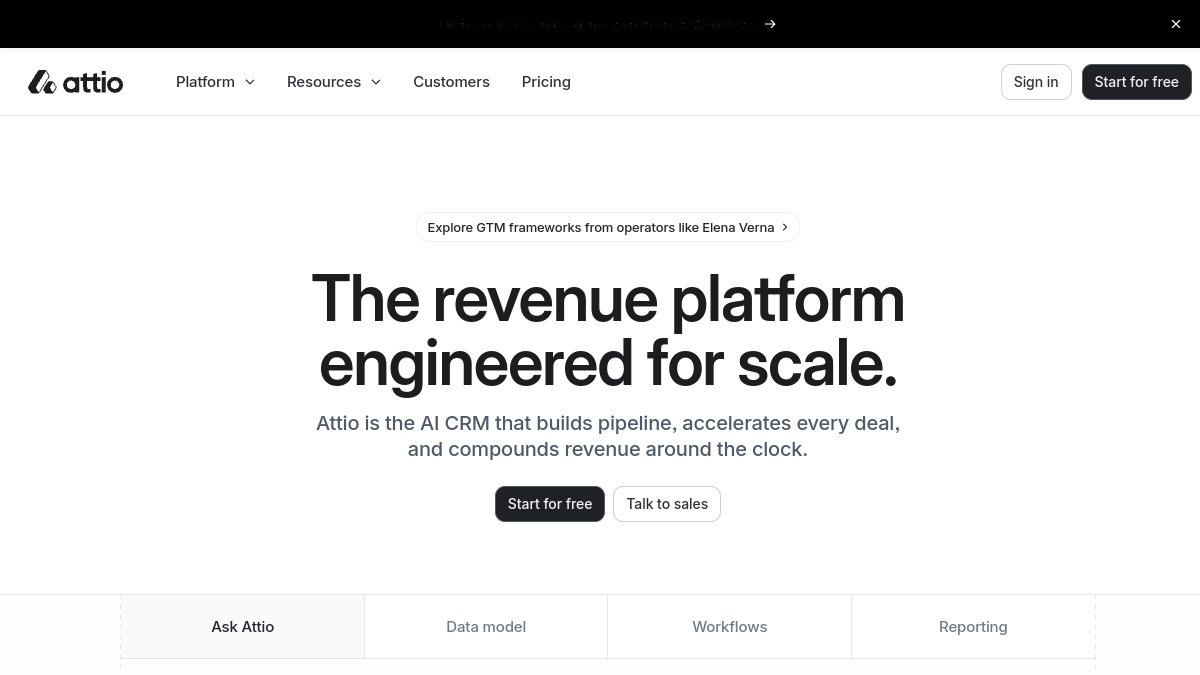
Attio's appeal is flexibility, modern design, and being built for how teams work today. It's highly customizable — you can shape it to fit your specific workflow, data and processes rather than bending to a rigid structure — and it's data-driven, treating your CRM like a powerful, flexible database of relationships. It's beautifully designed, fast, and feels genuinely modern, with real-time collaboration and increasingly smart, AI-assisted features. For startups, modern teams, and relationship-led businesses who want a CRM that adapts to them, looks and feels great to use, and isn't bloated with features they don't need, Attio is a standout. It represents a fresh take on what a CRM can be — flexible, elegant and modern — which is exactly why so many newer companies are choosing it over heavier, older systems.
The core difference: all-in-one vs flexible CRM
The heart of this comparison is breadth versus flexibility and focus. HubSpot is an all-in-one suite — CRM plus marketing, sales and service in one platform — which is powerful if you want everything connected in one system, but can be heavier and more rigid. Attio is a focused, highly-flexible CRM that adapts to your workflow and treats relationships as flexible data, which is elegant and modern but isn't trying to be a full marketing-and-service suite. So the decision largely comes down to what you want: an established all-in-one platform that does CRM plus marketing and service (HubSpot), or a modern, flexible, beautifully-designed CRM that adapts to how you work (Attio). That distinction — broad suite versus focused, flexible CRM — points most teams clearly toward one or the other based on their needs and stage.
Flexibility and modern design
Where Attio really distinguishes itself is flexibility and design. Its data-driven, highly-customizable model lets teams build a CRM that matches exactly how they think about their relationships and process, rather than forcing them into a predefined structure — which feels liberating for teams whose workflow doesn't fit a rigid template. And its modern, fast, elegant design makes it genuinely pleasant to use, with collaboration that feels current. HubSpot is capable and customizable too, but as a mature, broad platform it can feel heavier and less fresh. So if flexibility to shape your CRM to your workflow, and a modern, delightful experience, matter to you — as they often do for startups and design-conscious teams — Attio has a clear edge. For teams that prize adaptability and modern feel, this is frequently the deciding factor.
Which I'd pick for you
My recommendation: choose HubSpot if you want an established, all-in-one platform combining CRM with deep marketing, sales and service features and a vast ecosystem, and you'll use that breadth — it's a powerful, connected system for businesses that want everything in one place. Choose Attio if you want a modern, flexible, beautifully-designed CRM that adapts to your workflow and feels great to use, especially as a startup or relationship-led team that doesn't need a full marketing suite. Personally, I love Attio's flexibility and modern feel for focused CRM needs, while I'd point a business wanting all-in-one CRM-plus-marketing toward HubSpot. Decide based on whether you want broad all-in-one capability or a flexible, modern, focused CRM.
Can you switch?
Switching CRMs is real work, since your customer data and process are involved, but it's very doable — both let you import and export your data, so you can move your contacts, companies and deals between them, then rebuild your views and workflow in the new tool. A common path is startups beginning on a flexible, modern CRM like Attio that fits their evolving workflow, or businesses on HubSpot reconsidering if they find it heavier than they need. Because your CRM is central, it's worth being deliberate about a move and planning the migration, but the portability of your data means you're not permanently locked in. Given Attio and HubSpot both offer ways to try them, you can evaluate the fit on real data before committing, which takes much of the risk out of the decision.
The wider field of CRMs
Attio and HubSpot are a great matchup, but the CRM space has more worth knowing. If your main need is a clean, visual sales pipeline, Pipedrive is excellent and sales-focused. If you want strong value with a broad feature set, Zoho CRM offers a lot for the price. If you want simplicity for a small team or relationship-driven work, tools like Folk and Capsule keep things light and pleasant. And at the enterprise end, Salesforce remains the powerful, highly-customizable giant. The point is that CRMs span modern and flexible (Attio), all-in-one suites (HubSpot), sales-focused (Pipedrive), value all-rounders (Zoho), simple and light (Folk, Capsule), and enterprise (Salesforce) — so the right choice depends on your size, needs and how much breadth versus focus you want. Attio versus HubSpot captures the modern-flexible-versus-established-all-in-one choice especially well for startups and growing teams.
The honest caveats
For balance, each has trade-offs. HubSpot's caveats are that its all-in-one breadth can feel heavy and more rigid than focused tools, and its pricing climbs significantly as you add features and contacts — many find the useful capabilities sit behind tiers that get expensive. Attio's caveats are that, being a focused, modern CRM, it isn't a full marketing-and-service suite, so if you want all of that in one platform you'd pair it with other tools; and being newer, its ecosystem, while growing, isn't as vast as HubSpot's. Both also share the reality that a CRM only delivers value if your team actually adopts and updates it consistently — the best CRM is the one people use. Knowing whether you want broad all-in-one capability (HubSpot) or flexible, modern, focused CRM (Attio), based on your stage and needs, makes the choice clear.
A practical way to decide
Here's a simple way to choose. Start by asking what you actually need beyond core CRM. If you want marketing, sales and service tools connected in one platform and you'll genuinely use that breadth, HubSpot's all-in-one suite is compelling and worth its weight. If you mostly need a CRM — to manage relationships, deals and your pipeline — and you value flexibility and a modern, delightful experience over a sprawling suite, Attio is likely the better, fresher fit, especially for a startup or relationship-led team. Be honest about whether you'll use a full suite or whether the extra breadth would just add cost and complexity you don't need.
Then, whichever you lean toward, trial it on your real data and process, because how a CRM fits your actual workflow matters more than any feature list — import some real contacts and deals, set up your pipeline, and see whether it feels right and whether your team would happily use it. For startups and modern teams prioritizing flexibility and design, Attio often wins this test; for businesses wanting connected all-in-one capability, HubSpot justifies its breadth. The real goal is a CRM your team actually uses to stop relationships slipping through the cracks, so pick the one that fits your needs and that people will reach for daily, then commit to keeping it updated.
Frequently asked questions
Is Attio better than HubSpot? It depends on your needs. HubSpot is a mature all-in-one platform with deep marketing and service features and a vast ecosystem; Attio is a modern, flexible, beautifully-designed CRM that adapts to your workflow. For all-in-one breadth, HubSpot; for a flexible, modern, focused CRM (great for startups), Attio. Both are capable with different strengths.
Why are startups choosing Attio? For its flexibility, modern design, and data-driven model that adapts to how teams actually work, rather than forcing them into a rigid structure. It's beautifully designed, fast, and feels current, with smart AI-assisted features — exactly what startups and relationship-led teams want from a CRM without the bloat of a heavy suite.
Is HubSpot still worth it in 2026? For businesses that want an all-in-one platform tying CRM together with deep marketing, sales and service tools, and that will use that breadth, yes — HubSpot's maturity, features and ecosystem are real strengths. But its pricing climbs as you scale, so teams that mostly need a focused CRM may prefer a flexible, modern tool like Attio.
Can I move my data between Attio and HubSpot? Yes. Both let you import and export your contacts, companies and deals, so you can migrate between them, then rebuild your views and workflow in the new tool. Because your data is portable, you're not permanently locked in, which lets you evaluate the fit on real data before committing.
The bottom line
Attio vs HubSpot comes down to flexibility and modern design versus all-in-one breadth. HubSpot is the established platform combining CRM with deep marketing, sales and service — ideal for businesses that want everything connected in one mature system. Attio is the modern, flexible, beautifully-designed CRM that adapts to your workflow — ideal for startups and relationship-led teams who want a fresh, focused tool without the bloat. Both manage relationships well and let you move your data, so you can trial each. Pick HubSpot for connected all-in-one capability, or Attio for flexibility and modern feel — and choose the one your team will actually use every day. Trial each on your real contacts and pipeline before committing, because the CRM that fits your actual workflow and that your team genuinely enjoys updating will always beat the one with the longer feature list on paper.
Building a CRM or sales tool? List it on Tolodora — get discovered by the founders and teams comparing options, earn a backlink, and collect real reviews from day one.