The 8 Best Software for Bankruptcy Attorneys in 2026
Bankruptcy is one of the most form-intensive, deadline-driven and often high-volume areas of law. Every Chapter 7 or Chapter 13 case revolves around preparing an accurate petition — dozens of schedules and forms, the means test, creditor matrices and calculations — then filing electronically with the court and managing strict deadlines and the 341 meeting. Get a number wrong or miss a deadline and the consequences are real for a vulnerable client. That's why the right bankruptcy software — above all, dedicated petition-preparation software — is essential: it automates the math and the forms, catches errors, files electronically, and lets a firm handle a steady caseload accurately and profitably.
Because bankruptcy filers are often price-sensitive and the work is repetitive, efficiency is everything. The best bankruptcy stack pairs petition-preparation software with practice management and intake/CRM so you produce filings fast, keep cases organized, and convert the many people who inquire. Below are the 8 best software tools for bankruptcy attorneys in 2026, with what each does best and how to build your stack.
Why bankruptcy attorneys need specialized software
Generic legal tools can't really run a bankruptcy practice, because bankruptcy's core is specialized petition preparation:
- Petition and schedules. A bankruptcy filing is a large package of interdependent forms and schedules that must be consistent and accurate. Petition software generates them from a single set of client data.
- Means testing and calculations. The means test and various calculations are error-prone by hand; software performs them automatically and keeps them consistent.
- Electronic filing (ECF/CM). Cases are filed electronically with the bankruptcy court, and good software streamlines or integrates that filing.
- Deadlines and the 341 meeting. Strict deadlines and the meeting of creditors must be tracked precisely.
- Volume and price sensitivity. Many practices handle high volumes at modest fees, so speed and efficiency drive profitability.
Petition-preparation software encodes all of this so your team produces accurate filings quickly and consistently, whether you file twenty cases a month or two hundred.
What to look for in bankruptcy software
- Petition preparation — generate the full petition, schedules and forms from client data, with the means test and calculations built in.
- Accuracy checks — validation that catches inconsistencies and errors before filing.
- Electronic filing — smooth e-filing with the bankruptcy court (or tight integration).
- Credit report and data import — pull debts and creditors directly to reduce data entry.
- Client intake questionnaires — collect client financial information once, ideally online.
- Case and deadline management — track cases, deadlines and the 341 meeting.
- Billing and intake/CRM — flat-fee billing, payment plans, and fast follow-up on inquiries.
1. BestCase — best-established petition preparation
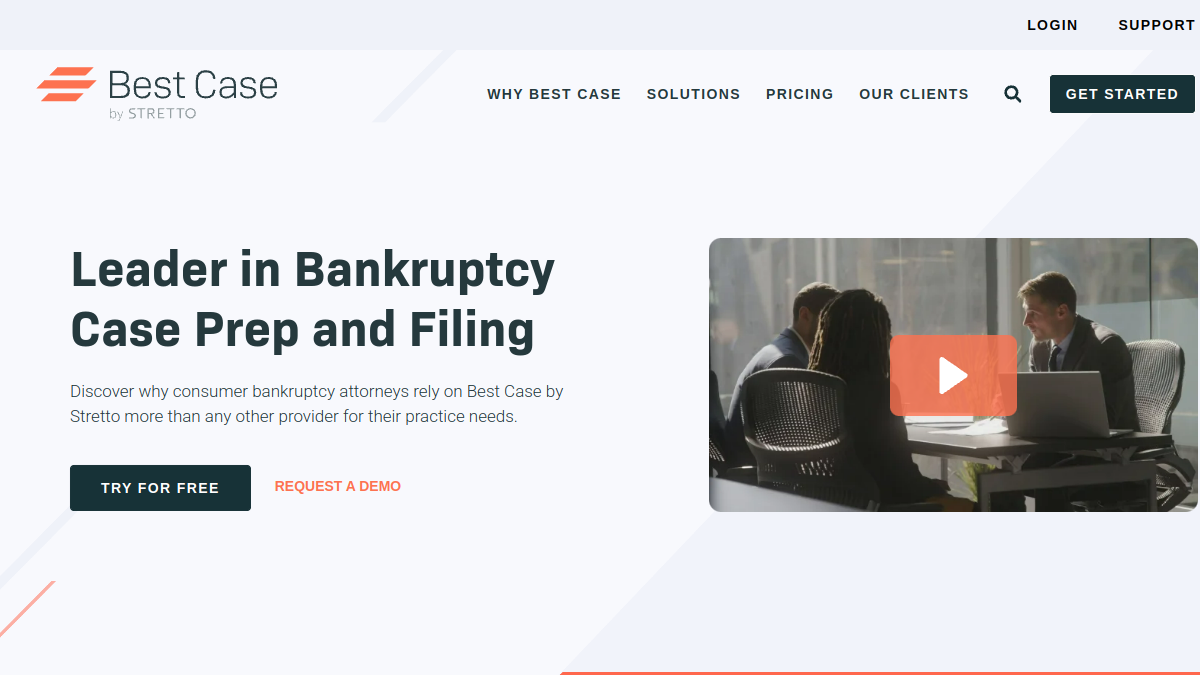
BestCase (from Stretto) is one of the most established and widely used bankruptcy petition-preparation platforms, trusted by a huge number of bankruptcy practices. It handles the full petition, schedules, means test and calculations, with data import, validation and electronic filing, so firms can prepare accurate filings efficiently. For a bankruptcy practice that wants proven, comprehensive petition software that bankruptcy professionals know well, BestCase is a category leader and a safe backbone for the filing side of the practice.
2. NextChapter — best modern, cloud-based petition software
NextChapter is a cloud-based bankruptcy petition-preparation platform with a clean, modern interface, online client intake, data import, the means test and e-filing. Being cloud-based, it lets you work from anywhere and offers a smoother, more contemporary experience than legacy desktop tools. For firms that want modern, accessible petition software with online client intake, NextChapter is a standout choice.
3. CINcompass — best all-in-one bankruptcy platform
CINcompass (from CINgroup, makers of the long-standing Best Case-era tools) is a cloud-based, all-in-one bankruptcy platform combining petition preparation with practice management — cases, calendaring, documents and workflow — in one system. For firms that want their petition preparation and case management together rather than as separate tools, CINcompass offers an integrated bankruptcy-specific approach.
4. Clio — best all-round practice management
Clio is the market-leading cloud practice management platform, and while it doesn't prepare petitions itself, it's an excellent backbone for the rest of a bankruptcy practice — matters, calendaring, documents, flat-fee billing, payment plans, online payments, trust accounting, a client portal and a huge integration ecosystem, plus Clio Grow for intake. Paired with dedicated petition software, Clio runs the practice management and client side while the specialist tool handles the filings. A flexible, proven choice.
5. MyCase — best affordable practice management
MyCase is a budget-friendly all-in-one practice management platform with case management, document automation, client communication, billing and online payments, including payment plans that suit bankruptcy clients. Paired with petition software, it's a strong, affordable practice-management core for small bankruptcy firms that want to keep costs down while staying organized and communicating well with price-sensitive clients.
6. Lawmatics — best legal CRM & intake
Bankruptcy is a high-inquiry, price-sensitive practice, and converting inquiries quickly and affordably matters. Lawmatics is a legal-specific CRM built for intake and marketing automation — instant follow-up, nurturing (important since some filers hesitate), e-sign engagement letters and marketing-ROI reporting. Paired with petition and practice-management tools, it ensures the many people who inquire become signed clients and shows which marketing works for a volume practice.
7. An AI assistant (ChatGPT / Claude) — best for client communication & drafting
AI assistants help bankruptcy attorneys explain complex, stressful concepts to clients in plain language (the process, exemptions, what to expect), draft correspondence and educational materials, and summarize documents. They don't replace petition software, which must drive the actual filing, but they improve client communication and cut time on non-filing drafting. Used carefully — verifying output, protecting confidentiality, never relying on AI for legal determinations — a tool like ChatGPT or Claude is a useful addition. See our ChatGPT vs Claude guide.
8. A client intake & document portal
Bankruptcy requires collecting extensive financial information and documents from clients — income, debts, assets, tax returns, pay stubs. An online intake questionnaire and secure document portal (built into petition tools like NextChapter, or into practice management like Clio/MyCase) make this far easier and reduce the endless back-and-forth of gathering documents from stressed clients. Clean, complete intake also directly improves the accuracy and speed of the petition.
How to build your bankruptcy stack
A powerful, common setup is: dedicated petition software at the core — BestCase for established, comprehensive preparation, NextChapter for a modern cloud experience, or CINcompass for an integrated all-in-one — plus a practice management platform (Clio or MyCase) for matters, billing and payment plans, Lawmatics for intake, and an AI assistant for client communication. Petition preparation is the biggest lever, so start there; some firms prefer CINcompass's integrated approach to reduce the number of tools. Then add intake automation to convert your high inquiry volume.
How much does bankruptcy software cost?
Petition-preparation software is typically priced per user or via subscription, and is the essential spend for a bankruptcy firm given how much time it saves preparing accurate filings. Practice management platforms (Clio, MyCase) charge a per-user monthly fee, and a legal CRM adds a monthly cost. AI assistants are around $20/month per user. Because bankruptcy is a volume, price-sensitive practice, efficiency is the whole game: petition software that lets you prepare more accurate filings per hour, and intake that converts more of your inquiries, easily pay for themselves. Keep your stack lean and focused on those two levers.
Migrating to new bankruptcy software
Switching petition or practice-management tools is manageable with planning. Export and clean your client, case and document data, then map it to the new system. If moving petition software, rebuild or import your templates and confirm e-filing works before go-live. Migrate closed cases in bulk and move active cases carefully so no deadline or 341 meeting is missed. Cloud tools like NextChapter and CINcompass make access easier during transition. Use vendor onboarding and data-migration support, and train staff on the daily workflows — intake to petition, e-filing, deadlines — rather than every feature.
Common mistakes bankruptcy firms make with software
The biggest is weak intake and document collection — chasing stressed clients for financial documents by email instead of a structured online questionnaire and portal, which slows every case. Second is manual data entry instead of importing debts and creditors from credit reports, wasting time and risking errors. Third is ignoring accuracy checks and filing without using the software's validation, when errors on schedules or the means test cause real problems. Fourth is slow intake on a high inquiry volume, losing price-sensitive clients to faster firms. Fifth is over-relying on AI for anything on the actual filing — AI helps explain and communicate, but petition software and the attorney must drive the filing.
Solo and small bankruptcy firms: where to start
A solo or small bankruptcy practice doesn't need every tool at once. Start with dedicated petition software — BestCase for established, comprehensive preparation, or NextChapter for a modern cloud experience with online client intake — since accurate, efficient petition preparation is the core of the practice and the biggest time saver. Add an online intake questionnaire and secure document portal so you collect clients' financial documents cleanly rather than chasing them by email. Use ChatGPT or Claude to explain the process to stressed clients in plain language and draft correspondence. As your inquiry volume grows, add an affordable practice-management core (MyCase or Clio) for matters, payment plans and billing, and a dedicated intake CRM like Lawmatics to convert more of the many people who reach out. Grow the stack in step with your caseload: nail petition preparation and document collection first, then layer on practice management and intake automation.
Chapter 7 vs Chapter 13: does your software matter?
Most petition-preparation platforms handle both Chapter 7 and Chapter 13, but the emphasis differs. Chapter 13 involves plan preparation and ongoing plan management over years, so if you do significant Chapter 13 work, prioritize software with strong plan tools and calculations and good handling of the longer case lifecycle. High-volume Chapter 7 practices lean more on speed of petition assembly, the means test, and efficient intake and document collection to move many cases affordably. When evaluating BestCase, NextChapter or CINcompass, confirm the platform handles your actual mix of chapters well, including plan preparation if Chapter 13 is a meaningful part of your practice.
Frequently asked questions
What is the best software for bankruptcy attorneys?
BestCase is the most established petition-preparation platform, NextChapter is the best modern cloud option, and CINcompass is the best integrated all-in-one. Pair petition software with Clio or MyCase for practice management and Lawmatics for intake. The best depends on whether you want established, modern-cloud or integrated software.
Which software prepares bankruptcy petitions?
BestCase, NextChapter and CINcompass are dedicated bankruptcy petition-preparation platforms that generate the full petition, schedules, means test and calculations from client data and handle electronic filing — the core tools of a bankruptcy practice.
Is there cloud-based bankruptcy software?
Yes — NextChapter and CINcompass are cloud-based bankruptcy platforms, letting you prepare petitions and work from anywhere with a modern interface, unlike older desktop tools. Practice management tools like Clio and MyCase are cloud-based too.
Can AI help bankruptcy lawyers?
Yes — AI assistants explain the process to stressed clients in plain language, draft correspondence, and summarize documents, saving time. They don't replace petition software for the actual filing, and you must verify output and protect confidentiality.
Which tool is best for bankruptcy intake?
Lawmatics is purpose-built for legal intake and follow-up, converting a high inquiry volume with instant response and nurturing for filers who hesitate. Petition tools like NextChapter and practice-management platforms also offer online intake questionnaires.
How do I choose bankruptcy software?
Start with petition preparation — the core of the practice — choosing BestCase, NextChapter or CINcompass. Then add a practice-management core (Clio or MyCase) for billing and payment plans, and Lawmatics for intake. Prioritize accuracy checks, e-filing, data import and online intake, and use free trials to test fit.
Is there free bankruptcy software?
Dedicated petition software is generally paid given its specialized, essential function, though some offer trials. Practice-management tools have trials, and AI assistants have free tiers for client communication. The petition tool is the key investment, justified by the filing time it saves.
Which is better, BestCase or NextChapter?
Both are excellent petition-preparation tools with different strengths. BestCase is the long-established, comprehensive standard that a huge number of bankruptcy professionals know and trust, with deep functionality and validation. NextChapter is a modern, cloud-based platform with a cleaner interface and built-in online client intake, ideal if you value working from anywhere and a contemporary experience. Firms that want the proven, feature-rich standard often choose BestCase; those that prioritize a modern cloud workflow and online intake lean toward NextChapter. Try both if you can, and pick the one whose interface and workflow your team prefers.
How do bankruptcy firms get more clients?
Fast, affordable intake and consistent follow-up win a price-sensitive, high-inquiry practice. A legal CRM like Lawmatics responds to inquiries instantly and nurtures filers who hesitate, while clear online booking and a simple document portal reduce friction. Combined with local marketing and reviews, converting more of your existing inquiries is usually the fastest way to grow — many firms lose more clients to slow follow-up than to lack of leads.
The bottom line
Bankruptcy is a petition-preparation practice, so the biggest win is dedicated petition software — BestCase for established comprehensiveness, NextChapter for a modern cloud experience, or CINcompass for an all-in-one. Add a practice-management platform (Clio or MyCase) for billing and payment plans, Lawmatics to convert your high inquiry volume, and an AI assistant for client communication. Automate the filings, streamline intake, and your firm will handle a steady caseload accurately and profitably. Compare more software on Tolodora to build your shortlist.