Craneware Data Breach 2026: What Happened, What Data Was Exposed, and What It Means for Healthcare
Craneware Data Breach 2026: Everything We Know So Far
The Craneware data breach has become one of the most discussed cybersecurity incidents in the healthcare technology industry in 2026. After confirming that unauthorized actors accessed part of its data environment and exfiltrated company files, Craneware launched an investigation with the help of external cybersecurity specialists and notified the relevant authorities.
While the company has stated that its core products and customer services remained operational, the incident has raised important questions about data security, third-party risk, and the growing number of cyberattacks targeting healthcare organizations.
In this article, we explain what happened, what information has been disclosed so far, whether patient data was affected, and what organizations can learn from the incident.
What Is Craneware?
Craneware is a healthcare software company headquartered in the United Kingdom that provides financial performance, revenue integrity, and data analytics solutions for healthcare organizations, particularly hospitals across the United States.
Its cloud-based platform helps healthcare providers improve billing accuracy, regulatory compliance, reimbursement management, and operational performance.
Because healthcare technology companies manage large volumes of sensitive operational and business information, they have become increasingly attractive targets for cybercriminals.
What Happened During the Craneware Data Breach?
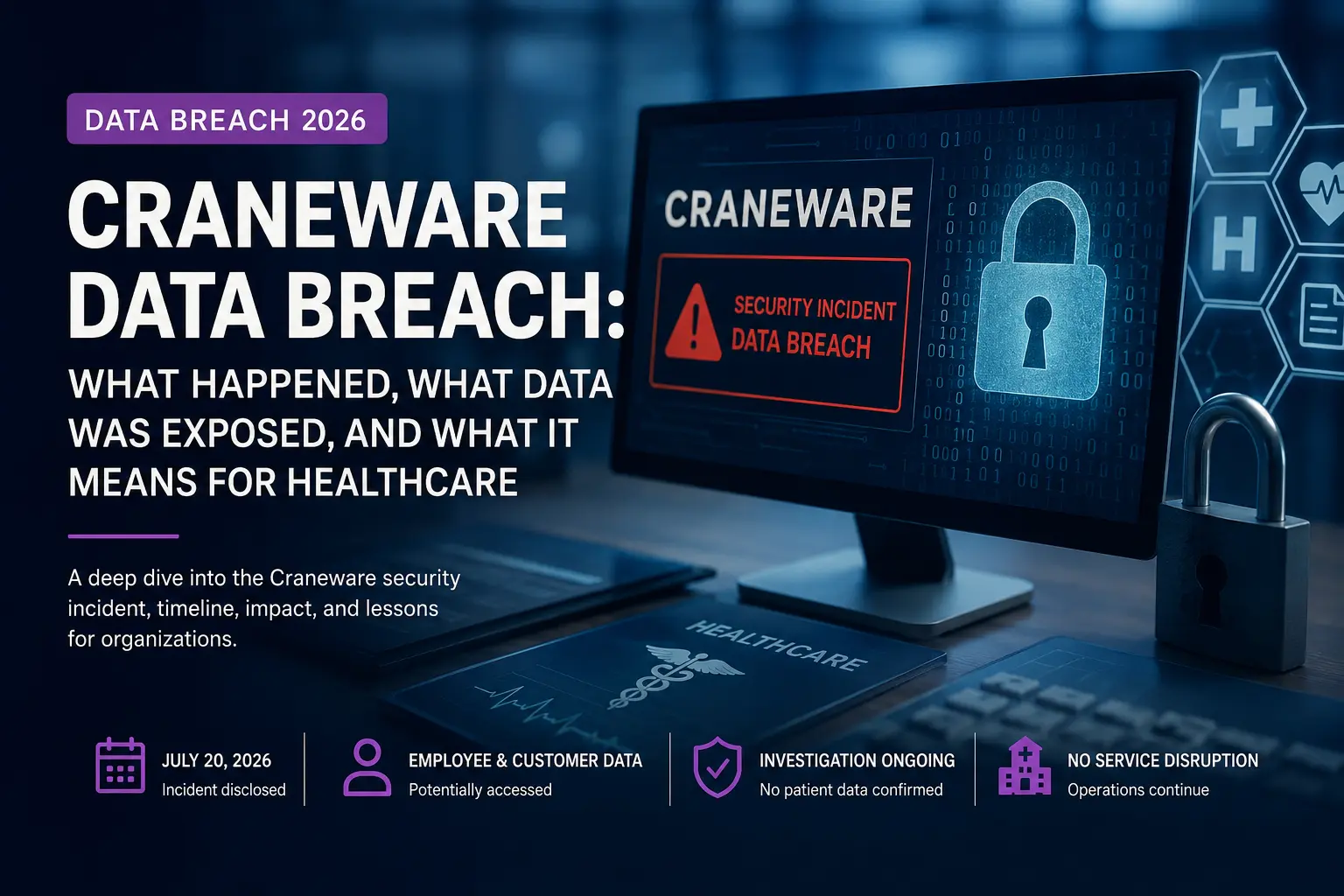
On July 20, 2026, Craneware confirmed that it had experienced a cybersecurity incident involving unauthorized access to part of its internal data environment.
According to the company's public statements:
Attackers gained unauthorized access to certain systems.
A significant number of files were copied from the environment.
The company immediately activated its incident response procedures.
Independent cybersecurity experts were brought in to investigate.
Relevant regulatory authorities and law enforcement agencies were notified.
The investigation remains ongoing, meaning additional information could emerge as forensic analysis continues.
What Data Was Potentially Exposed?
Based on Craneware's public disclosures, the stolen files include a mixture of information.
The company stated that:
Many files contained non-sensitive or publicly available information.
Some employee information was involved.
A subset of customer and business partner information may have been accessed.
At the time of writing, Craneware has not stated that patient medical records were compromised.
However, organizations connected with the company may still review their own security procedures while the investigation continues.
Was Patient Data Affected?
One of the biggest questions following the announcement has been whether patient health records were exposed.
So far, Craneware has not confirmed that protected patient medical records were accessed or stolen.
This distinction is important because healthcare technology providers often process different categories of information, including:
Operational data
Financial records
Business contracts
Employee information
Customer support documentation
Software development assets
The exact categories involved in this incident have not yet been fully disclosed.
How Did Craneware Respond?
Following the discovery of suspicious activity, Craneware initiated its cybersecurity response plan.
According to company statements, the response included:
Immediate containment measures
Internal investigation
External digital forensic specialists
Security monitoring enhancements
Regulatory notifications
Communication with customers and partners
The company also reported that its products continued operating without significant disruption.
Why Healthcare Companies Are Increasingly Targeted
Healthcare has become one of the most targeted industries for cybercriminals.
Several factors explain this trend:
Valuable Information
Healthcare organizations manage valuable information that can include financial records, insurance details, employee data, and operational systems.
Complex Infrastructure
Hospitals often operate thousands of connected devices and multiple software platforms, making cybersecurity especially challenging.
Third-Party Vendors
Modern healthcare organizations rely heavily on external software providers.
A breach affecting a vendor may require customers to investigate potential downstream risks even if their own infrastructure remains secure.
Business Continuity
Healthcare organizations cannot afford extended downtime.
This urgency sometimes makes ransomware and extortion attacks particularly damaging.
The Growing Trend of Healthcare Data Breaches
The Craneware incident is part of a broader trend affecting healthcare technology companies worldwide.
Healthcare organizations continue to face:
ransomware attacks
phishing campaigns
credential theft
cloud misconfigurations
third-party supply chain attacks
insider threats
As attackers become more sophisticated, organizations must strengthen both preventive and detective security controls.
What Organizations Should Do After a Vendor Breach
Whenever a technology provider experiences a security incident, customers should take proactive steps.
Review Vendor Communications
Read all official notifications carefully and determine whether your organization may have been affected.
Reset Credentials
If recommended by the vendor, update passwords and rotate privileged credentials.
Enable Multi-Factor Authentication
MFA remains one of the most effective protections against account compromise.
Monitor for Suspicious Activity
Review authentication logs, administrator activity, and unusual network behavior.
Update Incident Response Plans
Vendor-related incidents should be incorporated into future cybersecurity planning.
Lessons for Healthcare Technology Companies
The Craneware incident highlights several cybersecurity best practices.
Continuous Monitoring
Organizations should continuously monitor infrastructure for unusual behavior.
Zero Trust Security
Modern security strategies increasingly rely on Zero Trust architecture, where every request is continuously verified.
Least Privilege Access
Employees should only receive the minimum permissions necessary for their roles.
Security Awareness Training
Human error remains one of the leading causes of successful cyberattacks.
Regular employee education can reduce phishing risks significantly.
Third-Party Risk Management
Organizations should regularly assess the security posture of vendors handling sensitive information.
The Financial Impact
Cybersecurity incidents often have consequences beyond technical recovery.
Potential impacts include:
investigation costs
legal expenses
regulatory reviews
customer communications
reputational damage
stock market volatility
increased cybersecurity investment
Public companies may also experience significant short-term share price fluctuations following disclosure.
Timeline of the Craneware Incident
July 2026
Unauthorized access identified.
Incident response initiated.
External cybersecurity experts engaged.
Authorities notified.
Public disclosure released.
Investigation continues.
What Customers Should Watch For
Organizations using Craneware products should remain attentive to future updates.
Recommended actions include:
Review official communications.
Verify administrator accounts.
Monitor unusual login attempts.
Watch for phishing emails pretending to reference the incident.
Keep security software updated.
Follow any additional guidance issued by Craneware.
Frequently Asked Questions
What is the Craneware data breach?
It is a cybersecurity incident disclosed in July 2026 involving unauthorized access to part of Craneware's data environment.
Was patient medical data stolen?
At the time of writing, Craneware has not confirmed that patient medical records were compromised.
What information may have been exposed?
The company stated that some employee information and a subset of customer and partner information were involved, while many files were described as non-sensitive or publicly available.
Is Craneware still operating?
Yes. The company reported that its products and customer services continued operating during the investigation.
Is the investigation finished?
No. The forensic investigation is ongoing, and additional information may become available.
Key Takeaways
The Craneware data breach serves as another reminder that cybersecurity remains one of the most significant challenges facing the healthcare technology industry.
Although the company has stated that services remained operational and has not confirmed exposure of patient medical records, the incident demonstrates how even established software providers can become targets of sophisticated cyberattacks.
Healthcare organizations should continue monitoring official updates, strengthen vendor risk management programs, and ensure that strong security practices—including multi-factor authentication, continuous monitoring, and employee awareness training—remain central to their cybersecurity strategy.
As investigations continue, additional details may emerge. Organizations using Craneware products should rely on official communications and follow any recommended security actions promptly.