Did Elon Musk Buy Cursor? What's Actually Going On in 2026
Every few weeks the internet reruns the same headline with a different name in it: "Elon Musk just bought [hot startup]." Recently the name in the blank has been Cursor — the AI-powered code editor that developers have been raving about since it exploded in popularity. So let's answer the question head-on, then unpack what's really happening, because the real story is more interesting than the rumor.
Did Elon Musk buy Cursor? No.
As of this writing, there is no announcement, regulatory filing, or credible report indicating that Elon Musk — or any of his companies (Tesla, X, xAI, SpaceX, Neuralink) — has acquired Cursor. The claim appears to be a rumor, amplified by two facts that make it feel plausible: Musk is famous for buying attention-grabbing things, and Cursor is one of the hottest products in software right now. Put those together and a throwaway post on X can snowball into "news" within hours.
If a deal of that size had actually happened, it would be everywhere: press releases, SEC-style disclosures, coverage from major tech outlets, and statements from both companies. None of that exists. So the accurate answer is a simple one — Cursor has not been bought by Elon Musk.
Who actually owns Cursor?
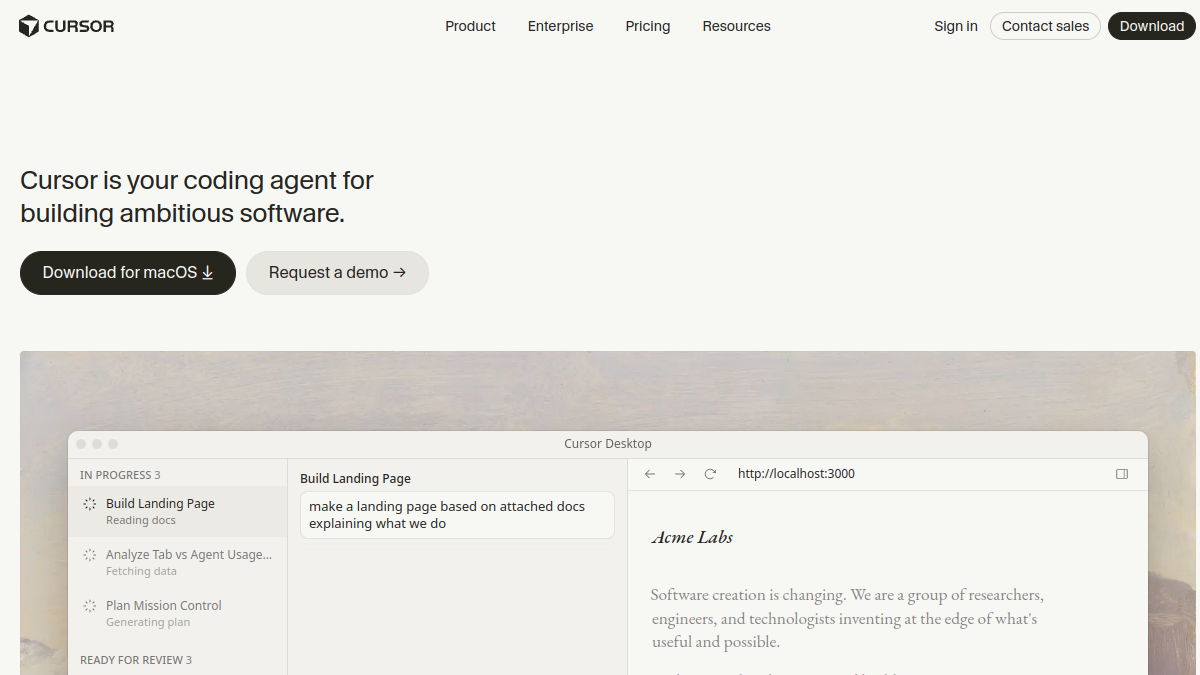
Cursor is built by Anysphere, a startup founded by a small group of MIT alumni. It's an independent, venture-backed company — not a division of a tech giant. Cursor's rise is one of the fastest in developer-tool history: by wrapping powerful AI models around a familiar, VS Code-style editing experience, it turned "AI helps you code" from a novelty into something professionals use all day.
On the back of that growth, Anysphere has raised large funding rounds at eye-watering valuations and reportedly reached a rate of revenue that few developer tools ever touch. Investors have poured in precisely because it's independent and growing fast — which is the opposite of a company that just got quietly absorbed by Elon Musk.
So to be crystal clear: Cursor is owned by Anysphere, the company that makes it. Not Musk, not xAI, not X.
What Elon Musk is actually doing in AI
Here's the kernel of truth that makes the rumor sticky: Musk is aggressively building AI, including tools that touch coding. His vehicle for that is xAI, the company behind the Grok family of models.
A few things are genuinely true about Musk's AI push:
- xAI is real and well-funded. It has raised enormous sums, built large GPU clusters, and ships new Grok models at a rapid pace.
- Grok is being pushed into coding and agentic use cases. Like every major lab, xAI wants Grok to write and debug code, not just chat.
- xAI and X are tightly linked. Musk folded his AI company and his social platform closely together, so Grok is woven into X.
In other words, Musk doesn't need to buy Cursor to be a player in AI coding — he's building a competing stack in-house. That's a much more likely strategy for him than acquiring a tool built on rival models.
Why the rumor spread (and keeps coming back)
Fake acquisition headlines follow a predictable recipe. Understanding it helps you spot the next one:
- Musk is a known buyer. He bought Twitter for $44 billion and rebranded it to X. After that, "Musk bought ___" feels believable by default.
- Cursor is everywhere. When a product blows up, people assume a giant must be behind it — or about to swoop in.
- AI moves at rumor speed. The pace of real AI news is so relentless that fake news blends right in. If genuine "unbelievable" announcements happen weekly, one more doesn't trigger skepticism.
- Engagement rewards the bold claim. A confident "BREAKING: Musk acquires Cursor" post gets clicks and reshares long before anyone checks it.
How to verify a tech acquisition rumor in 30 seconds
You don't need to be a journalist to fact-check these. A quick routine:
- Check the official sources. Real acquisitions are announced on both companies' blogs or newsrooms. No official post = be skeptical.
- Look for major outlets. If TechCrunch, Bloomberg, The Verge, or Reuters aren't reporting it, a billion-dollar deal probably didn't happen.
- Trace the claim to its origin. Often it's a single unsourced post or a satire account taken literally.
- Watch the language. "Reportedly," "rumored," and "could" are hedges. A real deal is stated plainly with names and numbers.
What a Cursor acquisition would actually mean (hypothetically)
It's worth asking why people even care. If a major player did acquire Cursor, it would matter because the tool sits at a strategic chokepoint: the editor where developers write software. Whoever controls the most-loved AI coding environment influences which models developers use by default. That's why every big lab and platform is competing here — and why an acquisition rumor gets pulses racing.
But strategically, buying Cursor would be an odd move for Musk specifically: Cursor is model-agnostic and often used with rival models. Musk's whole thesis with xAI is to own the model layer, not to buy a front-end that showcases competitors. The economics and the strategy both point away from the rumor.
The bigger story: the AI coding tool war
The real headline isn't a fake acquisition — it's how brutal the competition for developers has become. The current landscape includes:
- Cursor — the AI-first editor power users love for real codebases.
- GitHub Copilot — the incumbent, embedded in the world's biggest code host.
- Claude Code and other terminal/agent tools — AI that works across your whole project, not just autocomplete.
- Prompt-to-app tools like Lovable, Bolt, and v0 that generate whole applications from a description.
This is the essence of the vibe coding movement — building software by describing intent to an AI. For developers, the fierce competition is a gift: capabilities are rising and prices are falling at the same time. And if you're deciding where your code and workflow should live, our guide to the best GitHub alternatives breaks down the options.
Frequently asked questions
Is Cursor owned by any big tech company?
No. Cursor is owned by Anysphere, an independent startup. It's venture-backed but not a subsidiary of Microsoft, Google, OpenAI, xAI, or any other tech giant.
Does Elon Musk have his own AI coding tool?
Musk's company xAI builds the Grok models, which include coding capabilities and are integrated into X. That's his in-house AI effort — separate from, and competitive with, Cursor.
Where did the 'Musk bought Cursor' rumor come from?
There's no single credible source; it appears to be speculation amplified on social media, following the familiar pattern of "Musk buys hot startup" headlines. No official announcement supports it.
The bottom line
Elon Musk did not buy Cursor. Cursor belongs to Anysphere; Musk's AI ambitions run through xAI and Grok. The next time a "Musk bought X" headline rockets across your feed, take 30 seconds to check the official sources before sharing — because in AI right now, reality is already strange enough without the rumors filling in the gaps.