Higgsfield on GitHub: What They Actually Open-Sourced (and What They Didn't)
If you have seen the claim that Higgsfield open-sourced its entire website or platform on GitHub, pause before you repeat it. The short version: in September 2026 Higgsfield made a real, meaningful move toward developers — it opened up a public API and published a set of tools on GitHub — but it did not put its whole site or its AI models into the open. This guide breaks down exactly what is on GitHub, what the new API gives you, and what stays locked behind Higgsfield's own doors, so you know precisely how and what.
First, what is Higgsfield?
Higgsfield is a fast-growing generative-AI company focused on video, image, editing, storyboarding and commercial content creation. To put its scale in context: in August 2026 it raised a $400 million Series B at a $5.4 billion valuation, and it reports roughly $700 million in annualized revenue across around 30 million users. In other words, this is not a hobby project quietly dumping code — it is a major commercial platform deciding, deliberately, how much of its stack to expose.
The rumor vs. the reality
The rumor: “Higgsfield put its whole site on GitHub.” The reality: Higgsfield expanded developer access — it released developer tools and SDKs on GitHub and opened a public API — while keeping the platform itself and its AI models proprietary. The company says so directly: it has not open-sourced its entire platform or its models, and access happens only through official channels — the website, the API platform, the documentation and integrations.
That distinction matters. “Some tools and SDKs on GitHub” is very different from “here is our whole product, copy it.” One invites developers to build on Higgsfield; the other would hand competitors the keys. Higgsfield did the first.
What Higgsfield actually put on GitHub
Everything below lives under the official higgsfield-ai organization on GitHub, and some projects ship under permissive open-source licenses (MIT and Apache 2.0). The most notable repositories:
- Higgsfield CLI — a command-line tool for working with Higgsfield straight from your terminal.
- higgsfield-client — the official Python SDK for the Higgsfield API.
- higgsfield-js — the official SDK for Node.js and TypeScript.
- skills — a Python repo of agent “skills” for wiring Higgsfield into AI-agent workflows.
- higgsfield — the project that predates all of this: a fault-tolerant, highly scalable GPU-orchestration and machine-learning framework for training models with billions to trillions of parameters. It is the org's most-starred repo by far, with nearly 5,000 stars.
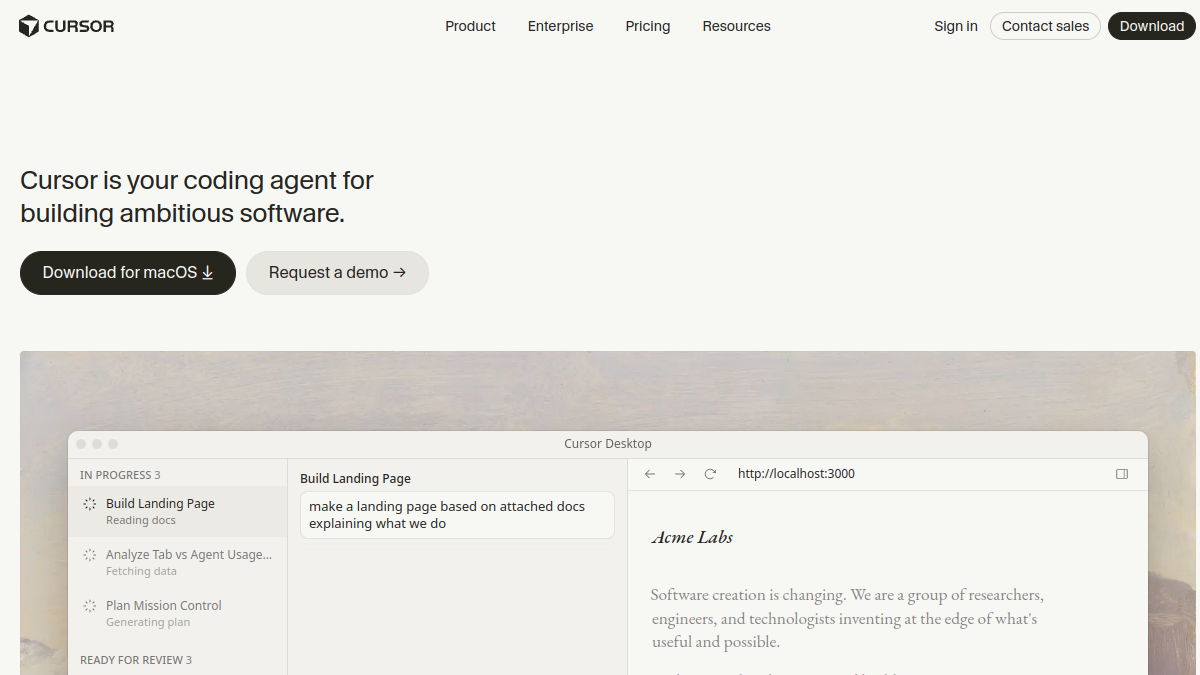
- Plus smaller pieces: a Cursor editor plugin, a Homebrew tap, an MCP bridge, and even omagotchi, an AI desktop-avatar demo.
Notice the pattern: these are ways to use and build around Higgsfield — a CLI, SDKs, agent skills, editor plugins — plus a genuinely open ML training framework. None of them is the Higgsfield web app or the model weights.
Where developer attention actually sits
The star counts tell the story: the open higgsfield training framework dominates with almost 5,000 stars, while the newer API SDKs (higgsfield-client, higgsfield-js) are just getting going. That is a useful signal — the community has long valued the open training framework, and the SDKs are the fresh on-ramp to the new API.
The bigger news: a public developer API
The headline for builders is not the repos — it is the Higgsfield API. Through a single developer platform you can call more than 50 video and image generation models programmatically, including big names like Sora 2, Veo 3.1, Kling, Seedance, Hailuo, FLUX and Nano. You send generation requests with an API key — no web interface required — and API usage is billed separately from the consumer subscription, through a dedicated API balance.
For a developer, that is the real unlock: instead of clicking around a web app, you can wire Higgsfield's models straight into your own product, script or AI agent, and pay only for what you generate.
Open vs. proprietary: what you can and can't do
Here is the clean mental model to keep:
- Open (on GitHub, some MIT/Apache 2.0): the CLI, the Python and JS/TypeScript SDKs, agent skills, editor plugins, and the
higgsfieldML training framework. You can read, fork and build on these freely. - Accessible via API (paid, not open): 50+ generative models behind
platform.higgsfield.ai. You can call them, but you do not get the code or the weights. - Proprietary (closed): the Higgsfield website/platform itself and the AI models. These are not on GitHub and are not for the taking.
Why this matters for founders and builders
If you build software, this is a playbook worth studying. Higgsfield is doing what many of the strongest platforms do: keep the crown jewels (the product and the models) closed, but open just enough — SDKs, a CLI, an API, agent skills — to turn outside developers into a growth channel. Every SDK and plugin makes it easier for someone to build Higgsfield into their own tool, which pulls more usage back to the paid API.
It is the same discovery-and-distribution logic that powers a directory like Tolodora: the tools that win are the ones that are easy to find, easy to try and easy to build on. If you are shipping an AI product, look at how others position themselves among the best AI tools and software, and think about which parts of your own stack are worth opening to pull developers in.
How to get started with Higgsfield's tools
- Browse the official higgsfield-ai GitHub organization to see every public repository.
- Grab the SDK for your stack — Python or Node/TypeScript — or install the CLI.
- Get an API key from the Higgsfield developer platform and top up an API balance.
- Send your first generation request to a model like Veo 3.1 or Sora 2, then iterate.
Frequently asked questions
Did Higgsfield open-source its entire website or platform?
No. Higgsfield released developer tools and SDKs on GitHub and opened a public API, but the platform itself and its AI models remain proprietary. The company states plainly that it has not open-sourced its entire platform or models.
What is actually on Higgsfield's GitHub?
The official higgsfield-ai organization hosts the Higgsfield CLI, the Python and JavaScript/TypeScript SDKs, an agent “skills” repo, editor plugins, and the open higgsfield GPU-orchestration and ML training framework — some under MIT and Apache 2.0 licenses.
Which AI models can I use through the Higgsfield API?
The API exposes more than 50 video and image generation models, including Sora 2, Veo 3.1, Kling, Seedance, Hailuo, FLUX and Nano, all through platform.higgsfield.ai.
Is the Higgsfield API free?
No. API usage is billed separately from the consumer subscription through a dedicated API balance — you pay for what you generate, and authenticate with an API key.
Can I self-host Higgsfield's models?
No. The models are proprietary and available only through Higgsfield's API and official products. The open-source repositories are tools and a training framework, not the model weights.
The bottom line
Higgsfield did not give away its website — it did something smarter for a commercial AI company: it opened the doors just wide enough for developers to build on it. If you were hoping to clone the whole platform from GitHub, that is not on the table. But if you want to plug 50+ top-tier video and image models into your own product, the new API and SDKs are a genuine opportunity. Know the difference, and you will know exactly how and what.