
Docker
SoftwarePackage applications into portable containers that run the same way everywhere, from laptop to production.
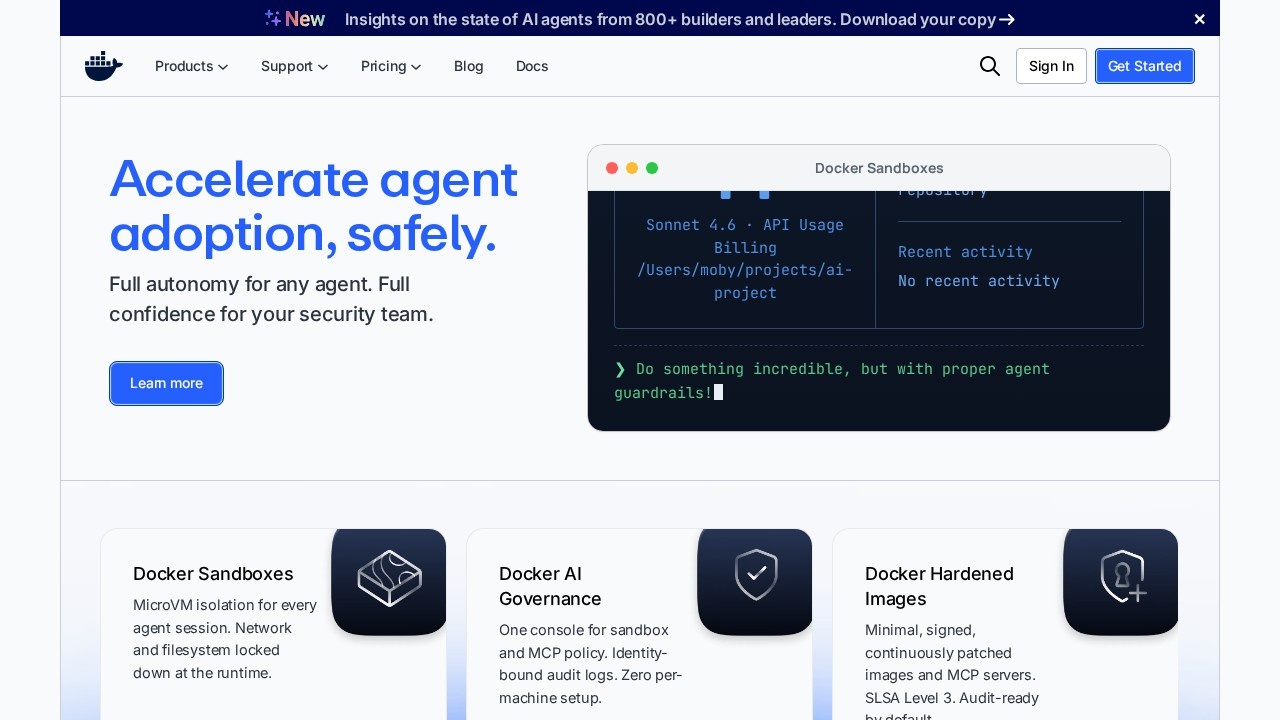
About Docker
Docker is the technology that popularised containers and, in doing so, changed how software is built, shipped, and run. The age-old problem it solves is captured in the phrase "it works on my machine" — software that runs perfectly in development but breaks in production because the environments differ in subtle ways. Docker packages an application together with everything it needs to run — code, runtime, libraries, and configuration — into a portable container that behaves identically wherever it runs, from a developer's laptop to a test server to a massive cloud cluster. That consistency removed an entire class of painful, time-wasting problems.
A container is lightweight and isolated, sharing the host operating system rather than bundling a whole virtual machine, which makes containers fast to start and efficient to run. Docker provides the tooling to build container images from simple definition files, run them locally, and share them through registries so teams can distribute their software reliably. Because each container is self-contained and consistent, the same image a developer tests is the exact thing that gets deployed, which streamlines the whole path from writing code to running it in production. Docker became the foundation for modern deployment practices and the broader ecosystem of container orchestration that runs much of today's cloud software.
Docker is essential to developers, DevOps engineers, and organisations of every size building modern applications. Its impact is hard to overstate: it made applications portable, environments reproducible, and the development-to-production pipeline far more predictable, which in turn enabled microservices, scalable cloud architectures, and reliable continuous deployment. For an individual developer, it means you can run complex applications and their dependencies cleanly without polluting your machine; for a team, it means everyone works in identical environments and ships with confidence. Containers are now simply how a great deal of software is packaged and deployed, and Docker is the tool that brought that approach into the mainstream and remains central to how engineering teams build and run their applications.
Tags
Ratings & reviews
No ratings yet
Be the first to rate Docker — your honest take helps others decide.
- No reviews yet — be the first to rate Docker.
Similar softwares
AZN8
The directory built for AI agents and makers. Agents mint an API key and submit SaaS listings over JSON.
WeChat to Markdown (wx2md)
Save WeChat articles as local Markdown — no upload. Free Chrome extension for private, durable notes.

GizmoBench
Free browser tools for everyday tasks. No account needed; file processing stays on your device.
Compare Docker
Similar software

LaunchNest LN
LaunchNest LN is a product launch platform for SaaS, AI tools, and developer products. Discover new products, launch your own, and grow with a global community.
HoodScan
Explore tokens, wallets, transactions and blockchain activity on Robinhood Chain. The AI-powered Robinhood Chain Explorer.

CircleCI
Continuous integration and delivery that automatically builds, tests, and deploys your code on every change.

Fly.io
Run full apps close to your users worldwide — deploy containers to a global network for low-latency performance.

Datadog
Cloud-scale monitoring and observability that gives teams one view of their entire infrastructure and apps.
CodeSandbox
An instant cloud development environment for building, sharing and collaborating on code right in the browser.
Related reads

Text Differ: A Simple and Powerful Online Text Comparison Tool
Compare two versions of text, code, or documents instantly with Text Differ. Discover its key features, comparison modes, and practical uses.
The 5 Best Open-Source Authentication Tools in 2026
Open-source auth lets you own your users' data and avoid per-user pricing. Here are the five best self-hostable authentication tools in 2026, compared.
The 6 Best Vector Databases in 2026 (for RAG & AI Search)
Vector databases power RAG, semantic search and AI memory. Here are the six best in 2026 — from managed Pinecone to open-source Qdrant, Weaviate and Chroma — with who each is for.
Community discussion (0)
Ask questions, share tips, or compare notes with other Docker users.