The Best Webflow Alternatives in 2026 (Visual Website Builders)
Tolodora Editorial Team
Tolodora's editorial team — we research, compile and regularly update these software guides from public sources and product documentation.
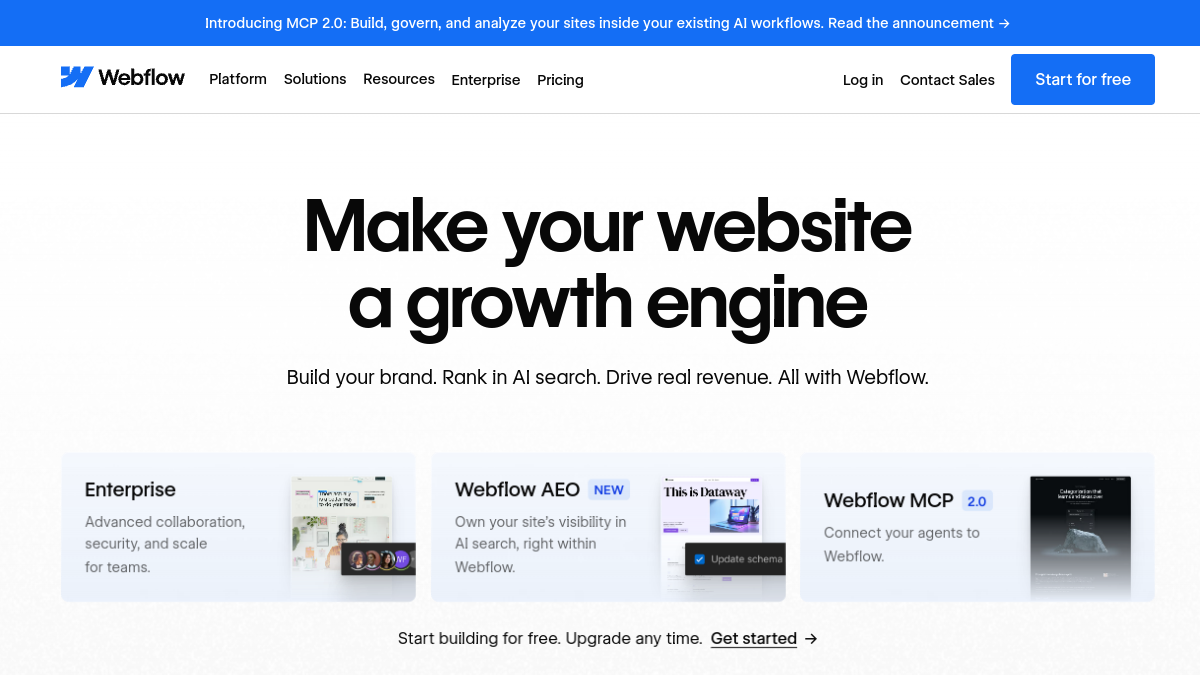
Webflow offers near-total design control without code, but the learning curve is real and pricing adds up once you need a CMS and hosting. Depending on whether you want speed, simplicity, a blogging focus or lower cost, another builder may suit you better.
These range from designer-grade canvases to simple template builders, all without hand-coding.
We rated every pick on four things — pricing and value, functionality, ease of use, and support. Here's the rundown.

Comparing against the original?
See Webflow's profile, rating & reviews on Tolodora →
| # | Tool | Best for | Rating |
|---|---|---|---|
| 1 | Framer | Designers and startups who want beautiful, animated marketing sites built fast. | 4.3/5 |
| 2 | Wix Studio | Agencies and freelancers who want Webflow-like control with an easier ramp and built-in hosting. | 4.3/5 |
| 3 | Squarespace | Creatives, small businesses and portfolios that want a beautiful site without fiddly design work. | 4.3/5 |
| 4 | WordPress | Content-heavy sites and anyone who wants full ownership and endless extensibility. | 4.2/5 |
| 5 | Ghost | Bloggers, publications and creators who want a clean site plus newsletters and subscriptions. | 4.2/5 |
| 6 | Carrd | Anyone who needs a simple, cheap one-pager or landing page without any complexity. | 4.3/5 |
Framer
- Pricing
- 8.4/10
- Functionality
- 9.0/10
- Ease of use
- 8.8/10
- Support
- 8.4/10
What I like
A designer-grade canvas with best-in-class animations and interactions, a much gentler curve than Webflow, and AI that can generate whole pages.
Best for
Designers and startups who want beautiful, animated marketing sites built fast.
Framer is the trendiest Webflow alternative. It delivers similar design freedom and stunning animations, but you're productive far sooner, and its AI and templates speed things up. Ideal for landing pages and marketing sites; its CMS is capable if not quite Webflow-deep. For a your business setup, it's well worth a closer look.
Wix Studio
- Pricing
- 8.4/10
- Functionality
- 9.0/10
- Ease of use
- 8.4/10
- Support
- 8.4/10
What I like
Advanced responsive design tools aimed at agencies, with a CMS, huge app market and more creative control than classic Wix.
Best for
Agencies and freelancers who want Webflow-like control with an easier ramp and built-in hosting.
Wix Studio is Wix's pro-tier answer to Webflow: a flexible responsive canvas, real CMS, animations and a client-handoff workflow, backed by Wix's reliable hosting and app ecosystem. Easier to learn than Webflow while still powerful — a strong agency pick. For your business, it's one of the stronger options on this shortlist.

Squarespace
- Pricing
- 8.2/10
- Functionality
- 8.2/10
- Ease of use
- 9.2/10
- Support
- 8.6/10
What I like
Gorgeous templates, all-in-one hosting, commerce and email, and a genuinely easy editor — you get a polished site fast.
Best for
Creatives, small businesses and portfolios that want a beautiful site without fiddly design work.
Squarespace trades Webflow's granular control for speed and polish. Pick a designer template, edit content, publish — with commerce, blogging and email built in. If you don't need pixel-level custom design, it's a faster, simpler route to a professional site. For a your business setup, it's well worth a closer look.
WordPress
- Pricing
- 9.0/10
- Functionality
- 9.2/10
- Ease of use
- 7.4/10
- Support
- 7.8/10
What I like
Unmatched flexibility and a massive plugin/theme ecosystem — plus, with modern builders, you can design visually and own everything.
Best for
Content-heavy sites and anyone who wants full ownership and endless extensibility.
It tends to suit your business that want exactly this balance. WordPress powers a huge share of the web for good reason: total flexibility, thousands of themes and plugins, and low hosting costs. Paired with a builder like Elementor it becomes visual, and it's unbeatable for blogging and content at scale. More maintenance than Webflow, but you own it all.
Ghost
- Pricing
- 8.4/10
- Functionality
- 8.2/10
- Ease of use
- 8.6/10
- Support
- 8.2/10
What I like
A fast, focused publishing platform with built-in newsletters and paid memberships — perfect for writers who also want to monetise.
Best for
Bloggers, publications and creators who want a clean site plus newsletters and subscriptions.
Ghost is a modern, publishing-first alternative: blisteringly fast, distraction-free writing, and native email newsletters and paid subscriptions. If your site is really a blog or publication (and you want to charge for content), Ghost beats Webflow at its core job. Open-source and self-hostable too. For a your business setup, it's well worth a closer look.
Carrd
- Pricing
- 9.8/10
- Functionality
- 6.6/10
- Ease of use
- 9.6/10
- Support
- 8.0/10
What I like
Dead-simple one-page sites for a few dollars a year — the fastest way to launch a landing page or link-in-bio.
Best for
Anyone who needs a simple, cheap one-pager or landing page without any complexity.
Carrd is the minimalist pick: build a clean one-page site — landing page, portfolio, link-in-bio — in minutes, for a few dollars per year. It's nowhere near Webflow's power, but for simple single-page needs it's unbeatable on speed and price. For a your business setup, it's well worth a closer look.
The verdict
For the fastest modern, animation-rich sites, Framer is the standout Webflow rival. Want power with a gentler curve? Wix Studio. Prefer the simplest polished templates? Squarespace. Content-heavy or blog-first? WordPress or Ghost.
Frequently asked questions
What is the best Webflow alternative for designers?
Framer is the closest in spirit — a powerful visual canvas with excellent animations and a much faster learning curve, plus AI features for generating pages quickly.
Is there a cheaper alternative to Webflow?
Yes — Carrd and Squarespace are cheaper for simple sites, WordPress can be very low-cost, and Framer's plans are competitive. Webflow's cost mainly climbs with CMS and traffic.
Which alternative is easiest for non-designers?
Squarespace and Wix are the most beginner-friendly, with polished templates and less freedom to get lost in. Carrd is easiest of all for one-page sites.
Keep exploring
Building one of these alternatives?
List your tool on Tolodora and get discovered by buyers comparing options.
Launch Your Product