Komo
SoftwareAn AI revenue engine that detects buyer signals, researches accounts and automates outbound follow-up.
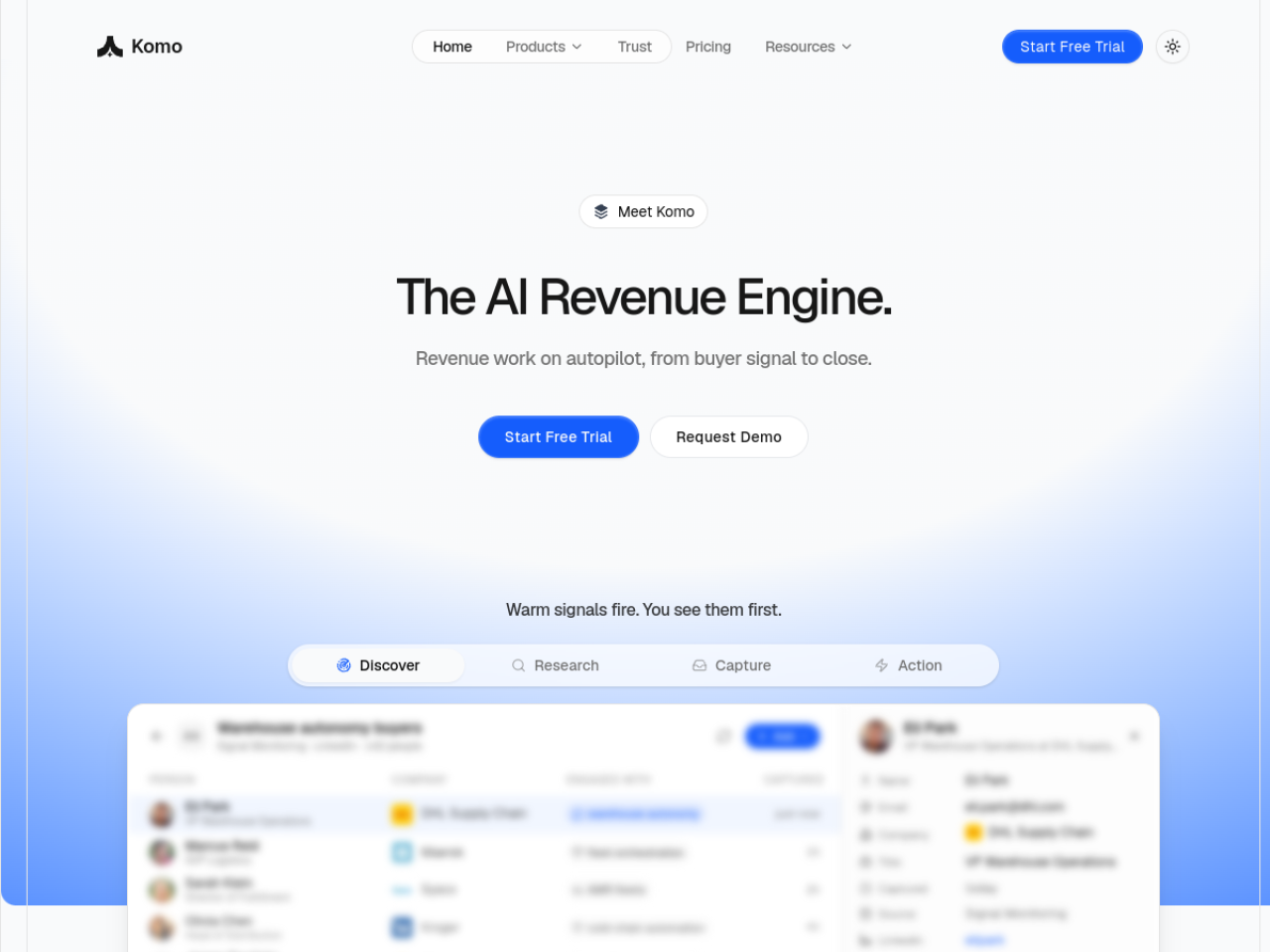
About Komo
Sales reps spend a shocking amount of time on research and admin — figuring out which accounts are worth pursuing, prepping for meetings, chasing follow-ups — instead of actually selling. Komo aims to automate all of that, positioning itself as 'the AI revenue engine' that runs revenue work from buyer-signal detection through deal closure.
Find the accounts worth chasing
Komo monitors markets for warm buying signals and scores accounts by fit and timing, so your team focuses on prospects who are actually likely to buy right now rather than blasting everyone equally. That signal-driven prioritization is where a lot of sales effort is won or lost — reaching the right account at the right moment dramatically improves outcomes, and Komo surfaces those moments automatically. It shares the AI-sales frontier with tools like Artisan and Lavender.
Research and prep, done for you
Komo generates research briefs and meeting-preparation materials automatically, so reps walk into conversations informed without spending an hour digging through LinkedIn and company sites. It also creates expansion briefs for growing existing accounts and provides personalized outreach drafts — turning the tedious research-and-writing grind into something the AI handles, freeing reps for high-value selling.
Manages the follow-through
Deals die in the gaps between touches, so Komo manages follow-up sequences automatically and integrates with email, calendar and CRM systems to surface qualified leads and keep execution clean. That means the pipeline stays warm and organized without reps manually tracking every next step — the administrative slippage that costs teams deals is largely automated away.
Built for clean pipeline
The overarching goal is quality pipeline with clean execution — letting revenue teams scale outbound without drowning in manual research and admin.
Who it's for
Komo suits sales leaders, revenue operations teams, SDRs, founders running outbound, and enterprises scaling outbound across multiple teams who prioritize pipeline quality.
Pricing
Komo offers a 7-day free trial and three tiers — Starter ($99/month), Growth ($399/month) and custom Enterprise — priced on action credits, account/contact volume, active Signal Agents and collaboration features. The trial lets you test the signal detection and research automation before committing.
The strategic shift Komo represents is moving reps from reactive research to proactive selling: instead of a rep deciding who to chase and then spending an hour prepping, the system surfaces the warm accounts and hands over the brief already written. Multiply that across a whole team and the time reclaimed is enormous — hours that were spent on manual research and admin get redirected into the actual conversations that move revenue.
Bottom line: Komo is an AI revenue engine that detects buyer signals, scores and researches accounts, drafts outreach and automates follow-up — offloading the research and admin grind so revenue teams can focus on actually closing deals.
Tags
Ratings & reviews
No ratings yet
Be the first to rate Komo — your honest take helps others decide.
- No reviews yet — be the first to rate Komo.
Similar softwares

Google Maps Email Extractor
Chrome extension to extract business emails and leads from Google Maps.

Google Maps Scraper
Chrome extension that exports Google Maps business leads to CSV or XLSX
GMB Scraper
Chrome extension that turns public Google Maps listings into a clean CSV or XLSX for outreach and local SEO.
Compare Komo
Similar software
Artisan
Home of Ava, an autonomous AI BDR that finds leads and books meetings on autopilot.
DialPhone
Get a business phone system with AI receptionist, call forwarding, SMS, and voicemail transcription. US & Canada coverage. Plans from $24/user/month. No con
LocalTry
A fully customizable AI CRM for sales, operations, scheduling, marketing, reviews, publishing, and automation.

ChatAxon
AI sales assistant for online stores with deep native WooCommerce support — semantic product search, in-chat cart, order tracking & 24/7 help in 50+ languages.

Relevance AI
Build and manage a team of no-code AI agents — your 'AI workforce' that automates sales, marketing and operations.

Bardeen
An AI automation tool that runs in your browser to automate repetitive tasks like scraping, data entry and outreach.
Related reads
The Tool Sprawl Tax: Why Small Service Businesses Pay for Five Apps to Do One Job
Five apps, five logins, and a tax most small operators never see itemized. Here's the real bill of tool sprawl for service businesses, and how to close the seams.

Best POS Software for Retail, Restaurant & Pharmacy | Hulm POS
Compare POS software for retail, restaurants and pharmacies in Pakistan. Learn which features, FBR tools, inventory controls and pricing matter.
How to Create Professional Quotes Faster: A Practical Guide for Service Businesses
Learn how service businesses can streamline estimates, create professional quotes, and track client responses without relying on spreadsheets and manual documents.
Community discussion (0)
Ask questions, share tips, or compare notes with other Komo users.