The Best Shortcut Alternatives in 2026
Tolodora Editorial Team
Independent software reviews for founders and small businesses.
Shortcut (formerly Clubhouse) built a loyal following among software teams for its clean interface and agile-native structure — stories, epics, sprints, and workflows without the bloat of larger platforms. But as teams grow, some outgrow its feature set, want deeper enterprise controls, or simply want to compare pricing and functionality against the wider project management market.
Below we compare six of the most-searched Shortcut alternatives across pricing, ease of use, support, and functionality. The quick answer: Linear is the closest match for teams that love Shortcut's speed and simplicity, Jira suits larger organizations needing deep customization, and ClickUp is the best value pick for teams wanting an all-in-one workspace.

Comparing against the original?
See Shortcut's profile, rating & reviews on Tolodora →
| # | Tool | Best for | Rating |
|---|---|---|---|
| 1 | Jira | Large software teams and enterprises already standardized on the Atlassian ecosystem (Confluence, Bitbucket). | 3.8/5 |
| 2 | Linear | Fast-moving product and engineering teams that want a polished, opinionated workflow with minimal setup. | 4.3/5 |
| 3 | Asana | Organizations that need one tool spanning both software delivery and general business or marketing project management. | 4.1/5 |
| 4 | ClickUp | Teams wanting an all-in-one workspace that goes well beyond issue tracking, on a tight budget. | 4.2/5 |
| 5 | Trello | Small teams or solo developers who want lightweight task tracking without sprints, epics, or story points. | 4.0/5 |
| 6 | Notion | Teams that want a flexible knowledge base and lightweight project tracking combined, rather than dedicated agile tooling. | 4.0/5 |
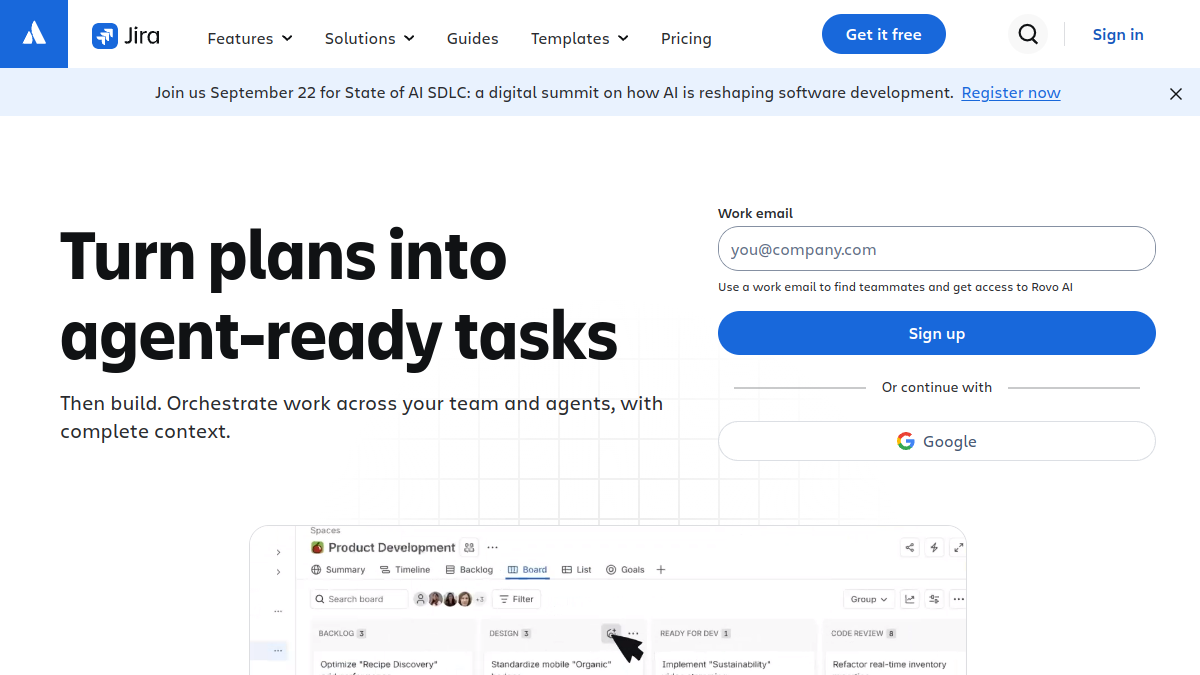
Jira
- Pricing
- 6.8/10
- Functionality
- 9.4/10
- Ease of use
- 6.2/10
- Support
- 7.8/10
What I like
Its customization and enterprise-grade reporting can model almost any workflow a large engineering organization needs.
Best for
Large software teams and enterprises already standardized on the Atlassian ecosystem (Confluence, Bitbucket).
Jira offers far more configurability and enterprise features than Shortcut, but that flexibility comes with a steeper learning curve and a less polished interface than Shortcut's famously clean UI.
Linear
- Pricing
- 8.5/10
- Functionality
- 8.4/10
- Ease of use
- 9.2/10
- Support
- 8.0/10
What I like
Its speed and minimalist, keyboard-driven interface make issue tracking feel almost frictionless.
Best for
Fast-moving product and engineering teams that want a polished, opinionated workflow with minimal setup.
Linear is the closest philosophical match to Shortcut — both prioritize a clean, developer-friendly UI over sprawling configurability — though Linear leans even further into speed and opinionated simplicity.
Asana
- Pricing
- 7.6/10
- Functionality
- 8.2/10
- Ease of use
- 8.5/10
- Support
- 8.2/10
What I like
Its flexible views (list, board, timeline, calendar) make it easy for cross-functional teams to track work beyond engineering.
Best for
Organizations that need one tool spanning both software delivery and general business or marketing project management.
Asana is built for broad cross-team project management rather than software-specific concepts like sprints and story points, so engineering teams often find Shortcut's agile-native structure a better fit, while Asana suits mixed technical and non-technical teams.
ClickUp
- Pricing
- 8.8/10
- Functionality
- 9.2/10
- Ease of use
- 7.4/10
- Support
- 7.8/10
What I like
An extremely wide feature set — docs, goals, whiteboards, dashboards — bundled into one platform at a competitive price.
Best for
Teams wanting an all-in-one workspace that goes well beyond issue tracking, on a tight budget.
ClickUp packs dramatically more features and customization into its plans than Shortcut, but that breadth can feel overwhelming compared to Shortcut's more focused, purpose-built agile workflow.
Trello
- Pricing
- 9.2/10
- Functionality
- 6.2/10
- Ease of use
- 9.0/10
- Support
- 7.4/10
What I like
A dead-simple Kanban board that almost anyone can pick up in minutes, with a generous free plan.
Best for
Small teams or solo developers who want lightweight task tracking without sprints, epics, or story points.
Trello is simpler and cheaper than Shortcut but lacks native sprint planning, epics, and story estimation, so teams that outgrow basic Kanban boards usually move toward Shortcut-style agile tooling instead.
Notion
- Pricing
- 8.4/10
- Functionality
- 8.0/10
- Ease of use
- 8.0/10
- Support
- 7.6/10
What I like
Its all-in-one docs-plus-database approach lets teams combine specs, wikis, and lightweight task tracking in one workspace.
Best for
Teams that want a flexible knowledge base and lightweight project tracking combined, rather than dedicated agile tooling.
Notion's project tracking is built from flexible databases rather than purpose-built agile primitives like Shortcut's stories and sprints, making it better suited to teams that value documentation and flexibility over structured sprint workflows.
The verdict
Choose Linear for a Shortcut-like experience with even more speed, Jira for enterprise-scale customization, ClickUp for maximum features per dollar, Trello for the simplest possible board, Asana for cross-functional teams, or Notion for combined docs and task tracking.
Whatever you shortlist, run your real work through it for a week before committing — the right tool is the one that quietly disappears and lets you get back to it. And if you build software like this yourself, you can list it on Tolodora free.
Frequently asked questions
Is there a free alternative to Shortcut?
Yes — Trello, ClickUp, Linear, Asana, and Notion all offer functional free tiers for small teams, though most cap users or features compared to their paid plans.
What's the closest alternative to Shortcut for engineering teams?
Linear is generally considered the closest match, since both tools prioritize a fast, minimalist interface built around software-specific concepts like issues, cycles or sprints, and workflow states.
Why do teams look for Shortcut alternatives?
Common reasons include wanting more enterprise-grade customization (Jira), a broader all-in-one workspace (ClickUp, Notion), simpler non-technical project tracking (Asana, Trello), or evaluating pricing at scale as a team grows.
Keep exploring
Building one of these alternatives?
List your tool on Tolodora and get discovered by buyers comparing options.
Launch Your Product