The Best Stytch Alternatives in 2026
Tolodora Editorial Team
Independent software reviews for founders and small businesses.
Stytch built its reputation on developer-friendly passwordless authentication, fraud and risk signals, and flexible APIs for both consumer and B2B applications, but it is far from the only option for teams building login, MFA, and session management into a product.
The right substitute depends on whether a team needs enterprise SSO out of the box, a fully open-source stack it can self-host, or the fastest drop-in UI for a startup MVP — for most teams evaluating alternatives, Auth0, Clerk, and WorkOS are the strongest starting points.

Comparing against the original?
See Stytch's profile, rating & reviews on Tolodora →
| # | Tool | Best for | Rating |
|---|---|---|---|
| 1 | Auth0 | Larger organizations that need a proven, compliance-heavy identity platform backed by Okta's infrastructure. | 4.0/5 |
| 2 | Clerk | Startups and small teams that want a polished, ready-made auth UI without building their own frontend. | 4.2/5 |
| 3 | WorkOS | B2B SaaS companies that need to sell to enterprise customers requiring SSO and directory sync. | 4.2/5 |
| 4 | Firebase Auth | Mobile-first and early-stage apps already using other Firebase or Google Cloud services. | 3.9/5 |
| 5 | Supabase Auth | Teams already using Supabase's Postgres backend that want auth to live in the same platform. | 4.0/5 |
| 6 | SuperTokens | Engineering teams that want to self-host authentication for cost control or data-residency reasons. | 3.9/5 |
Auth0
- Pricing
- 6.2/10
- Functionality
- 9.4/10
- Ease of use
- 7.4/10
- Support
- 9.2/10
What I like
Its breadth of enterprise identity features, including SSO, MFA, adaptive security, and extensive compliance certifications, covers nearly every auth scenario out of the box.
Best for
Larger organizations that need a proven, compliance-heavy identity platform backed by Okta's infrastructure.
Auth0 is the more established, enterprise-oriented platform compared with Stytch's newer, passwordless-first approach, offering a deeper feature set but a steeper learning curve and higher cost at scale. Where Stytch emphasizes frictionless passkey and OTP flows, Auth0 leans on configurable rules, extensive SDKs, and long-standing enterprise trust.
Clerk
- Pricing
- 7.8/10
- Functionality
- 8.2/10
- Ease of use
- 9.4/10
- Support
- 8.2/10
What I like
Prebuilt, customizable UI components for sign-in, sign-up, and user profile management that drop straight into React and Next.js apps.
Best for
Startups and small teams that want a polished, ready-made auth UI without building their own frontend.
Clerk competes most directly with Stytch on developer experience, but ships more complete UI components out of the box, while Stytch leans toward headless building blocks. Both support passwordless and MFA, though Clerk's ecosystem is more tightly focused on modern JavaScript frameworks.
WorkOS
- Pricing
- 8.4/10
- Functionality
- 8.0/10
- Ease of use
- 8.6/10
- Support
- 8.6/10
What I like
A free user management tier that scales to a large number of monthly active users, plus fast, standardized SSO and SCIM connectors for enterprise buyers.
Best for
B2B SaaS companies that need to sell to enterprise customers requiring SSO and directory sync.
WorkOS focuses more narrowly on making B2B apps enterprise-ready, covering SSO, SCIM, and audit logs, where Stytch offers broader passwordless and fraud-prevention tooling across both B2C and B2B use cases. Teams whose primary blocker is enterprise procurement checklists often find WorkOS simpler to integrate for that specific job.
Firebase Auth
- Pricing
- 9.0/10
- Functionality
- 6.8/10
- Ease of use
- 8.4/10
- Support
- 7.0/10
What I like
A generous free tier and tight integration with the rest of Google's Firebase and Cloud ecosystem for mobile and web apps.
Best for
Mobile-first and early-stage apps already using other Firebase or Google Cloud services.
Firebase Auth is a more basic, general-purpose identity service compared with Stytch's specialized passwordless and fraud-detection focus, offering fewer advanced security signals but a much lower cost floor. It suits teams that want authentication as one piece of a broader Google-hosted backend rather than a dedicated identity platform.
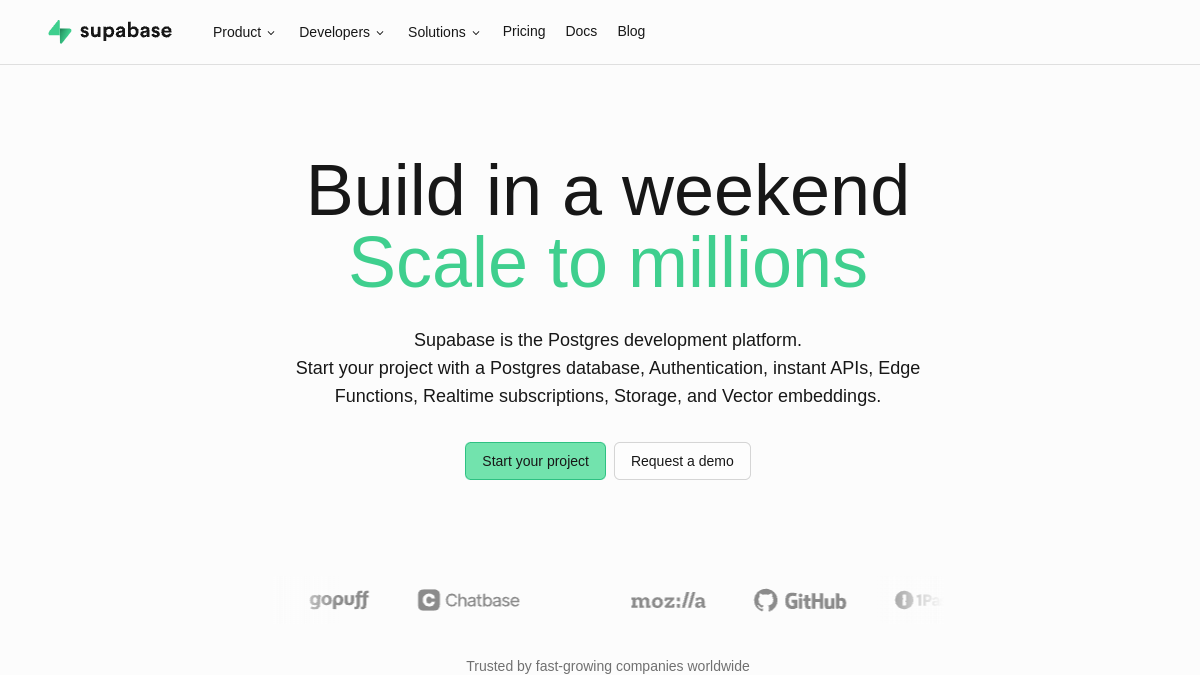
Supabase Auth
- Pricing
- 8.8/10
- Functionality
- 7.4/10
- Ease of use
- 8.2/10
- Support
- 7.6/10
What I like
Auth built directly on Postgres with row-level security, so user data and permissions live in the same database as the rest of the app.
Best for
Teams already using Supabase's Postgres backend that want auth to live in the same platform.
Supabase Auth trades Stytch's dedicated fraud and risk tooling for tight coupling with a Postgres database and open-source flexibility, including the option to self-host. It is a strong fit when auth needs are straightforward and the team values owning its data layer over specialized passwordless infrastructure.
SuperTokens
- Pricing
- 9.2/10
- Functionality
- 7.6/10
- Ease of use
- 7.2/10
- Support
- 6.8/10
What I like
Fully open-source and self-hostable, so teams can avoid per-MAU vendor pricing entirely and keep user data in-house.
Best for
Engineering teams that want to self-host authentication for cost control or data-residency reasons.
SuperTokens is the most infrastructure-hands-on alternative to Stytch's fully managed API, requiring teams to run and maintain the auth service themselves in exchange for no vendor lock-in and predictable self-hosted costs. It offers session management, passwordless login, and social login, though with a smaller managed-service support team behind it.
The verdict
Choose Auth0 for enterprise-grade breadth, Clerk for the fastest polished UI, WorkOS for B2B SSO and SCIM, Firebase or Supabase Auth for tight backend integration, and SuperTokens for a fully self-hosted, open-source stack.
Whatever you shortlist, run your real work through it for a week before committing — the right tool is the one that quietly disappears and lets you get back to it. And if you build software like this yourself, you can list it on Tolodora free.
Frequently asked questions
What is the closest alternative to Stytch for passwordless authentication?
Clerk and Auth0 both offer strong passwordless and passkey support comparable to Stytch, with Clerk favoring a faster drop-in UI and Auth0 offering a broader enterprise feature set.
Is there a free open-source alternative to Stytch?
SuperTokens and Supabase Auth are both open-source and can be self-hosted, avoiding per-monthly-active-user pricing entirely, though teams take on more infrastructure responsibility as a result.
Which Stytch alternative is best for B2B SaaS needing enterprise SSO?
WorkOS is purpose-built for B2B SaaS companies that need to add SSO, SCIM directory sync, and audit logs quickly to satisfy enterprise buyers.
Keep exploring
Building one of these alternatives?
List your tool on Tolodora and get discovered by buyers comparing options.
Launch Your Product