The Best WorkOS Alternatives in 2026
Tolodora Editorial Team
Independent software reviews for founders and small businesses.
WorkOS built its reputation as the fastest way for a B2B SaaS company to bolt on the "enterprise readiness" checklist — SAML-based SSO, SCIM directory sync, audit logs, and a hosted admin portal — without hiring a dedicated identity team. Its per-connection pricing and narrow scope work well for teams that only need those four features, but plenty of companies outgrow that scope or want a different pricing curve, deeper authorization controls, or a self-hosted option.
The right alternative depends on how much identity surface you want to own: full-spectrum platforms like Auth0 and Okta cover consumer and workforce auth alongside enterprise SSO, developer-first platforms like Clerk and Stytch prioritize integration speed, and Frontegg and Ory compete directly on B2B tenant management or open-source flexibility. If you just want the quickest like-for-like swap for WorkOS's exact scope, start with Frontegg or Clerk.

Comparing against the original?
See WorkOS's profile, rating & reviews on Tolodora →
| # | Tool | Best for | Rating |
|---|---|---|---|
| 1 | Auth0 | Teams that need consumer-facing auth (social login, MFA, passwordless) alongside enterprise SSO in one platform. | 3.9/5 |
| 2 | Okta | Larger organizations that want a single IAM vendor covering both employee identity and customer-facing app SSO, not just enterprise connections for one product. | 3.7/5 |
| 3 | Clerk | Product teams building modern web apps, especially React/Next.js, that want polished drop-in auth UI rather than an API-only integration. | 4.1/5 |
| 4 | Frontegg | B2B SaaS teams that want their customers' admins to self-serve identity and access settings without the vendor writing custom UI for it. | 4.1/5 |
| 5 | Stytch | B2B SaaS teams that want passwordless or passkey login combined with enterprise SSO from the same provider. | 4.0/5 |
| 6 | Ory | Engineering teams that want to self-host their identity stack or need full data control instead of relying on a third-party hosted API. | 3.7/5 |
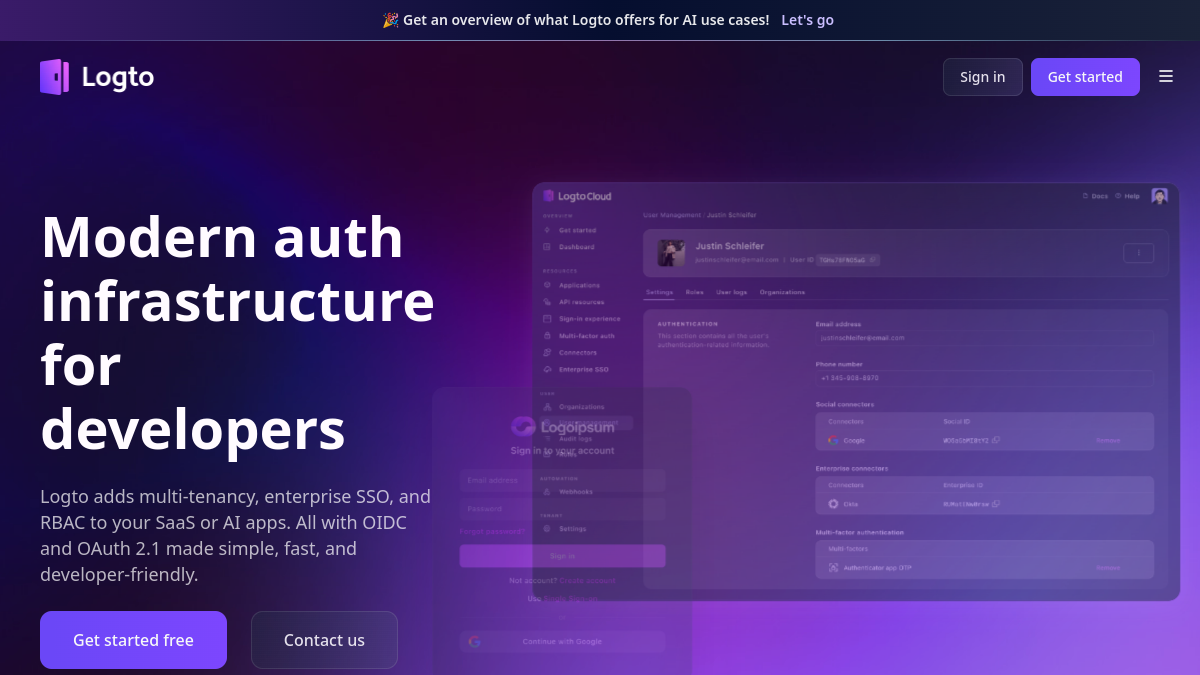
Auth0
- Pricing
- 5.8/10
- Functionality
- 9.2/10
- Ease of use
- 7.8/10
- Support
- 8.2/10
What I like
Auth0 offers the broadest set of pre-built login flows, social connections, and enterprise SSO integrations of any platform on this list.
Best for
Teams that need consumer-facing auth (social login, MFA, passwordless) alongside enterprise SSO in one platform.
Auth0 covers far more ground than WorkOS: it's a full customer identity platform for both consumer and business apps, not a narrow enterprise-readiness API, so you get login UI, social providers, and MFA that WorkOS doesn't offer. That breadth adds a steeper learning curve, and pricing tends to climb faster at higher user volumes than WorkOS's per-connection model.
Okta
- Pricing
- 5.0/10
- Functionality
- 9.0/10
- Ease of use
- 6.8/10
- Support
- 8.8/10
What I like
Okta is the most established workforce and customer identity suite, with mature SSO, lifecycle management, and compliance tooling enterprises already trust.
Best for
Larger organizations that want a single IAM vendor covering both employee identity and customer-facing app SSO, not just enterprise connections for one product.
Okta is the type of enterprise identity provider WorkOS's own SSO connections are built to plug into, so choosing Okta directly means owning the full IAM stack instead of a lightweight API layer on top of it. It's more powerful and better suited to complex org structures than WorkOS, but it's also heavier to configure and typically more expensive if all you need is SSO and SCIM for your own app.
Clerk
- Pricing
- 8.0/10
- Functionality
- 7.6/10
- Ease of use
- 9.2/10
- Support
- 7.8/10
What I like
Clerk pairs pre-built UI components (React, Next.js, and more) with backend auth, so teams ship login, user profile, and organization screens in hours instead of weeks.
Best for
Product teams building modern web apps, especially React/Next.js, that want polished drop-in auth UI rather than an API-only integration.
Clerk covers standard authentication and B2B organization management with a noticeably better out-of-the-box developer experience than WorkOS, which is API-only and expects you to build your own UI. Clerk's enterprise SSO and SCIM support are newer additions and less deeply proven at large enterprise scale than WorkOS, which was purpose-built around those exact connections.
Frontegg
- Pricing
- 7.4/10
- Functionality
- 8.8/10
- Ease of use
- 8.4/10
- Support
- 8.0/10
What I like
Frontegg ships a full self-service admin portal covering SSO, SCIM, roles, entitlements, and audit logs, going further than WorkOS's more limited portal.
Best for
B2B SaaS teams that want their customers' admins to self-serve identity and access settings without the vendor writing custom UI for it.
Frontegg is the closest direct competitor to WorkOS, targeting the same B2B enterprise-readiness use case, but it extends further into fine-grained authorization, entitlements, and adaptive MFA that WorkOS leaves out. Independent comparisons note that WorkOS's per-connection pricing can rise sharply as an account signs more enterprise customers, while Frontegg's model is often positioned as more predictable at scale.
Stytch
- Pricing
- 7.6/10
- Functionality
- 8.0/10
- Ease of use
- 8.6/10
- Support
- 7.6/10
What I like
Stytch offers strong passwordless and passkey support alongside B2B SSO/SCIM, appealing to teams that want modern login methods, not just enterprise connections.
Best for
B2B SaaS teams that want passwordless or passkey login combined with enterprise SSO from the same provider.
Stytch matches WorkOS's core B2B feature set of SSO, SCIM, and MFA while adding first-class passwordless and passkey flows that WorkOS doesn't emphasize as heavily. Stytch's B2B pricing is usage-based (per monthly active user) rather than WorkOS's per-connection model, which can favor accounts with many end users per enterprise customer over accounts with many separate enterprise customers.
Ory
- Pricing
- 9.0/10
- Functionality
- 8.4/10
- Ease of use
- 6.0/10
- Support
- 6.2/10
What I like
Ory's core identity components (Kratos, Hydra, Keto) are open source and can be fully self-hosted, avoiding per-connection or per-user fees entirely.
Best for
Engineering teams that want to self-host their identity stack or need full data control instead of relying on a third-party hosted API.
Ory takes the opposite approach from WorkOS's fully managed API: its identity stack is open source and can be self-hosted for free, or run through Ory Network, its managed cloud offering. That flexibility requires more engineering effort to wire up SSO and SCIM yourself compared to WorkOS's ready-made connections, but it removes vendor lock-in and the cost growth that comes with per-connection pricing.
The verdict
Reach for Auth0 or Okta when you need full-spectrum identity beyond enterprise SSO, Clerk or Stytch when integration speed and login UX matter most, Frontegg for the closest direct swap with deeper admin self-service, and Ory when you'd rather self-host than pay per connection.
Whatever you shortlist, run your real work through it for a week before committing — the right tool is the one that quietly disappears and lets you get back to it. And if you build software like this yourself, you can list it on Tolodora free.
Frequently asked questions
Is WorkOS only for enterprise SSO?
No. WorkOS also covers SCIM directory sync, audit logs, and a hosted admin portal, but its overall scope is narrower than full identity platforms like Auth0 or Okta, which add consumer login, social auth, and broader identity lifecycle management on top of enterprise SSO.
What's the cheapest WorkOS alternative?
Ory is generally the least expensive option since its core identity stack is open source and can be self-hosted for free. Among managed, hosted platforms, Clerk's usage-based pricing is often cited as more predictable at lower volumes than WorkOS's per-connection pricing.
Which WorkOS alternative is easiest to integrate?
Clerk and Stytch are generally the fastest to integrate thanks to pre-built UI components and SDKs. Ory requires the most engineering effort of the group since it's self-hosted, open-source infrastructure rather than a fully hosted API like WorkOS.
Keep exploring
Building one of these alternatives?
List your tool on Tolodora and get discovered by buyers comparing options.
Launch Your Product