What Is an AI Agent? A Plain-English Guide for 2026
In 2026, everything is suddenly an "AI agent." Vendors slap the label on chatbots, automations, and assistants alike, which has made the term almost meaningless. Let's fix that with a clear, jargon-free explanation — what an AI agent actually is, how it works under the hood, and how to tell a real one from marketing.
What is an AI agent?
An AI agent is a system that uses a large language model to take actions toward a goal — not just answer a question. The operative word is act. A regular chatbot responds to what you say. An agent can decide what steps to take, use tools (search the web, call an API, run code, send an email, update a database), observe the results, and keep going until the goal is achieved — often with little supervision.
Put simply: a chatbot talks; an agent does.
Chatbot vs. AI agent vs. automation — what's the difference?
These get mixed up constantly, so here's the clean version:
- Chatbot: you ask, it answers. One turn, no actions in the outside world.
- Traditional automation (like a Zapier zap): a fixed, pre-defined sequence — "when X happens, do Y." It doesn't reason or adapt; it follows the exact path you built.
- AI agent: you give it a goal, and it decides the steps, uses tools, adapts when things change, and retries when something fails.
Example: ask a chatbot "what flights are available?" and it lists options. Give an agent "book me the cheapest morning flight under $300 and add it to my calendar," and it searches, compares, handles the booking flow, and updates your calendar — making decisions along the way.
How do AI agents work?
Most agents combine four ingredients:
- A model (the "brain"). An LLM like Claude or GPT that reasons, plans, and decides what to do next.
- Tools. Things the agent can call — web search, APIs, code execution, a calendar, a CRM, a database. Tools are what let it affect the real world.
- Memory. A way to remember context across steps (and sometimes across sessions), so it doesn't lose the plot halfway through a task.
- A loop. The engine that ties it together: plan → act → observe the result → adjust → repeat until the goal is met or it decides it's stuck.
That loop is the real magic. Instead of one prompt and one answer, the agent runs many small cycles, checking its own work and course-correcting — the same way a person tackles a multi-step task.
What does 'agentic' mean?
You'll hear "agentic AI" a lot. It just describes AI that behaves like an agent — taking initiative, using tools, and completing multi-step tasks — rather than passively responding. "Agentic" is the adjective; "agent" is the thing. The more autonomy and tool use a system has, the more "agentic" it is.
Real examples of AI agents in 2026
Agents have moved from flashy demos to real work across categories:
- Voice agents that answer and place phone calls — booking appointments, qualifying leads, handling support — sounding remarkably human.
- Coding agents that write, run, and fix code across an entire project, not just autocomplete a line.
- Personal assistant agents that triage email, schedule meetings, and do research on your behalf.
- Sales and outreach agents that research prospects, draft personalized messages, and update the CRM.
- Workflow agents that automate multi-step business processes end to end.
The best tools for building AI agents
You don't have to build from scratch — both no-code and developer platforms make agents accessible:
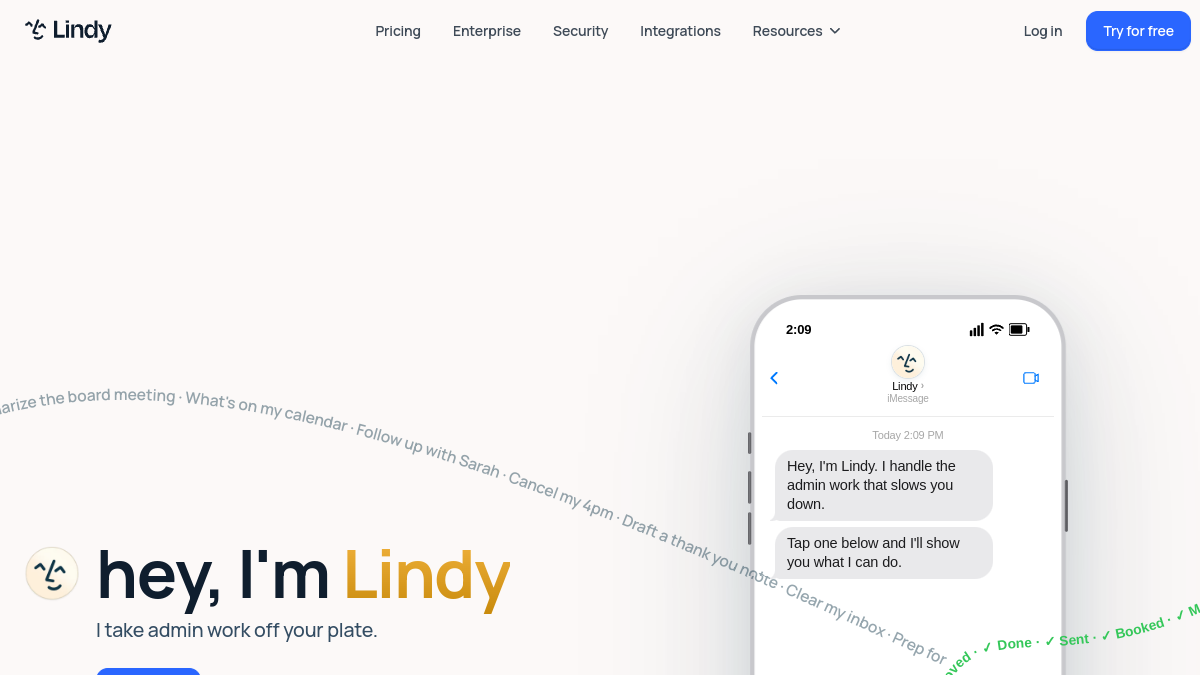
- General AI automation and assistants: see our roundup of Lindy alternatives for tools that build AI "employees" and workflows.
- Voice AI agents: our guides to Vapi alternatives and Retell AI alternatives cover the platforms for phone agents.
- Monitoring and debugging agents in production: once agents are live, you need observability — see Langfuse alternatives.
Coding agents are also a form of this — the same idea powering the vibe coding movement, where an agent edits, runs, and fixes your project.
Are AI agents safe and reliable?
They're powerful but not magic, and treating them as infallible is where teams get burned. The common failure modes:
- Wrong actions. An agent with real tools can send the wrong email or update the wrong record if it misreads the task.
- Getting stuck in loops. Without good stopping conditions, agents can spin, burning time and money.
- Over-trust. Because they sound confident, it's tempting to give agents more autonomy than they've earned.
The teams getting real value add guardrails: clear, narrow scopes; human approval for risky or irreversible steps; spending limits; and observability so you can see exactly what the agent did and why. Used carefully, agents are one of the biggest productivity shifts of the decade. Used carelessly, they're a fast way to automate a mistake.
Frequently asked questions
What's the difference between an AI agent and ChatGPT?
A standard chatbot like the basic ChatGPT experience answers questions. An AI agent goes further — it can use tools and take multiple actions to complete a goal. Many assistants now include agent features, blurring the line, but the distinction is whether it can act, not just reply.
Do I need to code to build an AI agent?
No. No-code platforms let you build capable agents by connecting a model to tools and workflows visually. Developers get more control with code and frameworks, but non-technical users can build useful agents today.
Are AI agents the same as automation?
Not quite. Traditional automation follows a fixed, pre-built path. An AI agent reasons about how to reach a goal and adapts as it goes — which makes it more flexible, but also less predictable, so guardrails matter.
The bottom line
An AI agent is software that doesn't just talk — it does, using a model plus tools and a plan-act-observe loop to accomplish goals with minimal supervision. In 2026 they're moving from demos into real work across voice, coding, sales, and operations. Understanding how they function — and where they need guardrails — is quickly becoming a core skill for builders and businesses alike.