Biodiversitas Nusantara
SoftwareNewIndonesian biodiversity data platform — open species data and maps

About Biodiversitas Nusantara
Exploring Indonesia's Biodiversity Through One Open Data Platform
Indonesia is one of the most biodiverse countries on Earth. The rainforests of Sumatra and Kalimantan, the coral reefs of the east, and the savannas of Nusa Tenggara hold thousands of species found nowhere else. Yet that wealth has long been scattered across research reports, global databases, and field notes that students and the public cannot easily reach. Biodiversitas Nusantara was built to fix that. The digital platform at https://www.gbif.co.id/ gathers Indonesia's biodiversity data in one place that anyone can explore for free.
One Door to Data from 38 Provinces
The platform's main strength is its coverage. Observation records are organised by province, so users can see where species have been recorded most. Papua leads with 290,207 observation records, followed by West Java with 237,935 and Maluku with 212,775. Those three provinces alone account for 38.8 percent of all data recorded in Indonesia. These are not just statistics. Behind them lie research expeditions, field surveys, and community observations showing where scientific attention has concentrated and where data gaps remain. For researchers, such a distribution map helps decide where the next survey should go. For teachers, the same figures become concrete classroom material about why conservation cannot be the same everywhere. Every province has its own ecological story, and this platform lets that story be read through data.
More Than a List of Names
Biodiversitas Nusantara goes beyond a list of species names. Each species has a profile with taxonomy and distribution information, grouped into taxon groups such as birds, mammals, reptiles, amphibians, insects, fish, and plants. Users can browse species by province, compare the biodiversity of two provinces directly, or view distributions on an interactive map. The province comparison feature is what sets the platform apart from a simple online encyclopaedia. Instead of reading about one species at a time, users can ask bigger questions: which province is richer in endemic birds, and how does the mix of taxa change from western to eastern Indonesia. The answers come as charts and regularly updated data, so the platform can be used again and again rather than read once.
Six Iconic Species as a Way In
For readers new to Indonesia's wildlife, the platform offers a friendly way in: six iconic species. There is the Komodo dragon, the world's largest lizard, found only in the Nusa Tenggara islands. There is the orangutan, the great ape endemic to Kalimantan and Sumatra, now critically endangered as tropical forest habitat disappears. There is the bird of paradise from Papua, a symbol of the beauty of eastern Indonesia's bird life. There is the rafflesia, the world's largest flower, growing in the rainforests of Sumatra and Kalimantan. There is the Sumatran tiger, the smallest tiger subspecies, with fewer than 400 individuals estimated to remain in the wild. And there is the green turtle, a marine reptile that migrates thousands of kilometres and relies on Indonesian beaches as nesting habitat. These six species are not decoration. Each one stands for an ecosystem, a threat, and a reason why data about them must be kept.
Who the Platform Is For
The platform serves many audiences at once. Students can use it for school work about the plants and animals of their region. Researchers can use it as a starting point before heading into the field. Teachers can show species distribution maps in class without installing special software. Conservationists can use provincial data to strengthen their advocacy. Even nature travellers can use it to plan more meaningful trips, knowing which species they might encounter in a region. All of it is free, and that is the point: biodiversity data should belong to everyone, not only to a handful of researchers.
Why Open Data Matters for Conservation
Good conservation needs evidence. Without data, decisions about which areas to protect and which species to prioritise rest on guesswork. With observation data organised by province and taxon, those decisions can be defended. Open data also invites participation. When anyone can see the data gaps in their own province, anyone can be moved to fill them through observation and recording. In the long run, that is how a country protects its natural heritage: not by locking it away, but by opening it so more people care. Biodiversitas Nusantara is one step in that direction, and that step is now open for anyone to explore at https://www.gbif.co.id/.
About the author: Gabriel Nusantara manages Biodiversitas Nusantara, an Indonesian biodiversity data platform at gbif.co.id.
What problem it solves
Indonesia's biodiversity data is scattered across research reports and global databases that students and the public cannot easily reach. Biodiversitas Nusantara gathers open occurrence, taxonomy and distribution data by province in one free place.
Alternatives & competitors
An open-data alternative to scattered global biodiversity databases, focused specifically on Indonesia's provinces, species and maps.
Tags
Biodiversitas Nusantara FAQ
What is Biodiversitas Nusantara?
Indonesian biodiversity data platform — open species data and maps It's a analytics tool listed on Tolodora with details and real user reviews.
Is Biodiversitas Nusantara free?
Yes — Biodiversitas Nusantara offers a free plan.
How much does Biodiversitas Nusantara cost?
Biodiversitas Nusantara uses a free pricing model. See its site for current figures.
Ratings & reviews
No ratings yet
Be the first to rate Biodiversitas Nusantara — your honest take helps others decide.
- No reviews yet — be the first to rate Biodiversitas Nusantara.
Similar softwares

Video Translate: AI Video Translator in Your Voice
Video Translate is an online AI video dubbing tool. Upload a talking-head or explainer clip and get a multilingual dubbed video that clones your voice, keeps th
Penguin ePulse
Plan social campaigns, respond to customers and research market signals in one connected workspace.

EarlyLore
Validate product ideas against real competitors, pricing, and market signals before building.
Compare Biodiversitas Nusantara
Similar software
Vectr4
Self-host Vectr4 on your VPS and track events, funnels, sessions, and journeys without sending product data to another vendor.

Tubalytics
AI-assisted macroeconomic research across 217 countries, with data, events, forecasts, and trade.
Global Data Tracker
Explore country statistics on an interactive globe, compare indicators by year, and trace values to their sources.
OZON数据_Ozon数据分析软件_ 跨境电商Ozon数据分析
OZON数据是萌啦科技旗下的数据分析软件,OZON数据分析软件实现了东南亚跨境电商Ozon平台多维度、多层次关键数据共享机制,为跨境电商企业提供全方位的大数据分析服务支持
Statsnet
Statsnet provides business data to help companies verify, understand, and monitor businesses.

CarHistory
UK MOT pass rates by model and year, plus a free MOT history check
Related reads
Vectr4: A Self-Hosted Umami Alternative for Product Analytics
Looking for an Umami alternative? See how Vectr4 combines self-hosted analytics with event tracking, funnels, sessions, users, and customer journeys.
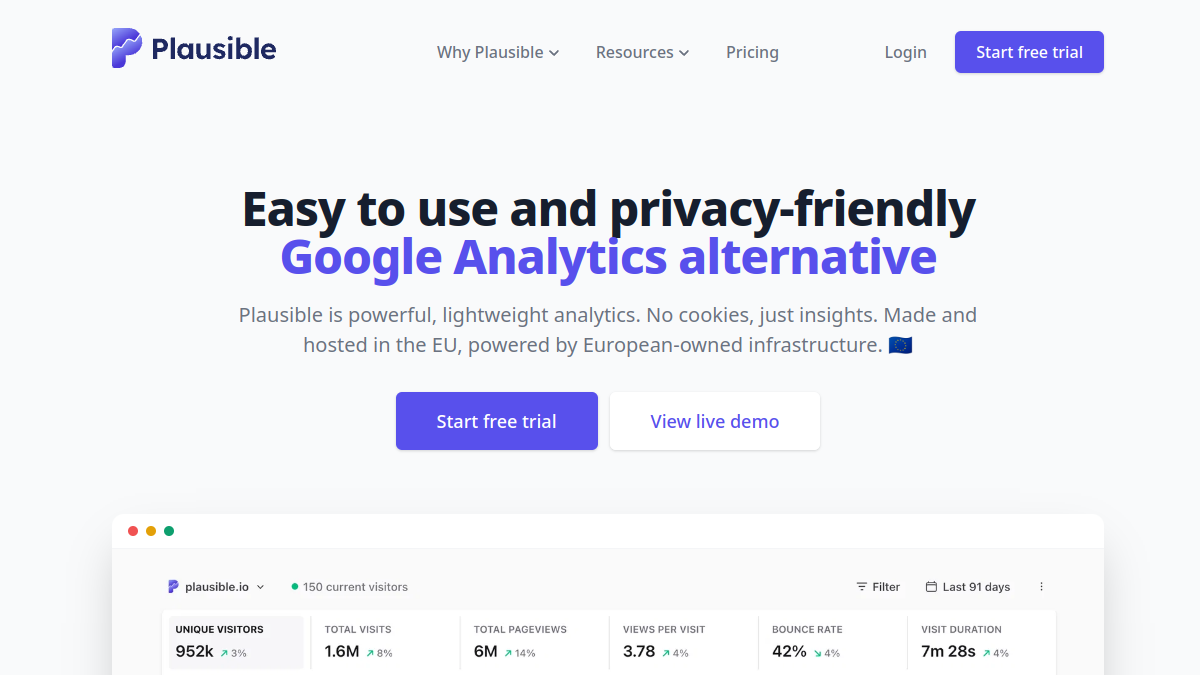
Plausible vs Google Analytics (2026): Which Should You Use?
Plausible vs Google Analytics: one is free but complex and a privacy headache, the other is simple, private, and paid. Here's an honest 2026 comparison to help you choose.
Fathom vs Plausible: Which Privacy-First Analytics Should You Use? (2026)
Both Fathom and Plausible are simple, privacy-first analytics — so which should you choose? Here's my honest comparison for 2026.
Community discussion (0)
Ask questions, share tips, or compare notes with other Biodiversitas Nusantara users.