
Lightdash
SoftwareAn open-source BI tool built on dbt that turns your data models into self-serve dashboards and metrics for the whole team.
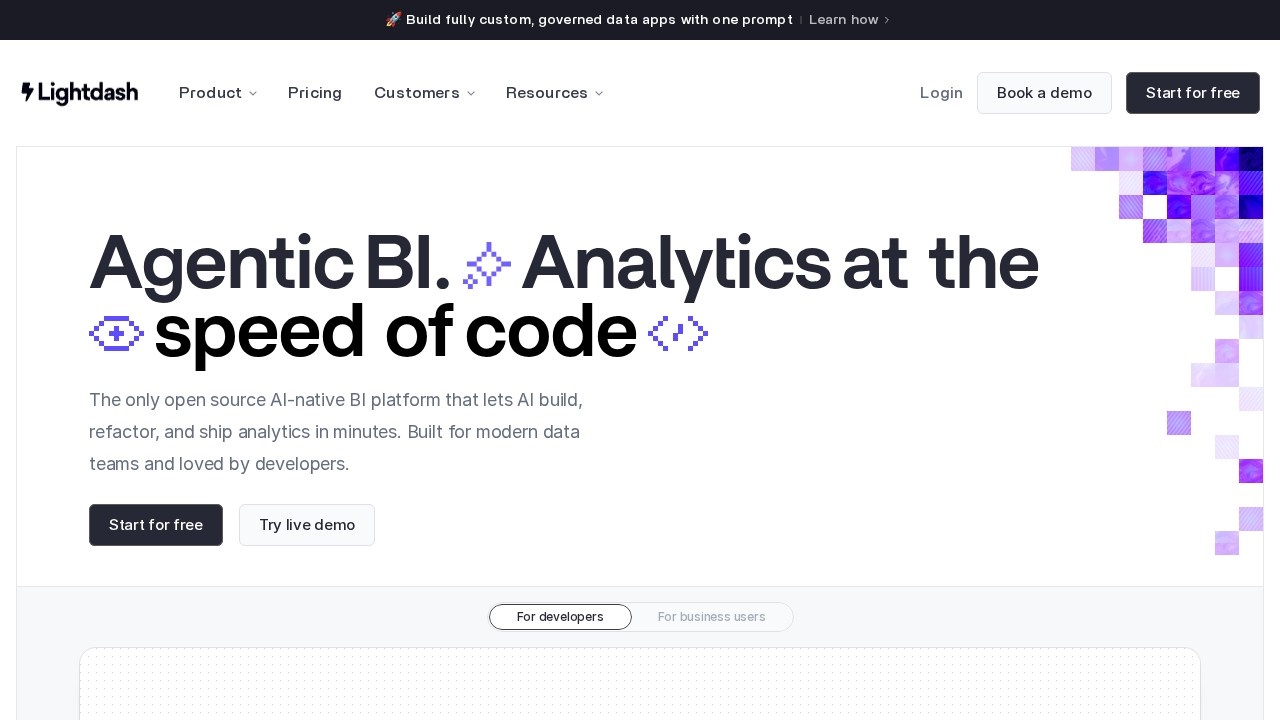
About Lightdash
Lightdash is an open-source business intelligence (BI) platform built to work natively with dbt, the popular data transformation tool that has become a standard in the modern data stack. Lightdash's core idea is to let data teams define their metrics and models once, in dbt, and then expose them through a self-serve BI layer so the whole organization can explore data and build dashboards — without duplicating metric definitions or maintaining a separate, disconnected BI semantic layer. This keeps a single source of truth from data modeling all the way to the charts business users see.
For data teams already using dbt, this integration is genuinely elegant. The metrics and dimensions you define in your dbt project become directly available in Lightdash, so analysts and business users can slice and visualize data confidently, knowing the numbers are governed and consistent. This solves a perennial problem where BI tools redefine metrics separately, leading to conflicting numbers and endless "why don't these match?" debates. Lightdash keeps the definitions in code, version-controlled and trustworthy.
As an open-source tool, Lightdash can be self-hosted for control and cost efficiency, inspected and extended, and adopted without the lock-in and expense of proprietary enterprise BI platforms; a cloud option exists for convenience. It provides the expected BI capabilities — interactive exploration, dashboards, charts, scheduling and sharing — while staying close to the developer-friendly, code-first ethos of the modern data stack. This makes it especially appealing to data-savvy teams who use dbt and want their BI to align with that workflow. For organizations that want governed, self-serve analytics built on a single source of truth, and that value open source and the dbt ecosystem, Lightdash offers a thoughtful, modern and well-integrated BI solution.
Tags
Ratings & reviews
No ratings yet
Be the first to rate Lightdash — your honest take helps others decide.
- No reviews yet — be the first to rate Lightdash.
Similar softwares

The Sport Stack
Sports analytics product with a public graded bet ledger.
GSC Wizard
Unlock powerful SEO analytics, forecasting, and content optimization from your Google Search Console data, with built-in Google Analytics 4 reports. Includes a
Global Data Tracker
Explore country statistics on an interactive globe, compare indicators by year, and trace values to their sources.
Compare Lightdash
Similar software

Evidence
An open-source, code-based BI tool that builds polished data reports and dashboards from SQL and Markdown.
Vemetric
Simple, privacy-first, open-source web and product analytics with funnels and user journeys.
OpenPanel
An open-source, privacy-friendly product and web analytics platform — like Mixpanel meets Plausible.

ClickHouse
A blazing-fast open-source column-oriented database for real-time analytics over massive datasets.
HoodScan
Explore tokens, wallets, transactions and blockchain activity on Robinhood Chain. The AI-powered Robinhood Chain Explorer.

Metabase
Open-source business intelligence that lets anyone ask questions of your data and build dashboards — no SQL required.
Related reads
Plausible vs Google Analytics (2026): Which Should You Use?
Plausible vs Google Analytics: one is free but complex and a privacy headache, the other is simple, private, and paid. Here's an honest 2026 comparison to help you choose.
Fathom vs Plausible: Which Privacy-First Analytics Should You Use? (2026)
Both Fathom and Plausible are simple, privacy-first analytics — so which should you choose? Here's my honest comparison for 2026.
Plausible vs Google Analytics: Why I'd Choose Privacy-First Analytics in 2026
I run both Plausible and Google Analytics. Here's my honest comparison for 2026 — and why, for most sites, I'd reach for the simpler, privacy-first option.
Community discussion (0)
Ask questions, share tips, or compare notes with other Lightdash users.