
PostHog
SoftwareAn all-in-one, open-source product analytics suite with analytics, replays, feature flags, and experiments.

About PostHog
PostHog is an all-in-one product analytics and "context" platform that pulls together the data teams need to understand and improve their products — usage analytics, session replays, error tracking, feature flags, experiments and more — in one place. Used by 500,000+ teams, it's become a favorite of product-led and engineering-driven companies, and it's increasingly built to feed context to AI agents too.
What PostHog is
PostHog centralizes the signals that tell you how a product is really being used. It ingests analytics, errors and business data, records user sessions, analyzes funnels, and lets you run experiments and toggle features — then lets you query all of it, even with SQL. The idea is a single "context layer" for both humans making product decisions and AI agents acting on them.
Who it's for
PostHog serves product teams, engineers and startups that want deep, self-serve insight into their product without stitching together five separate tools. Its developer-friendly, all-in-one approach especially appeals to technical teams and companies building AI-driven products that need rich context.
What it includes
- Product analytics and data ingestion (usage, errors, metrics)
- Session replay of real user recordings
- Funnel and conversion analysis
- Feature flags and A/B experiments
- Direct SQL querying for advanced analysis
- AI-ready architecture that provides context to agents
- Installation wizards, CLI and SDKs
- Integrations with Stripe, Google Ads, GitHub and more
Many tools, one platform
PostHog's biggest draw is consolidation. Analytics, session replay, error tracking, feature flags and experiments would normally each be a separate paid subscription; PostHog puts them in one platform where they share the same data. For a product team, that means you can watch a session replay of a user who dropped out of a funnel, check the error they hit, and ship a fix behind a feature flag — all without switching tools or reconciling datasets.
Data you can actually dig into
Where many analytics tools box you into pre-built charts, PostHog lets you query your product data directly with SQL, so you're never stuck when you have a question the dashboards don't answer. Combined with session replays and funnels, that depth lets teams move from "what happened" to "why" — the kind of investigative analysis that actually drives product improvements rather than just reporting numbers.
Built for the AI era
PostHog leans into a "self-driving product" philosophy: because it centralizes context across sources like Stripe, Google Ads and GitHub, AI agents can autonomously investigate issues, analyze data and recommend actions. As product teams increasingly work alongside AI, having a platform designed to give agents rich, unified context — not just show humans charts — is a forward-looking advantage.
Ship, test, learn, repeat
Because PostHog bundles feature flags and experiments alongside analytics, it closes the loop between shipping and learning. You can roll out a change to a small percentage of users behind a flag, run an A/B experiment to measure its impact, watch session replays of how people actually use it, and then decide whether to expand or roll back — all in one platform. For product teams practicing continuous, evidence-based iteration, having that whole cycle in a single tool removes an enormous amount of friction.
Why choose PostHog
For product teams and engineers who want deep, all-in-one insight without a stack of separate tools, PostHog is a compelling choice. Its combined analytics, session replay, experiments and feature flags, SQL-level depth, AI-ready design and famously generous free tier (most users pay nothing) make it a practical, powerful way to understand users and build better products — on data you fully control.
Built with
Open source
Tags
Ratings & reviews
No ratings yet
Be the first to rate PostHog — your honest take helps others decide.
- No reviews yet — be the first to rate PostHog.
Similar softwares
Slip
Slip helps freelancers and side hustlers track income, expenses, profit, recurring bills and estimated tax reserves.
达秘-TikTok达人建联工具
达秘-是 TikTok Shop 卖家专属工具:批量邀约私信达人、免费千万精准带货库、AI多语言话术+达人管理,多店铺运营,提 90% 效率+200%订单。
HelpSite
Simple, AI-powered knowledge-base software for public help centers, private SOPs, and sourced answers customers can trust.
Compare PostHog
Similar software

Highlight
Open-source monitoring with session replay, error tracking and logging — see exactly what went wrong in your app.

GrowthBook
An open-source feature flagging and A/B testing platform that works with your existing data warehouse.
Vemetric
Simple, privacy-first, open-source web and product analytics with funnels and user journeys.
OpenPanel
An open-source, privacy-friendly product and web analytics platform — like Mixpanel meets Plausible.

Flagsmith
An open-source feature flag and remote config platform to manage feature rollouts across your apps.

LogRocket
Session replay, error tracking and product analytics that let you see exactly what users experienced.
Related reads
Vectr4: A Self-Hosted Umami Alternative for Product Analytics
Looking for an Umami alternative? See how Vectr4 combines self-hosted analytics with event tracking, funnels, sessions, users, and customer journeys.
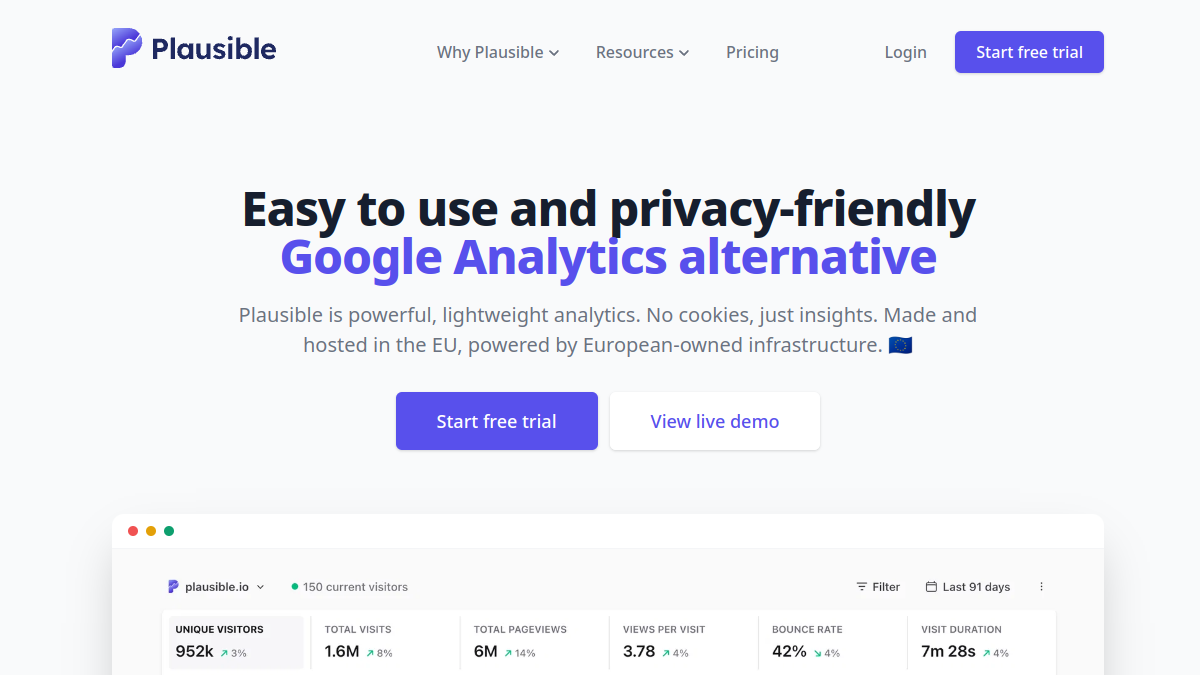
Plausible vs Google Analytics (2026): Which Should You Use?
Plausible vs Google Analytics: one is free but complex and a privacy headache, the other is simple, private, and paid. Here's an honest 2026 comparison to help you choose.
Fathom vs Plausible: Which Privacy-First Analytics Should You Use? (2026)
Both Fathom and Plausible are simple, privacy-first analytics — so which should you choose? Here's my honest comparison for 2026.
Community discussion (0)
Ask questions, share tips, or compare notes with other PostHog users.