The Best PostHog Alternatives in 2026
Tolodora Editorial Team
Independent software reviews for founders and small businesses.
PostHog built its following by bundling product analytics, session replay, feature flags, A/B testing, and surveys into one open-source, self-hostable platform, which appeals to engineering-led teams that want to own their data and avoid stitching together five separate tools. That breadth is also where it can feel like overkill: teams that only need clean behavioral analytics, or that want a simpler privacy-first dashboard, sometimes find PostHog's all-in-one scope harder to navigate than a focused single-purpose tool.
The right alternative depends on what you actually need PostHog for. Teams chasing deep cross-team behavioral analysis at scale tend to land on Amplitude, product teams that want a friendlier, well-priced analytics core pick Mixpanel, and anyone prioritizing data ownership or GDPR-first privacy over feature breadth gravitates to Matomo or Plausible.

Comparing against the original?
See PostHog's profile, rating & reviews on Tolodora →
| # | Tool | Best for | Rating |
|---|---|---|---|
| 1 | Amplitude | Larger product teams that need rigorous behavioral analysis and are willing to pay enterprise pricing for it. | 3.9/5 |
| 2 | Mixpanel | Product and growth teams that want fast, self-serve funnel and retention analysis without PostHog's broader tool sprawl. | 4.0/5 |
| 3 | Heap | Teams that want to skip manual event instrumentation and analyze historical interactions after the fact. | 3.7/5 |
| 4 | Pendo | Product-led teams that need in-app onboarding and adoption guidance layered on top of analytics, not just the analytics itself. | 3.7/5 |
| 5 | Matomo | Privacy-conscious teams that want PostHog's self-hosting philosophy but a lighter, web-analytics-first tool. | 3.8/5 |
| 6 | Plausible | Teams that want simple, privacy-first traffic analytics without the setup or scope of a full product analytics suite. | 3.7/5 |
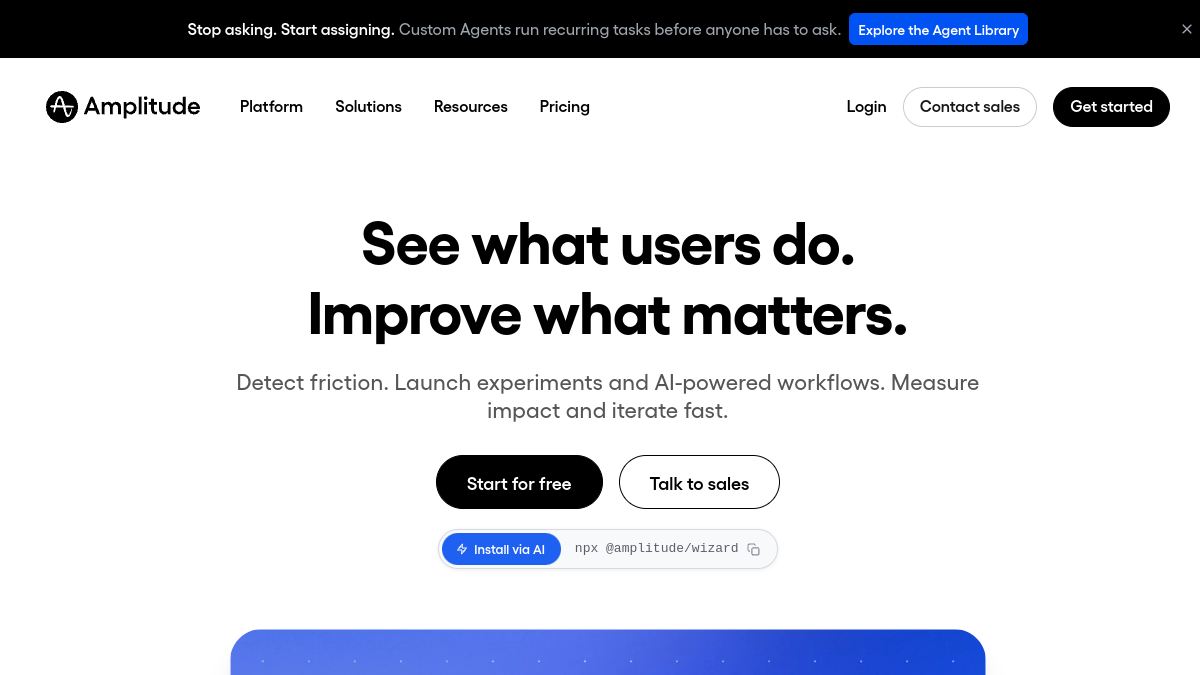
Amplitude
- Pricing
- 5.8/10
- Functionality
- 9.2/10
- Ease of use
- 7.8/10
- Support
- 8.2/10
What I like
Enterprise-grade behavioral analytics with deep cohorting, cross-team collaboration, and (after absorbing Statsig's platform in 2026) built-in experimentation.
Best for
Larger product teams that need rigorous behavioral analysis and are willing to pay enterprise pricing for it.
Amplitude goes deeper than PostHog on pure behavioral analytics: cohort building, predictive analytics, and cross-team governance are more mature. It doesn't natively bundle session replay or feature-flag management the way PostHog does, and its paid tiers climb quickly once event volume grows, making PostHog's flatter, usage-based pricing more attractive for smaller teams.
Mixpanel
- Pricing
- 7.4/10
- Functionality
- 8.5/10
- Ease of use
- 8.4/10
- Support
- 7.8/10
What I like
A generous free tier, transparent event-based pricing, and strong group analytics for tracking account-level behavior in B2B SaaS.
Best for
Product and growth teams that want fast, self-serve funnel and retention analysis without PostHog's broader tool sprawl.
Mixpanel is narrower than PostHog by design: it focuses on funnels, retention, and cohort analysis rather than session replay, flags, and surveys in one suite. Its interface is generally considered easier to onboard a non-technical team onto than PostHog's, though you'll need separate tools if you also want replay or experimentation.
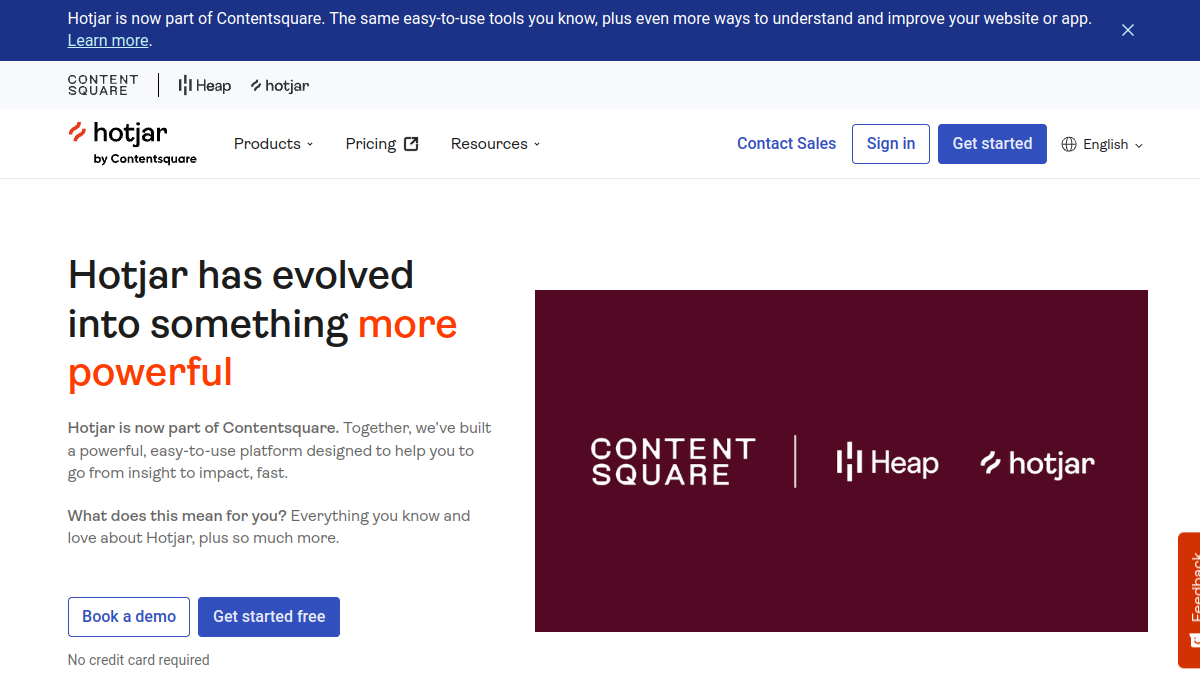
Heap
- Pricing
- 5.5/10
- Functionality
- 8.2/10
- Ease of use
- 8.0/10
- Support
- 7.6/10
What I like
Autocapture that records every user interaction automatically, so teams can define events retroactively instead of instrumenting tracking plans upfront.
Best for
Teams that want to skip manual event instrumentation and analyze historical interactions after the fact.
Both Heap and PostHog offer autocapture, but Heap leans on it as its core workflow while PostHog treats it as a supplement to manual event tracking and its wider feature set. Heap's pricing is typically quote-based and can run higher than PostHog's self-hosted or usage-based plans at similar data volumes.
Pendo
- Pricing
- 4.8/10
- Functionality
- 8.4/10
- Ease of use
- 7.6/10
- Support
- 8.5/10
What I like
Pairs product analytics with in-app guides, walkthroughs, and NPS surveys, plus high-touch onboarding and customer support.
Best for
Product-led teams that need in-app onboarding and adoption guidance layered on top of analytics, not just the analytics itself.
Pendo competes with PostHog on the analytics-plus-engagement front rather than the analytics-plus-engineering front: it's stronger on in-app guides and adoption workflows, weaker on developer-facing features like feature flags and open-source self-hosting. It's also priced for mid-market and enterprise budgets, well above PostHog's entry tiers.
Matomo
- Pricing
- 8.8/10
- Functionality
- 7.6/10
- Ease of use
- 7.0/10
- Support
- 6.8/10
What I like
Open-source and self-hostable like PostHog, with a strong focus on data ownership, GDPR compliance, and no-sampling analytics.
Best for
Privacy-conscious teams that want PostHog's self-hosting philosophy but a lighter, web-analytics-first tool.
Matomo is the closest philosophical match to PostHog: both are open-source and can be fully self-hosted for data ownership. Matomo focuses more narrowly on web and marketing analytics and doesn't natively include feature flags, A/B testing infrastructure, or session replay at the depth PostHog does, but its free community edition undercuts PostHog on cost for teams that only need core analytics.
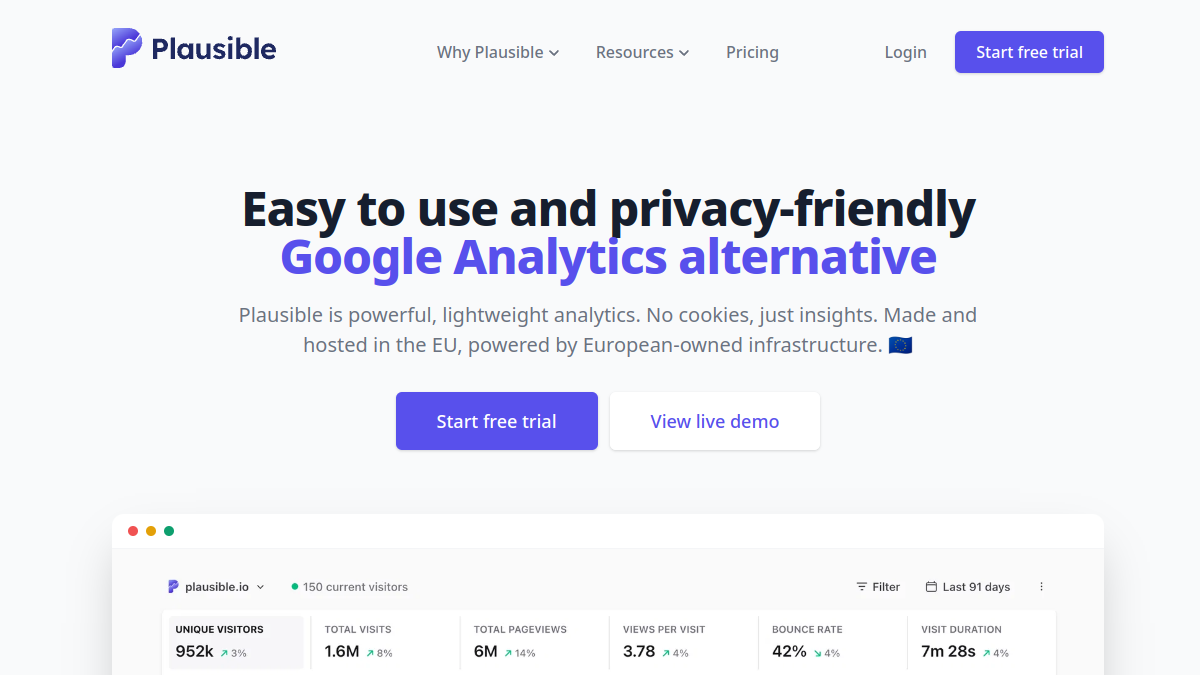
Plausible
- Pricing
- 9.0/10
- Functionality
- 5.5/10
- Ease of use
- 9.2/10
- Support
- 6.2/10
What I like
A lightweight, cookie-free analytics script with a simple dashboard, flat pricing, and an open-source self-hosted edition.
Best for
Teams that want simple, privacy-first traffic analytics without the setup or scope of a full product analytics suite.
Plausible is dramatically simpler than PostHog: it covers pageviews, referrers, and basic goal tracking rather than funnels, session replay, feature flags, or surveys. That makes it a poor fit for teams doing serious product analytics, but a much cheaper and faster-to-deploy option for marketing sites and smaller products that don't need PostHog's full feature set.
The verdict
Choose Amplitude for enterprise-scale behavioral depth, Mixpanel for a friendlier and better-priced analytics core, Heap to skip manual instrumentation, Pendo when in-app guidance matters as much as analytics, Matomo for a self-hosted privacy-first match to PostHog's ethos, and Plausible when you just need simple, lightweight traffic analytics.
Whatever you shortlist, run your real work through it for a week before committing — the right tool is the one that quietly disappears and lets you get back to it. And if you build software like this yourself, you can list it on Tolodora free.
Frequently asked questions
What is the best PostHog alternative for privacy-focused teams?
Matomo and Plausible are the strongest privacy-first options. Matomo is the closer match to PostHog's self-hosted, feature-rich approach, while Plausible is a much lighter, simpler tool for teams that only need basic web analytics without cookies.
Is Amplitude better than PostHog for large teams?
For pure behavioral analytics at enterprise scale, Amplitude generally offers deeper cohorting and cross-team collaboration tools than PostHog. It doesn't bundle session replay, feature flags, and surveys into the same product the way PostHog does, so some teams still need extra tools alongside it.
Do any PostHog alternatives offer a free self-hosted option?
Yes. Matomo's Community Edition and Plausible's Community Edition are both open-source and free to self-host, similar to PostHog's own open-source self-hosting option. Amplitude, Mixpanel, Heap, and Pendo are cloud-only commercial products with free usage tiers but no self-hosted edition.
Keep exploring
Building one of these alternatives?
List your tool on Tolodora and get discovered by buyers comparing options.
Launch Your Product