The Best Segment Alternatives in 2026 (Customer Data Platforms)
Tolodora Editorial Team
Tolodora's editorial team — we research, compile and regularly update these software guides from public sources and product documentation.
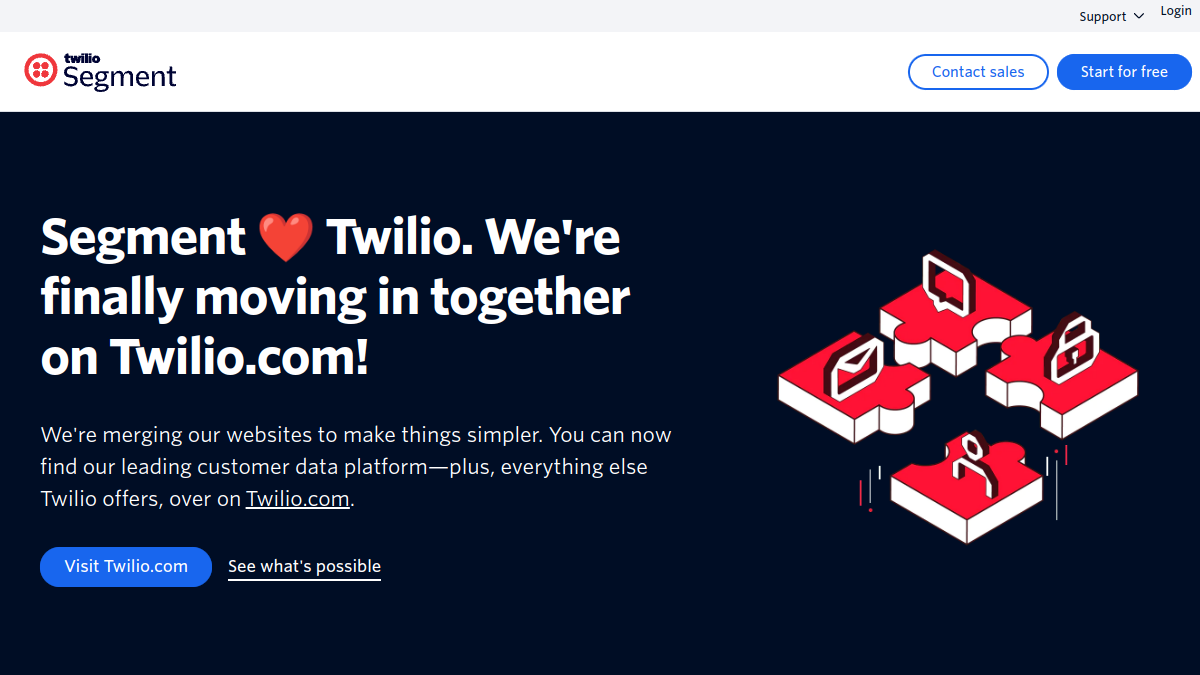
Segment (now Twilio Segment) pioneered the customer data platform: collect events once, route them everywhere. It's powerful, but pricing scales steeply with volume, so many teams look for open-source, warehouse-native or cheaper alternatives.
These all collect and route customer/event data to your tools and warehouse; they differ on hosting, pricing model and extra analytics.
We rated every pick on four things — pricing and value, functionality, ease of use, and support. Here's the rundown.

Comparing against the original?
See Segment's profile, rating & reviews on Tolodora →
| # | Tool | Best for | Rating |
|---|---|---|---|
| 1 | RudderStack | Data teams that want Segment's model, warehouse-first, at lower cost (and self-hostable). | 4.4/5 |
| 2 | PostHog | Product teams that want data collection and analytics in one platform. | 4.4/5 |
| 3 | Jitsu | Engineering teams that want a lightweight, open-source, self-hosted event pipeline. | 4.2/5 |
| 4 | mParticle | Enterprises needing robust identity, audiences and governance at scale. | 4.1/5 |
| 5 | Snowplow | Data-mature teams that want complete ownership and richly structured behavioural data. | 4.1/5 |
| 6 | Hightouch | Teams with a data warehouse who want to activate that data without duplicating a CDP. | 4.3/5 |
RudderStack
- Pricing
- 8.8/10
- Functionality
- 9.2/10
- Ease of use
- 8.4/10
- Support
- 8.6/10
What I like
A Segment-compatible, warehouse-native CDP with an open-source core — collect events and sync them to 200+ tools and your warehouse.
Best for
Data teams that want Segment's model, warehouse-first, at lower cost (and self-hostable).
RudderStack is the most direct Segment alternative: similar APIs (easy migration), 200+ integrations, and a warehouse-native design that keeps your data centralised. Its open-source edition can be self-hosted, and pricing is friendlier at volume. The default choice for teams leaving Segment on cost. For your business, it's one of the stronger options on this shortlist.
PostHog
- Pricing
- 8.8/10
- Functionality
- 9.4/10
- Ease of use
- 8.2/10
- Support
- 8.4/10
What I like
Event pipelines plus a full product-analytics suite — funnels, session replay, feature flags, A/B tests and surveys — with a huge free tier.
Best for
Product teams that want data collection and analytics in one platform.
That focus makes it a natural fit for many your business. PostHog goes beyond routing data: it's an all-in-one product OS with analytics, replays, experiments and a CDP layer, and it's open-source and self-hostable. For product teams, bundling the pipeline with analytics (and a generous free tier) makes it a compelling, cost-effective Segment alternative.
Jitsu
- Pricing
- 9.4/10
- Functionality
- 8.4/10
- Ease of use
- 8.2/10
- Support
- 7.8/10
What I like
An open-source, real-time data-collection pipeline you can self-host — stream events to your warehouse and tools without heavy fees.
Best for
Engineering teams that want a lightweight, open-source, self-hosted event pipeline.
That focus makes it a natural fit for many your business. Jitsu is an open-source alternative focused on real-time event ingestion and routing to your warehouse and destinations. Self-host it to avoid usage-based CDP pricing entirely, or use their cloud. A developer-friendly, budget-conscious Segment alternative for streaming data pipelines.
mParticle
- Pricing
- 6.8/10
- Functionality
- 9.2/10
- Ease of use
- 8.2/10
- Support
- 8.8/10
What I like
An enterprise CDP with strong identity resolution, audience management, governance and real-time data quality across many channels.
Best for
Enterprises needing robust identity, audiences and governance at scale.
mParticle is a leading enterprise CDP: advanced identity resolution, audience segmentation, data governance and 300+ integrations, built for large, multichannel organisations. It's a premium Segment alternative when governance, identity and scale matter more than price. Among your business, it earns its spot for the reasons above.
Snowplow
- Pricing
- 8.2/10
- Functionality
- 9.2/10
- Ease of use
- 7.4/10
- Support
- 8.2/10
What I like
Open-source behavioural data collection you fully own — rich, granular event data delivered to your warehouse with total control over schema.
Best for
Data-mature teams that want complete ownership and richly structured behavioural data.
Plenty of your business land on it after weighing the field. Snowplow is a powerful, open-source behavioural data platform: define your own event schemas and collect high-quality, granular data straight into your warehouse or lake, with full ownership. It's more engineering-heavy, but for teams that want maximum control over their data, it's a top Segment alternative.
Hightouch
- Pricing
- 8.4/10
- Functionality
- 9.0/10
- Ease of use
- 8.6/10
- Support
- 8.6/10
What I like
Reverse ETL and a warehouse-native CDP — activate the data already in your warehouse by syncing audiences and traits to 200+ tools.
Best for
Teams with a data warehouse who want to activate that data without duplicating a CDP.
Hightouch takes a warehouse-first approach: rather than a separate data store, it syncs the customer data already in your warehouse out to your marketing and sales tools (reverse ETL), plus audience building. For modern data stacks, it's a cost-effective, flexible Segment alternative. It's a common pick among your business comparing their choices.
The verdict
Want a Segment-compatible, warehouse-native CDP (often cheaper)? RudderStack. Prefer open-source you can self-host? Jitsu or RudderStack. Want product analytics bundled in? PostHog. Enterprise-scale CDP? mParticle.
Frequently asked questions
What is the best open-source Segment alternative?
RudderStack and Jitsu are the leading open-source CDPs — both self-hostable, with RudderStack offering Segment-compatible APIs so migration is straightforward.
Which alternative is warehouse-native?
RudderStack and Hightouch are built around your data warehouse (Snowflake, BigQuery, etc.), letting you keep data centralised and sync it out — a cost-effective, modern approach.
Is there a cheaper Segment alternative with analytics built in?
PostHog combines event pipelines with product analytics, session replay and feature flags, and has a generous free tier — often far cheaper than Segment for product teams.
Keep exploring
Building one of these alternatives?
List your tool on Tolodora and get discovered by buyers comparing options.
Launch Your Product