SurrealDB
SoftwareA multi-model database unifying documents, graphs, vectors and more in one system — a context layer for AI.
About SurrealDB
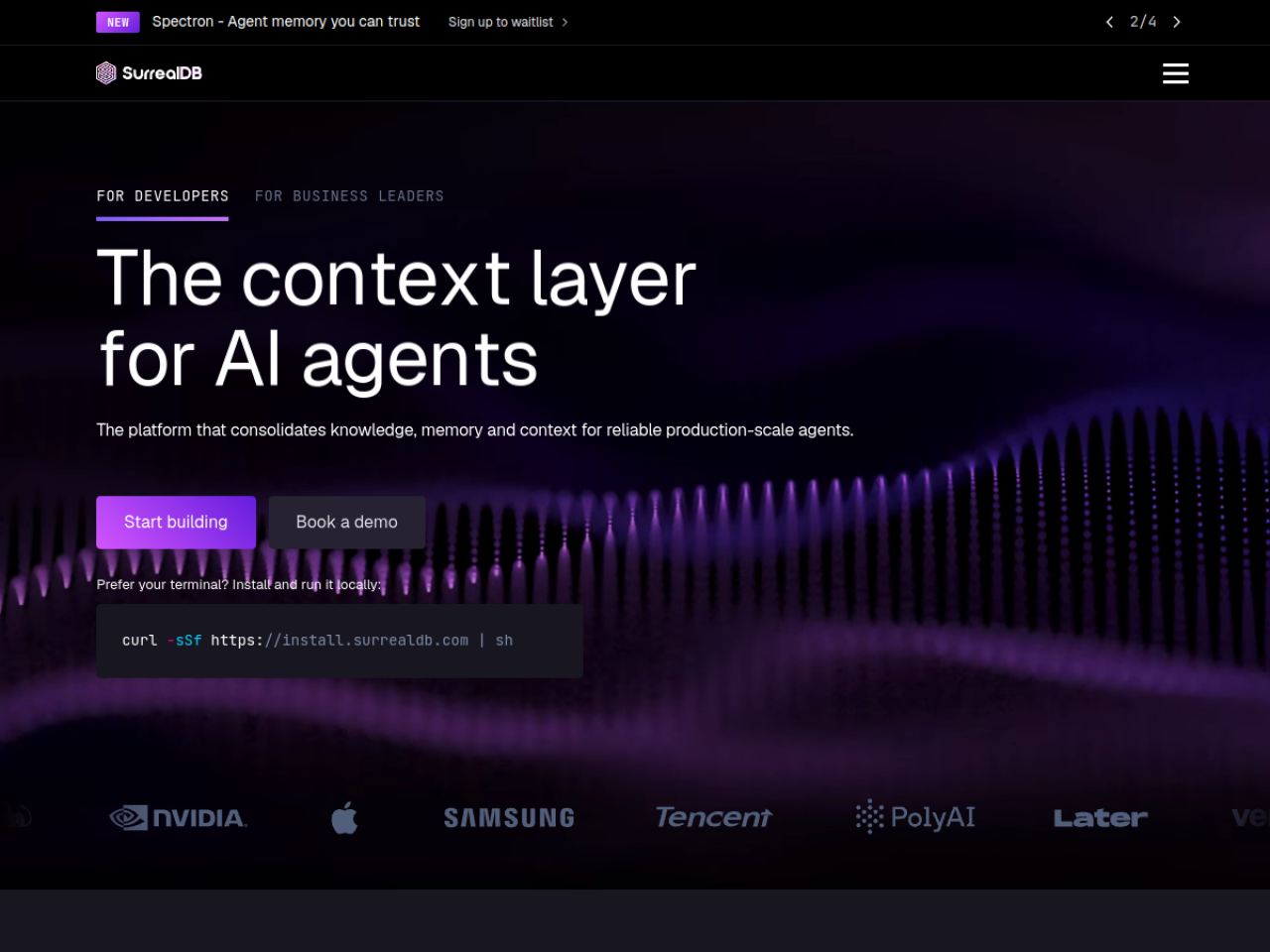
SurrealDB is a multi-model database that unifies documents, graphs, vectors, relational data and more in a single engine, queried with a SQL-like language called SurrealQL. Positioned as “the unified data layer for AI,” it aims to replace the stack of separate databases and services most modern applications bolt together, and it is trusted by organizations including Samsung, Verizon, Tencent and PolyAI.
What is SurrealDB?
SurrealDB collapses several kinds of database into one. Instead of running a document store, a graph database, a vector database, an auth service and a cache side by side, you model documents, relationships and vector embeddings in the same engine and query them together with SurrealQL. It is ACID-compliant with distributed write nodes, and it can run embedded inside your application or as a managed cloud service.
Who it's for
SurrealDB is built for developers and engineering teams building data-intensive and AI applications — agents, knowledge graphs, semantic search and real-time apps. It suits teams tired of gluing multiple data systems together and keeping them in sync, as well as enterprises that need one platform to reason over connected, multi-shaped data.
Key features
- Multi-model: documents, graphs, vectors and relational data in one engine
- SurrealQL, a familiar SQL-like query language
- ACID compliance with distributed write nodes
- Built-in authentication and row-level permission models
- Full-text and semantic (vector) search combined in a single query
- An Agent Memory layer for persistent AI-agent context
- Real-time capabilities with roughly 30ms vector-search latency
- Deployable embedded or as a cloud service
Built for the AI era
What makes SurrealDB especially timely is how well its multi-model design fits AI workloads. Retrieval-augmented generation and agents need vector search, structured data and relationships together — usually meaning a vector DB plus a document store plus a graph plus glue code. SurrealDB does all of it in one place, and its Agent Memory layer gives AI agents persistent, queryable context, so the database itself becomes the memory layer instead of yet another bolted-on service.
Fewer systems, less complexity
The core payoff is consolidation. By folding what typically requires five separate systems — vector database, graph database, document store, auth service and cache — into one engine, SurrealDB cuts operational complexity, reduces the latency of hopping between services, and removes whole classes of synchronization bugs. Combined built-in auth and permissions mean access control lives with the data rather than in a separate layer.
Open source and enterprise-ready
SurrealDB is available under open-source licensing, with a free tier accessible through SurrealDB Studio, so developers can start locally at no cost. For production use it brings serious credentials: SOC 2 Type 2, GDPR, ISO 27001 and Cyber Essentials Plus compliance, plus managed cloud hosting — the assurances enterprises need to trust it with real workloads.
Flexible deployment and querying
SurrealDB adapts to how a team wants to work. It can be embedded directly inside an application for local-first or edge scenarios, or run as a managed cloud service for scale, and SurrealQL gives developers a familiar, SQL-like way to express queries that would otherwise require juggling several query languages across different databases. Combining full-text and vector search in a single query — rather than stitching results from separate engines — is the kind of thing that turns complex retrieval code into a few readable lines.
Why choose SurrealDB
For a team building modern, data-intensive or AI-driven applications, SurrealDB offers a genuinely different proposition: one flexible, real-time, multi-model database instead of a fragile constellation of specialized services. Its AI-focused features, open-source availability and enterprise compliance make it a compelling foundation for developers who want power and simplicity at the same time.
Tags
Ratings & reviews
No ratings yet
Be the first to rate SurrealDB — your honest take helps others decide.
- No reviews yet — be the first to rate SurrealDB.
Similar softwares

FeatQ
Feature-request board for software teams: users vote, your coding agent pulls the top request as a spec over MCP, voters get emailed when it ships.

Nitroindexer
Bulk URL indexing and Google index checks for SEO professionals.
Vectoree
Give your coding agent a backend — models, auth, database and storage in one cloud.
Compare SurrealDB
Similar software
LaunchNest LN
LaunchNest LN is a product launch platform for SaaS, AI tools, and developer products. Discover new products, launch your own, and grow with a global community.
NeuraKeep
Auditable, source-cited memory for AI agents with review-gated durable updates, conflict visibility, and preserved failure lessons.
Moltgate
Turn AI agent ideas into paid offers. Learn what sells, then automate what repeats.
listai.tools
A free directory of AI tools, filed by what each one makes: writing, image, video, audio, code and agents. Reviewed by hand.
E2B
Open-source, secure cloud sandboxes that let AI agents run code and use real tools safely.

Browserbase
Headless browser infrastructure for AI agents and automation — run reliable, scalable browsers in the cloud via API.
Related reads

Text Differ: A Simple and Powerful Online Text Comparison Tool
Compare two versions of text, code, or documents instantly with Text Differ. Discover its key features, comparison modes, and practical uses.
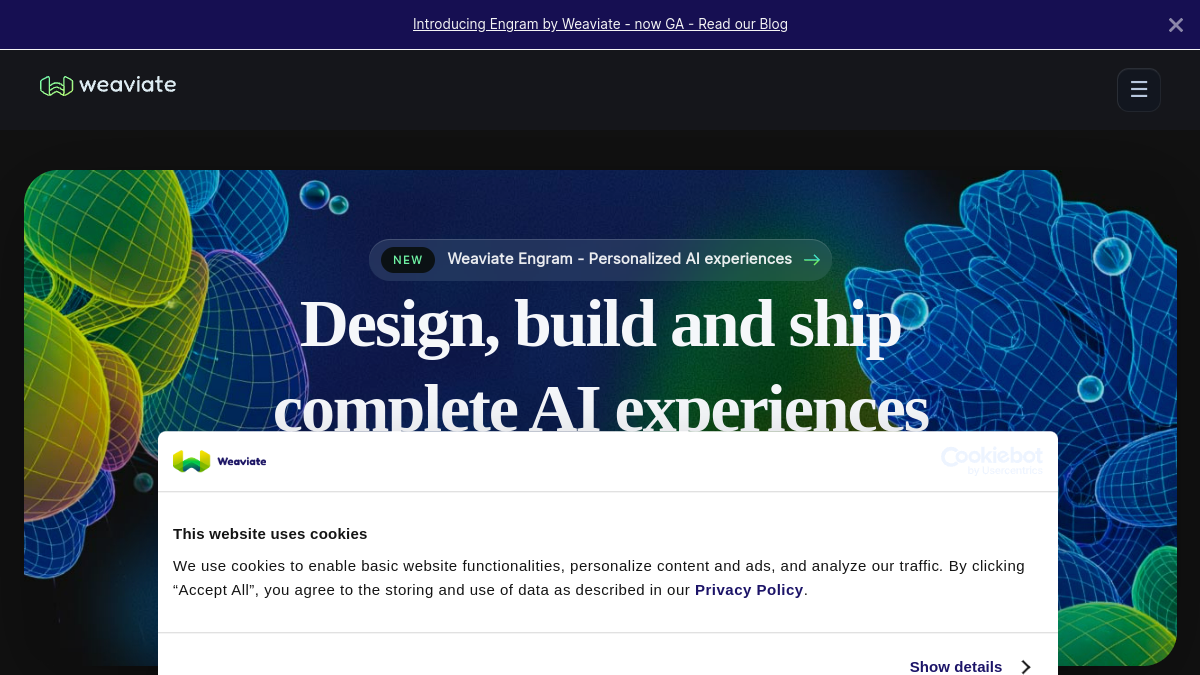
The 6 Best Vector Databases in 2026 (for RAG & AI Search)
Vector databases power RAG, semantic search and AI memory. Here are the six best in 2026 — from managed Pinecone to open-source Qdrant, Weaviate and Chroma — with who each is for.
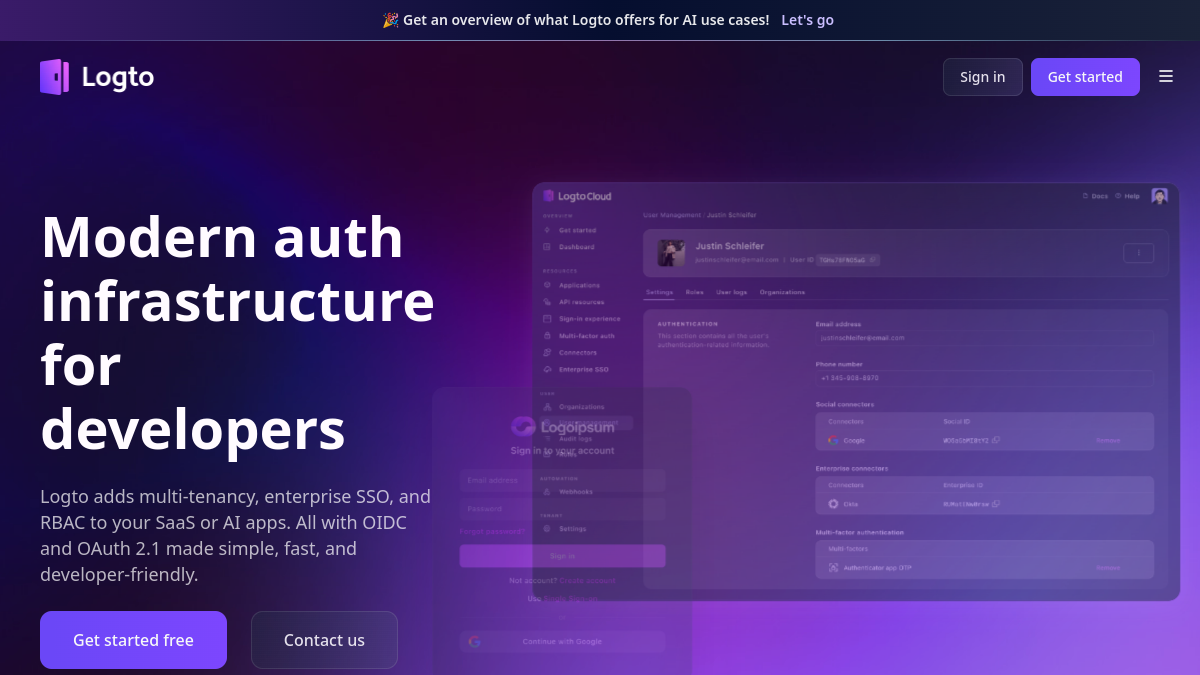
The 5 Best Open-Source Authentication Tools in 2026
Open-source auth lets you own your users' data and avoid per-user pricing. Here are the five best self-hostable authentication tools in 2026, compared.
Community discussion (0)
Ask questions, share tips, or compare notes with other SurrealDB users.