Attio vs Clay (2026): What's the Difference and Which Do You Need?
Attio and Clay both come up when modern sales teams shop for tools, so people compare them directly. But here's the key thing: they're not really competitors — they solve different problems, and many teams use both. Let's clear up what each does and which one you actually need.
The quick answer
Attio is a CRM — it's where you store and manage contacts, companies, and deals. Clay is a data-enrichment and prospecting engine — it finds and enriches leads before they ever hit your CRM. If you need a place to run your sales pipeline, that's Attio. If you need to build and enrich targeted lead lists, that's Clay. Plenty of teams use Clay to source and enrich leads, then push them into a CRM like Attio.
What is Attio?
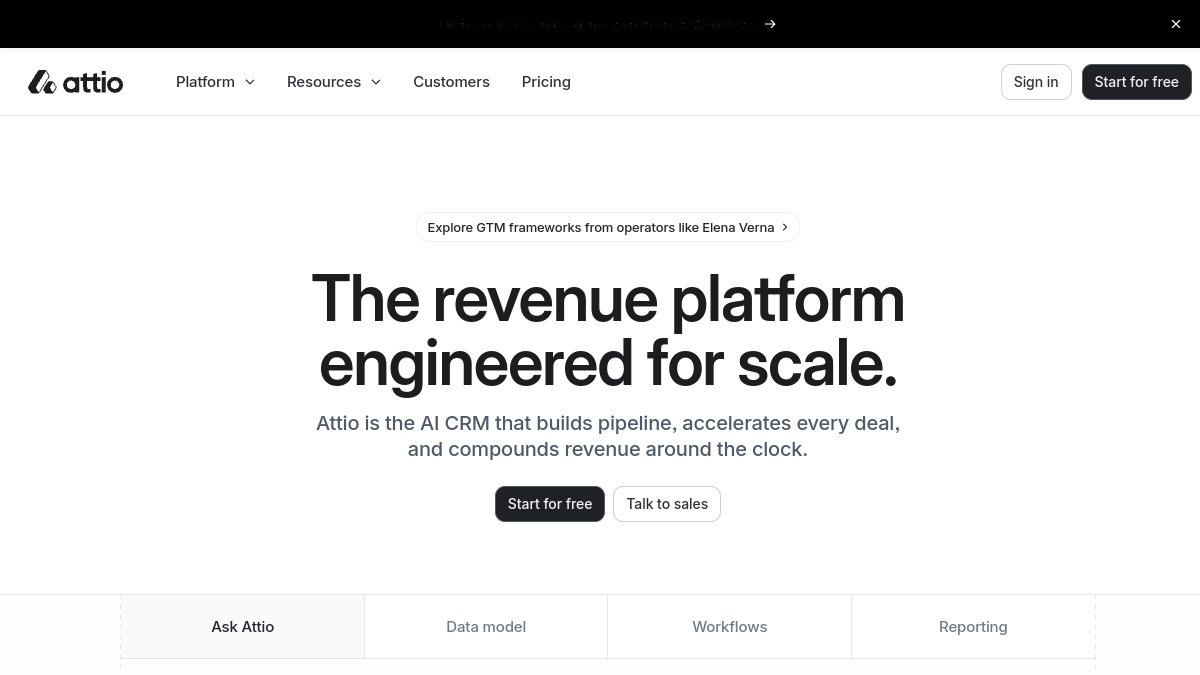
Attio is a modern, flexible CRM that startups love. It's fast, customizable, and data-rich, letting you model your contacts, companies, and deals however you work, with pipelines, reports, and automations. Think of it as the system of record for your relationships and deals — the place your team lives day to day.
What is Clay?
Clay is a data-enrichment and prospecting powerhouse. It pulls from dozens of data providers (and layers AI on top) to find prospects and enrich them with emails, phone numbers, firmographics, and signals. It's built for building high-quality, targeted lead lists and automating research — the top of the funnel, before a lead becomes a deal in your CRM.
The core difference
Simply put: Clay gets and enriches the data; Attio stores and manages it. Clay answers "who should we reach out to, and what do we know about them?" Attio answers "where do we track our contacts, deals, and pipeline?" One feeds the other.
Do you need both?
It depends on your motion. If you mainly need to organize existing relationships and manage deals, you need a CRM — Attio (or an alternative). If you're doing outbound and need to build and enrich targeted prospect lists at scale, you need Clay. Many outbound teams use both: Clay to source and enrich, then sync clean data into Attio to work the pipeline. If you only do inbound and relationship management, you may not need Clay at all.
Which should you choose?
- Choose Attio if you need a CRM to manage contacts, companies, and deals.
- Choose Clay if you need to find and enrich leads for outbound at scale.
- Use both if you run serious outbound and want enriched data flowing into a modern CRM.
Comparing the wider field? See our guides to the best Attio alternatives and the best Clay alternatives — and if outbound data is your focus, our Apollo.io alternatives roundup is worth a look too.
Frequently asked questions
Is Clay a CRM?
Not really. Clay is a data-enrichment and prospecting tool, though it has table/spreadsheet features. It's designed to find and enrich leads, not to be the long-term system of record for your deals — that's what a CRM like Attio is for.
Can Clay and Attio work together?
Yes. A common setup uses Clay to source and enrich prospects, then pushes that clean data into Attio (via integrations or API) where the sales team manages the pipeline.
Which is better for a startup?
They serve different needs. A startup that needs to organize its sales pipeline should start with a CRM like Attio. One that's scaling outbound and needs better prospect data should add Clay.
The bottom line
Attio vs Clay isn't an either/or for most teams — it's CRM vs data enrichment. Figure out whether your bottleneck is managing relationships (Attio) or finding and enriching leads (Clay), and the choice is clear. Serious outbound teams often benefit from both, working together.